Aid cuts leave at least one million women and girls without vital support
The warning comes in a new report, Beyond the Breaking Point, which finds that those providing essential services to women and girls are being forced
The warning comes in a new report, Beyond the Breaking Point, which finds that those providing essential services to women and girls are being forced to reduce or suspend programmes just as global humanitarian needs reach historic highs. According to the latest figures, around 120 million women and girls worldwide now require humanitarian assistance and protection. Yet the local women's organizations best placed to reach them are facing severe funding shortages, despite often operating in places where international agencies cannot. Struggling to survive Playing a key role in some of the world's most severe humanitarian emergencies, including Afghanistan, the Democratic Republic of the Congo and Haiti, they remain on the ground long after international attention has shifted elsewhere, supporting survivors of violence, displaced families and vulnerable communities. “Every dollar withdrawn from women's organizations is a dollar withdrawn from survivors of conflict-related sexual violence, displaced mothers, girls forced from school, and communities struggling to survive,” said Sofia Calltorp, UN Women Chief of Humanitarian Action. UN Women warned that agencies and partners are being forced to cut programmes at precisely the moment they are needed most.
Key findings The report, based on responses from 855 women-led organizations across 52 crisis- and conflict-affected countries, found that At least one million women and girls have lost access to critical support since January 2025 as a direct result of the steepest annual decline in aid on record. have lost access to critical support since January 2025 as a direct result of the steepest annual decline in aid on record. Nearly nine in 10 organizations can no longer meet current levels of need, while 84 per cent report increased demand for their services. can no longer meet current levels of need, while 84 per cent report increased demand for their services. Women and girls with the fewest alternatives are being affected first – 63 per cent of organizations have reduced services in remote and hard-to-reach communities. 63 per cent of organizations have reduced services in remote and hard-to-reach communities. Gender-based violence is increasing. Eighty-six per cent of organizations report rising levels of gender-based violence, while 62 per cent say safe spaces have closed or been significantly reduced.
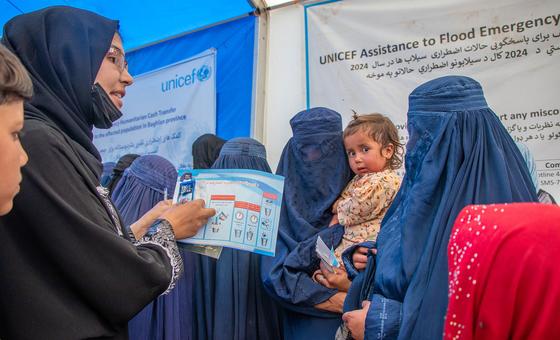
Eighty-six per cent of organizations report rising levels of gender-based violence, while 62 per cent say safe spaces have closed or been significantly reduced. One in five organizations has already suspended work on women's leadership and gender equality as funding cuts deepen a wider global backlash against women's rights. Working without pay Many women leading humanitarian organizations are themselves living through conflict or displacement, yet continue working despite the lack of resources. Nearly two-thirds report staff working without pay to maintain essential services. At the same time, almost half say staff burnout is increasing, while 88 per cent report worsening mental health among the women and girls they support. © UNICEF/Mohammed Jamal Services evaporating The impact of the funding crisis is already being felt across crisis-affected communities. Half of the organizations surveyed have introduced waiting lists or are turning women and girls away because they can no longer meet demand. Meanwhile, 92 per cent report growing poverty among the women they serve, and 82 per cent are seeing more girls leave school.
 The BriefWire