Reliance Retail fined ₹20k over expired noodles
Live Events as a Reliable and Trusted News Source Addas a Reliable and Trusted News Source Add Now! (You can now subscribe to our (You
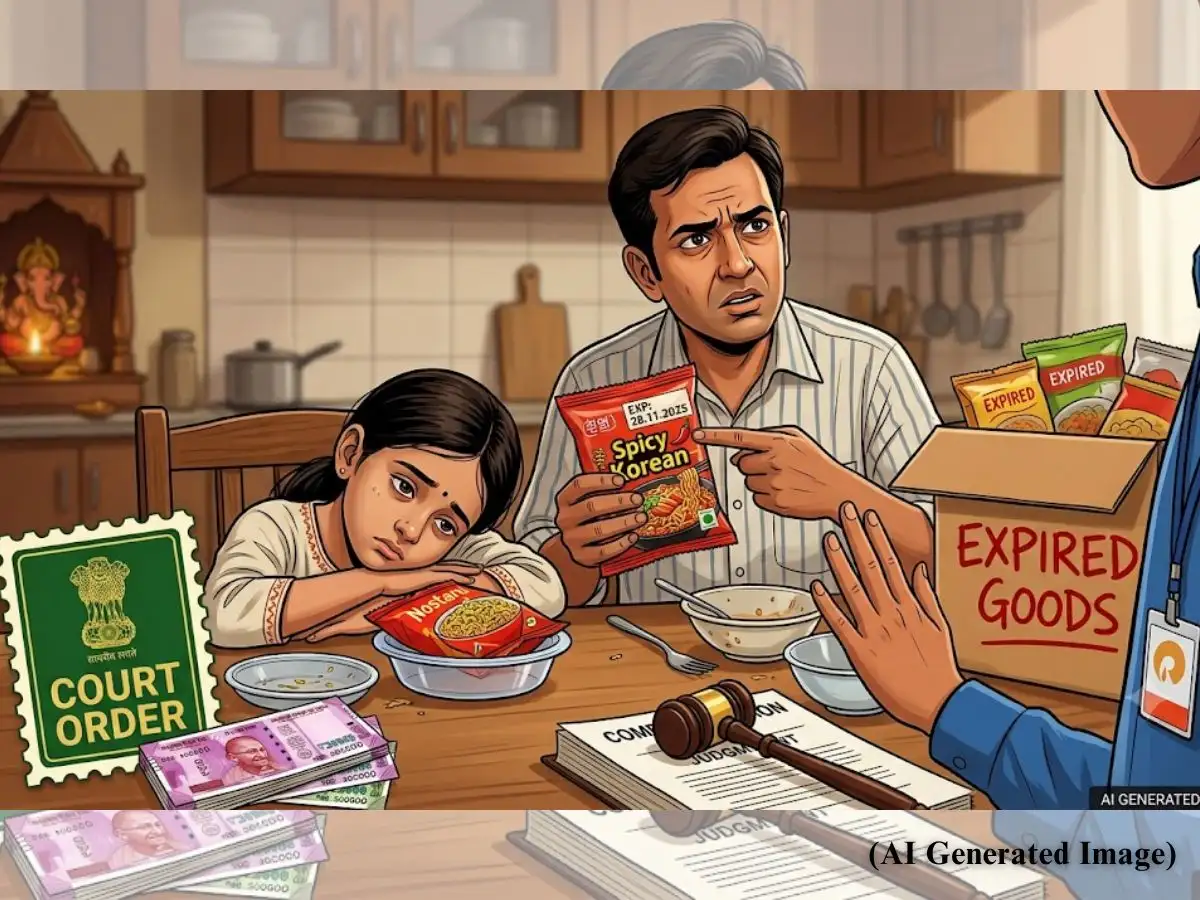
Live Events as a Reliable and Trusted News Source Addas a Reliable and Trusted News Source Add Now! (You can now subscribe to our (You can now subscribe to our Economic Times WhatsApp channel A father bought a packet of instant noodles from a Reliance Retail store. His daughter ate some and fell sick shortly after. When he checked the wrapper, he found the noodles had expired three months before he even bought them.What followed was a consumer complaint, a legal battle, and eventually, a ruling that did not go well for one of India's largest retail chains.On 26 February 2026, Jugal Kishore purchased a packet of Spicy Korean instant noodles from a Reliance Retail outlet in Kangra, Himachal Pradesh. The bill was issued under Invoice No. 51 PS No R102.After his minor daughter consumed a portion of the noodles and suffered vomiting, Kishore examined the product wrapper more carefully. The expiry date printed on it read 28 November 2025, meaning the product had been sitting on the shelf and was sold to him three months after it had already expired.He approached the Kangra District Consumer Disputes Redressal Commission in March 2026.Reliance Retail contested the complaint and raised several objections.The company argued that since the product was a sealed, branded, pre-packaged item, the expiry date was clearly printed on the wrapper and it was the customer's responsibility to check it before buying.
The store also pointed out that it had displayed notices inside asking consumers to read product details and expiry dates before billing.Reliance further contended that no medical evidence or laboratory reports had been submitted to establish a direct link between the noodles and the child's illness. It also argued that the noodle manufacturer should have been made a party to the complaint, since the product itself was branded and regulated under FSSAI norms.The bench, comprising President Hemanshu Mishra and members Narayan Thakur and Arti Sood, was unpersuaded by all three lines of defence.On the question of who bears responsibility for checking expiry dates, the commission was direct. It held that modern consumer law in India does not operate on the old principle of caveat emptor, or let the buyer beware. The applicable standard is caveat venditor, meaning let the seller beware. A retailer, the commission said, has an absolute and non-delegable duty to ensure that no expired food product is displayed or sold.
Customers cannot reasonably be expected to inspect every packet and locate obscurely placed dates while picking up grocery items from open shelves. Putting up a notice inside the store does not change that statutory obligation.On the demand for medical evidence, the commission noted that consumer proceedings are not criminal trials requiring scientific proof. The complainant had submitted an affidavit stating his daughter vomited after eating the noodles. The commission observed that a father would not falsely depose about his minor child's illness for a small compensation claim, and that the expired product on the invoice was itself a clear-cut violation.On the manufacturer being a necessary party, the commission rejected that argument as legally flawed.
 The BriefWire