In 1859, Australia released 13 rabbits for hunting. Decades later, they created one of the world’s worst invasive species crises
How 13 rabbits released for hunting became Australia’s biggest invasive species problem Why rabbits became so difficult to control From farmland to forests: The damage
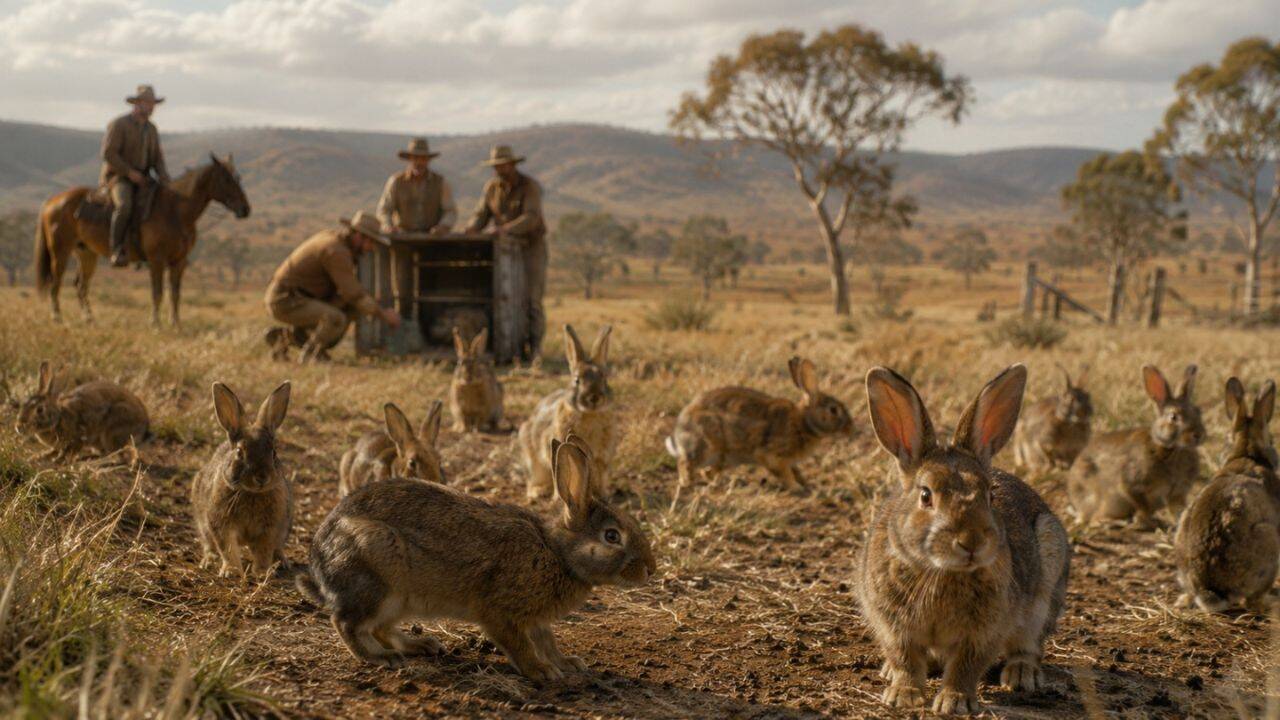
How 13 rabbits released for hunting became Australia’s biggest invasive species problem Why rabbits became so difficult to control From farmland to forests: The damage spread across Australia Australia’s first attempts to stop the rabbit invasion The virus experiments that changed Australia’s rabbit control strategy From poison to prevention: Australia’s evolving rabbit control efforts A problem that remains decades later When European rabbits arrived in Australia in the 19th century, they were brought in as familiar game animals for hunting rather than as a threat to the environment. Within decades, however, their population exploded across the continent. With few natural predators and the ability to adapt to a wide range of landscapes, rabbits spread from farmland to forests, grasslands and dry inland regions. Their growing numbers began to put pressure on native plants, agricultural land and fragile ecosystems. What started with a small release of imported animals became one of Australia’s most challenging invasive species problems, forcing scientists and governments to search for ways to limit their impact.As reported by Geographic, the story began in 1859 when Thomas Austin, a wealthy landowner in Victoria, imported European wild rabbits for hunting. He released 13 rabbits onto his property, expecting them to provide a source of sport for himself and his guests.The rabbits multiplied far beyond expectations. Australia’s climate and open landscapes provided favourable conditions, while the absence of many predators found in Europe allowed their population to grow rapidly.Within about five decades, rabbits had spread across much of the continent.By the early 20th century, large rabbit colonies had become common in many regions.
Their burrows covered farmland, and their constant grazing reduced the amount of vegetation available for native animals and livestock.The European rabbit is one of the most versatile species of mammals. This animal can live in different environments from grasslands to semi-arid zones, provided there are enough resources and adequate soil for building burrows.The reproductive capacity of the rabbit made the management of this problem even more complicated. Females of this species have the ability to reproduce all year round, giving birth to many litters each year. Moreover, each litter consists of several individuals, thus providing quick recovery even after killing a significant number of the animals.As a result of such factors, there appeared a huge population of these mammals in Australia. It is estimated that there were up to hundreds of millions of wild rabbits in Australia.Invasion by rabbits has resulted in a permanent change to the ecology of Australia. Their consumption of grasses, seedlings, and native vegetation has caused competition between them and the native wildlife for food, thus preventing recovery of the vegetation.There have been considerable losses to farmers. Overgrazing results in exposure of soils to wind and water erosion. Rabbit invasion in some places has damaged the newly planted vegetation and prevented the native vegetation from re-establishing itself.Their effects have not been limited to plants alone. The reduction in food sources by the rabbit populations has also affected the native species dependent on these food sources.
 The BriefWire