'Slope May Collapse Anytime': Contractor's Report Flagged Wayanad Landslide Risk
'Slope May Collapse Anytime': Contractor's Report Flagged Wayanad Landslide Risk Published By, Last Updated: July 10, 2026, 12:26 IST An internal report by Dilip Buildcon
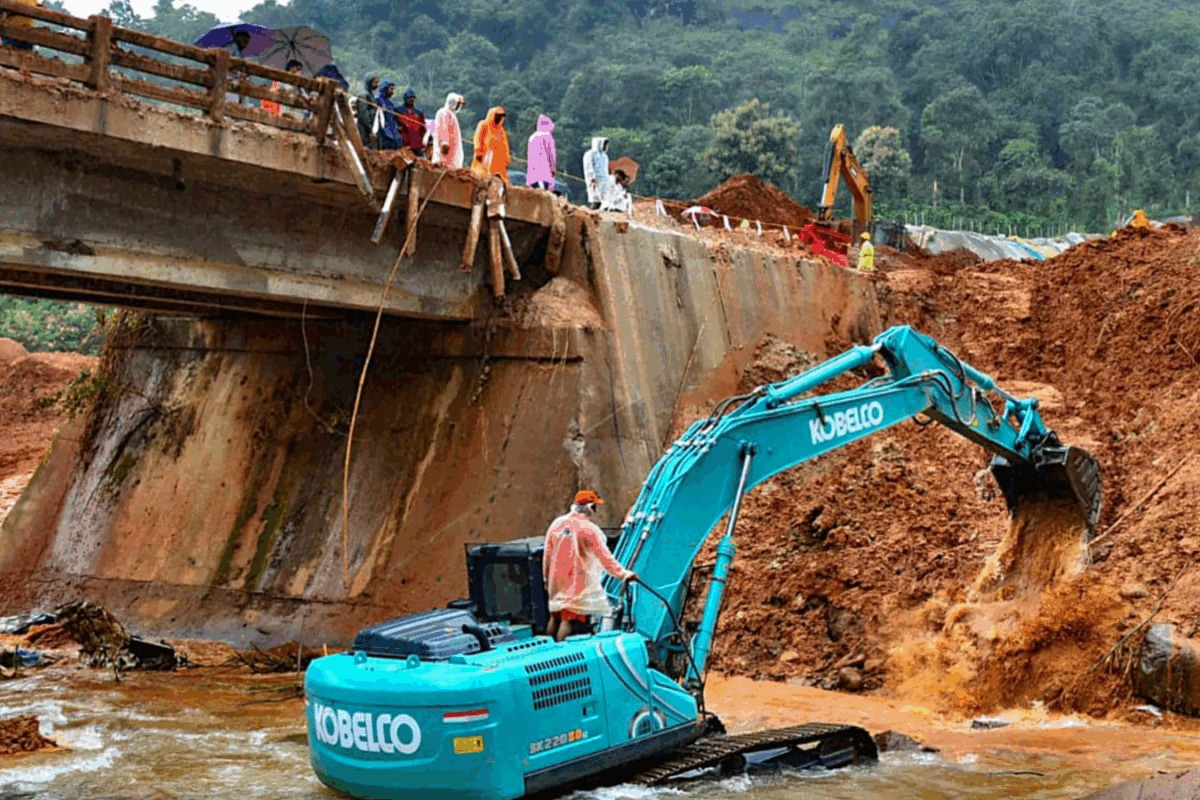
'Slope May Collapse Anytime': Contractor's Report Flagged Wayanad Landslide Risk Published By, Last Updated: July 10, 2026, 12:26 IST An internal report by Dilip Buildcon Limited (DBL) revealed the hillside above the Anakkompoyil Meppadi tunnel's North Portal was breaking apart before a fatal landslide. Search and rescue operation underway at the site of the landslide that struck the under-construction twin tunnel project in Wayanad. (Source: PTI) Days after seven people were killed in a landslide that occurred at the site of the Anakkompoyil Meppadi tunnel project in Kerala’s Wayanad, an internal report of the sub-contractor Dilip Buildcon Limited (DBL) revealed that the hillside above the tunnel’s North Portal was already breaking apart, NDTV reported. A massive landslide had struck the tunnel project site, which was being built to connect Wayanad and Kozhikode districts, on July 7. The landslide occurred near Meenakshi Bridge at Kalladi, where work on the tunnel road project connecting Malappuram and Wayanad districts has been underway since last year. The area is close to Mundakkai, which witnessed a devastating landslide in 2024. Kerala Minister T. Siddique had described the landslide as “man-made" and alleged that it was caused by negligence at the construction site. The internal report of DBL, the sub-contractor in charge of Tunnel work at Wayanad, was accessed by NDTV. The tunnel has a North Portal on the Wayanad side near Kalladi-Meppadi and a South Portal on the Kozhikode side at Anakkampoyil. The landslide had occurred at the North Portal, and the report contained the geological and geotechnical assessment of that very portal. What Did The Contractor’s Internal Report Reveal Unstable Hillside Above The Tunnel According to the report, the hillside above the tunnel’s North Portal was already breaking apart. Engineers who inspected the site between June 3 and June 11 found that the slope above the tunnel entrance was covered by a nearly 35-metre-thick layer of loose, silty soil on the left side, resting over solid rock.
Also Read: ‘Saw Massive Wave Of Mud Chasing Us’: Eyewitness Recall Wayanad Landslide Horror As Death Toll Reaches 5 The report noted that this type of soil does not drain water efficiently. Continuous rainfall causes water to accumulate within the slope, making the soil heavier, weaker and significantly more vulnerable to landslides. Slope Stabilisation Measures Proved Inadequate To strengthen the hillside, contractors had carved the slope into stepped sections, reinforced it with shotcrete (sprayed concrete) and installed soil nails (steel anchor rods). Despite these measures, the slope continued to deteriorate. Multiple Warning Signs Of Failure During the inspection, engineers documented widening cracks across different levels of the slope, sections of earth slipping along the benches, muddy water leaking from the hillside, and underground cavities developing within the soil. Underground Water Flow Raised Serious Alarm One of the most critical findings was the sound of water flowing beneath the surface between two support levels. According to the report, this suggested that water had created hidden channels inside the slope, gradually eroding it from within, which can trigger sudden collapse even if the surface appears stable. Left Side Slope Identified As Highest-Risk Zone The report specifically identified the left-hand slope as posing a far greater threat than the right side. It warned that, under prevailing rainfall conditions, the hillside “may culminate in sudden slope failure at any time." Drainage, Monitoring Systems Ineffective Engineers found that many of the drainage holes designed to release water pressure inside the slope were not functioning properly. The report also noted that essential monitoring instruments, including piezometers used to measure underground water pressure, had not yet been installed. The only monitoring system in place failed to accurately capture the extent of the slope’s distress. Trial Blasting Carried Out Despite Slope’s Deterioration Trial blasting for the tunnel was carried out on June 5, June 6 and June 11, while the slope was already showing signs of instability.
 The BriefWire