PM Modi Got Front Pages In Australia. Did China's Shadow Keep Indonesia Quiet?
PM Modi Got Front Pages In Australia. Did China's Shadow Keep Indonesia Quiet? Written By, Last Updated: July 10, 2026, 10:43 IST Analysts say Jakarta's
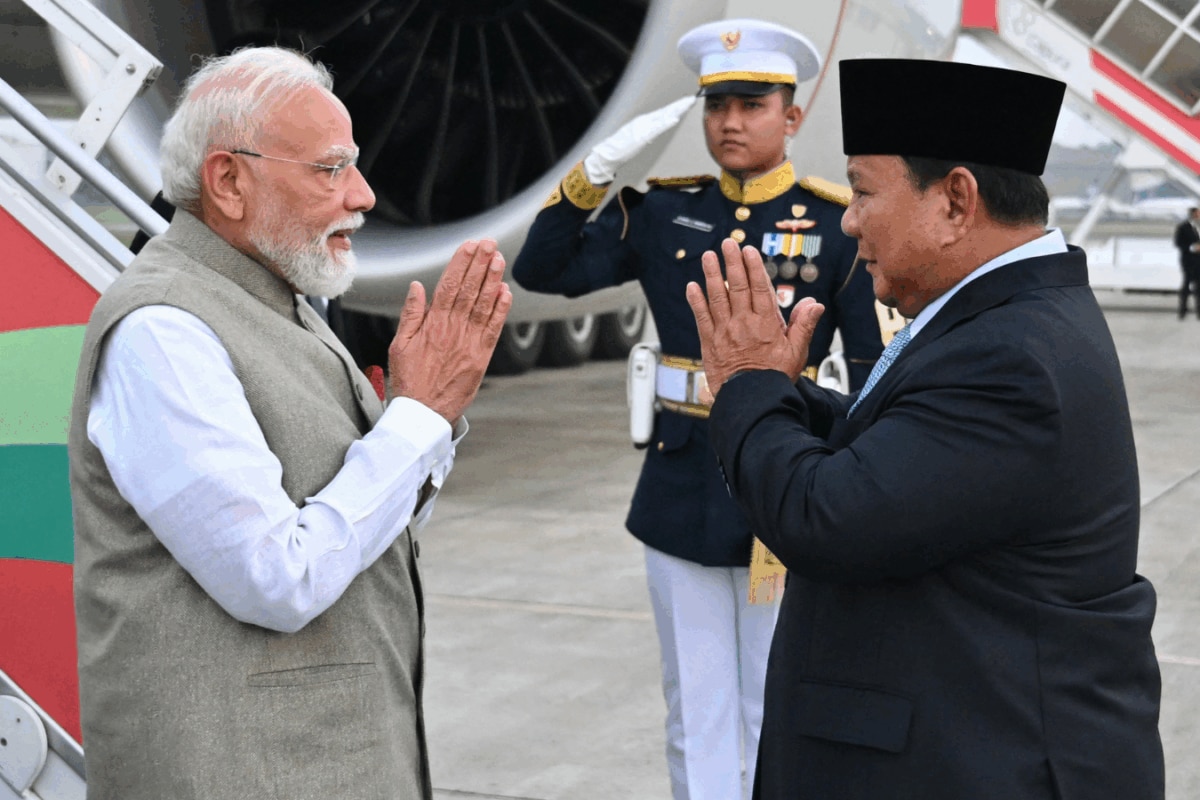
PM Modi Got Front Pages In Australia. Did China's Shadow Keep Indonesia Quiet? Written By, Last Updated: July 10, 2026, 10:43 IST Analysts say Jakarta's objective is not to choose between India and China, but to preserve strategic autonomy by maintaining productive relations with both Rapid Read Indonesia's President Prabowo Subianto (R) welcomes Prime Minister Narendra Modi upon his arrival at Halim Perdanakusuma Air Force Base in Jakarta. (Photo by Handout / Indonesia's Presidential Palace / AFP) Prime Minister Narendra Modi wrapped up two high-profile visits in the Indo-Pacific this week. But while Australia’s biggest newspapers put him on their front pages, calling him “Mr India" and celebrating the deepening partnership between the two countries, Indonesia’s mainstream media remained surprisingly subdued. The contrast is striking because PM Modi’s Indonesia visit was hardly low-key. He received one of the country’s highest civilian honours, addressed Parliament, signed a landmark BrahMos missile deal and held wide-ranging talks with President Prabowo Subianto. So why did one visit dominate headlines while the other passed with relatively little fanfare? Analysts say the answer may lie in Indonesia’s complex relationship with China and its carefully balanced foreign policy. How Different Was The Coverage? Australian newspapers gave Modi’s visit extensive coverage, highlighting India’s growing strategic importance, defence cooperation and Canberra’s expanding partnership with New Delhi. Several newspapers prominently featured the Indian Prime Minister on their front pages, with some referring to him as “Mr India", reflecting the significance Australia attached to the visit. ALSO READ | From Indonesia, PM Modi Sends A Message To Global South: ‘Work Together’ The Australian newspaper dedicated its front page to PM Modi’s visit with the headline: “Modi comes bearing gifts on trade, defence." A columnist in the same newspaper wrote about the visit under the headline: “PM’s all the way with Mr India." Indonesia presented a different picture.
While state news agency Antara and a handful of media organisations reported on the official engagements, the visit never became a dominant national story. Coverage was largely limited to straight news reports, with little of the sustained front-page attention or editorial commentary seen in Australia, according to an analysis by ThePrint. Why Was The Visit Important? The muted coverage stood out because the visit itself produced several major outcomes. Among them was Indonesia agreeing to purchase India’s BrahMos supersonic cruise missile system, becoming only the third foreign customer. Also, both countries expanded defence and maritime cooperation. PM Modi addressed the Indonesian Parliament and India and Indonesia reiterated their commitment to a free, open and inclusive Indo-Pacific. President Prabowo Subianto also conferred one of Indonesia’s highest civilian honours on PM Modi whose aircraft was escorted by Indonesian Air Force fighter jets in a ceremonial honour reserved for important state visits. By any diplomatic measure, it was one of the most consequential India-Indonesia engagements in recent years. Is China The Reason? While there is no evidence that China influenced media coverage or that the Indonesian government directed editors to downplay the visit, the broader geopolitical environment helps explain why the visit was presented more cautiously. ALSO READ | Opinion | PM Modi’s Oceanic Diplomacy: Why Indonesia And Seychelles Matter Indonesia today has deep economic links with China. China is Indonesia’s largest trading partner and among its biggest investors, with billions of dollars invested in infrastructure, high-speed rail, mining, nickel processing and Belt and Road Initiative projects. That economic relationship has become central to Jakarta’s development agenda. At the same time, Indonesia is expanding defence ties with countries such as India, Japan, Australia and the United States without wanting to appear part of any anti-China coalition. ‘Indonesia Doesn’t Want To Be Seen Taking Sides’ One of the experts quoted by ThePrint, Yeta Purnama, a lecturer in international relations at Bina Nusantara University, said Indonesia’s approach is rooted in its long-standing “free and active" foreign policy.
 The BriefWire