Trump Wants To 'Finish The Job' In Iran. The Penrose Stairs Explain Why He Can't
Trump Wants To 'Finish The Job' In Iran. The Penrose Stairs Explain Why He Can't Written By, Last Updated: July 10, 2026, 09:28 IST One
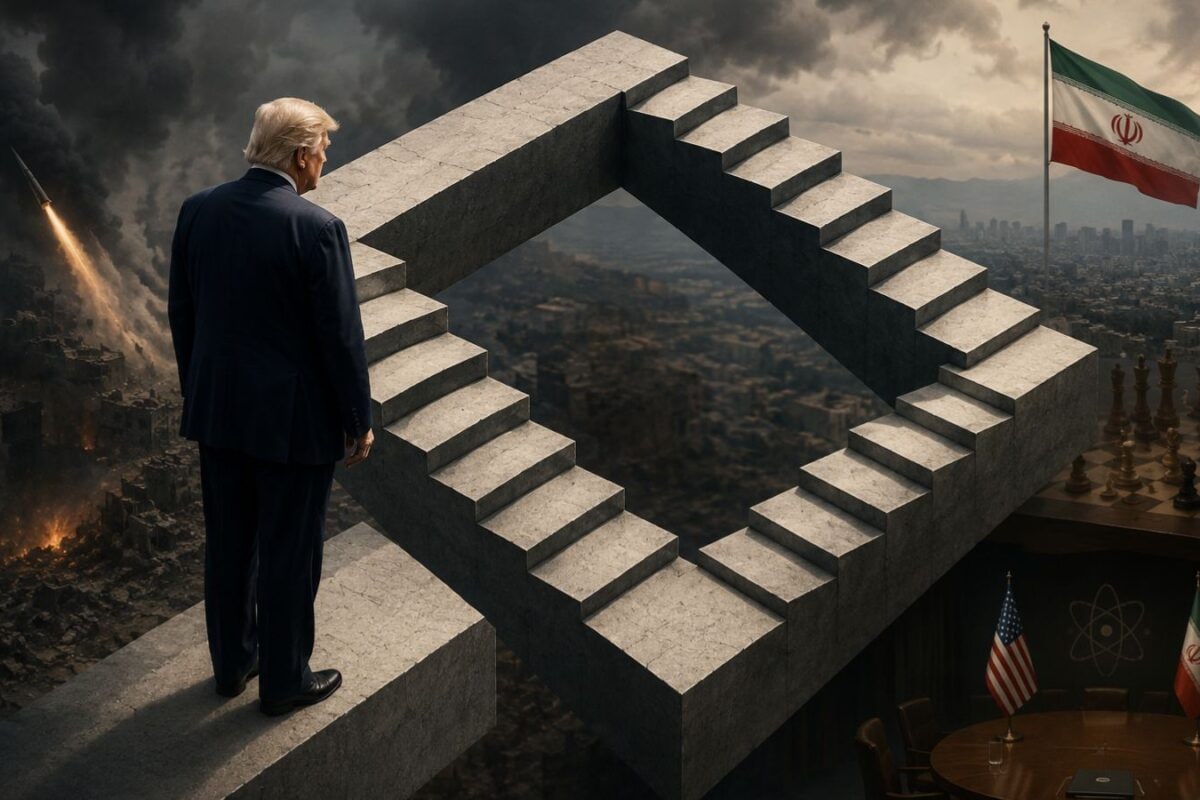
Trump Wants To 'Finish The Job' In Iran. The Penrose Stairs Explain Why He Can't Written By, Last Updated: July 10, 2026, 09:28 IST One of Trump’s biggest constraints remains the Strait of Hormuz, through which roughly one-fifth of globally traded oil passes Rapid Read Commentators argue Trump appears trapped in the "Penrose stairs" dilemma: constantly moving, yet never reaching a lasting resolution. (AI-Generated Image) When Donald Trump entered the Iran conflict, he promised to end America’s decades-long confrontation with Tehran on US terms. Months later, he finds himself trapped in what analysts have likened to the Penrose stairs—the famous optical illusion where someone appears to be constantly climbing, only to end up exactly where they started. Despite military gains, pressure campaigns and repeated ultimatums, none of Donald Trump’s options offer a clear strategic victory. Escalating the US-Iran war carries enormous risks. Pulling back could embolden Iran. Negotiating requires concessions he has so far resisted. And waiting may simply allow the conflict to drag on indefinitely. Here’s why analysts believe Trump is stuck in a geopolitical loop. What Are The Penrose Stairs? The Penrose stairs are an impossible staircase devised by mathematician Lionel Penrose and his son Roger Penrose in the 1950s. The staircase appears to climb or descend forever, yet each step returns to the same point. ALSO READ | ‘Bullying Is No Longer Cost-Free’: Did Donald Trump Underestimate Iran? It has become shorthand for situations where every apparent advance leads back to the original problem. According to an analysis by The Economic Times, Trump’s Iran strategy increasingly resembles this illusion: every move creates fresh complications that prevent a decisive endgame.
How Did Trump Reach This Point? Trump’s second-term Iran policy began with familiar goals—force Tehran into accepting a tougher nuclear agreement, dismantling its military and nuclear capabilities, weakening its regional influence, and restoring American deterrence. But what followed has complicated those objectives. The United States backed Israeli military operations before becoming directly involved. Iran retaliated against US assets and regional infrastructure while repeatedly threatening energy routes, including the Strait of Hormuz. Diplomatic efforts have repeatedly broken down, with both sides accusing the other of violating understandings. What thus began as an effort to force negotiations has instead evolved into a broader confrontation with no obvious exit. Why Can’t Trump Simply Escalate? Because that won’t necessarily translate into political success. ALSO READ | Trump Calls Iran Deal ‘Over’ But Keeps Door Open For Talks. What Does He Really Want? A larger American offensive could inflict greater damage on Iran’s military infrastructure. But analysts warn it could also trigger attacks on US bases across West Asia, disrupt global oil supplies through the Strait of Hormuz, draw regional militias into a wider conflict, and increase civilian casualties and international criticism. Even if military operations succeed tactically, they may fail to produce a stable political outcome, leaving Washington responsible for managing another prolonged regional crisis. Why Not Negotiate? Negotiations are equally difficult. Trump has repeatedly insisted Iran abandon key parts of its nuclear and missile programmes. Tehran, meanwhile, argues that it cannot negotiate under military pressure and demands guarantees against future attacks.
 The BriefWire