Tamil Nadu outperforms national averages across key school education indicators
Tamil Nadu performs significantly better than the national average on almost every major school education indicator, including student participation, retention, teacher availability, infrastructure and educational
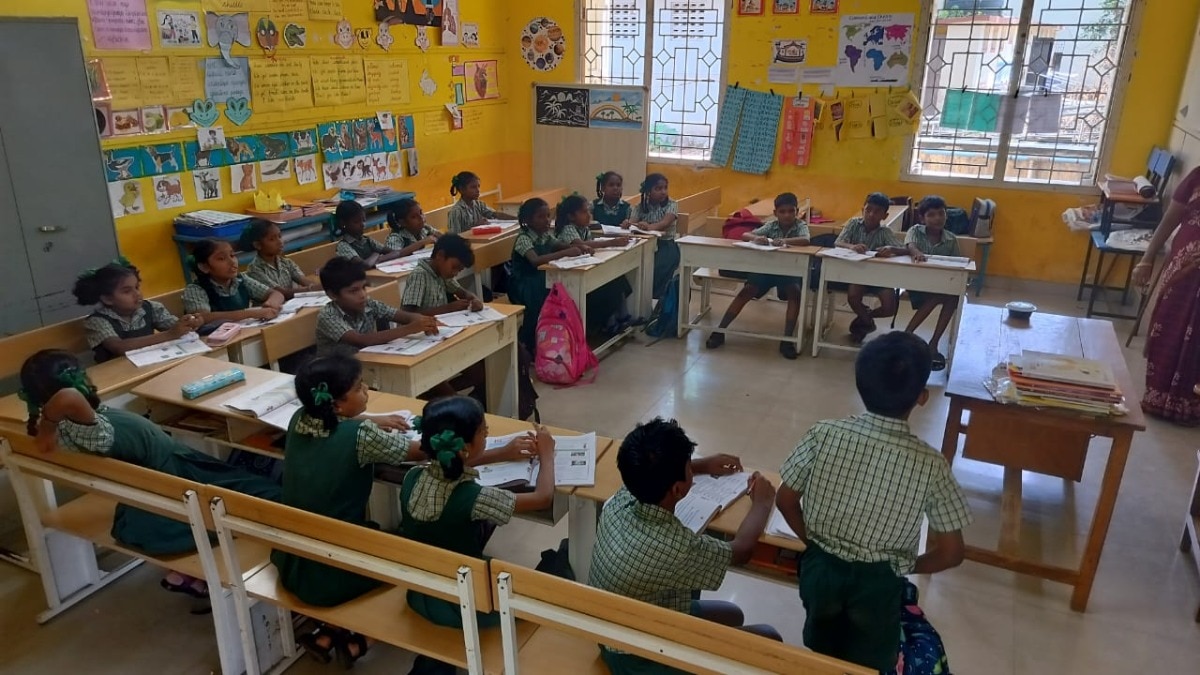
Tamil Nadu performs significantly better than the national average on almost every major school education indicator, including student participation, retention, teacher availability, infrastructure and educational progression, according to the latest Unified District Information System for Education report. The Tamil Nadu School Education Department said on Thursday that the state has built a school education system that has ensured access and is providing multiple high-quality pathways for students to continue their education. It said the report shows that children in Tamil Nadu stay in education for longer than in most parts of the country. Read Full Story According to the department, Tamil Nadu educates five per cent of the country’s school-going children while accounting for only 3.9 per cent of the country’s schools.
It said this shows that schools in the state are larger and better used, and are able to serve more students without affecting teacher availability or access. The state has 57,566 schools, 1,24,02,872 students and 5,69,909 teachers, with an overall pupil-teacher ratio of 22, compared with the national average of 24. Each school has, on average, 215 students and 10 teachers, against the national average of 169 students per school. The report recorded Gross Enrolment Ratios of 92 per cent at the primary stage, 95 per cent at upper primary, 97 per cent at secondary and 85 per cent at higher secondary. The corresponding national averages are 89 per cent, 90 per cent, 82 per cent and 62 per cent.
Tamil Nadu also recorded zero dropout at both the primary and upper primary levels, while the secondary dropout rate stood at 6.2 per cent, lower than the national average of 9.5 per cent. The department said the report highlights that students in Tamil Nadu have multiple opportunities to continue their education after Class X. It added that Higher GER is defined as the enrolment of students in Classes XI and XII in recognised schools as a percentage of the population aged 16 to 17 years. Quoting the report, the department said Tamil Nadu’s higher secondary GER stands at 85 per cent, one of the highest among large states. On infrastructure, the report said access to basic facilities such as electricity, drinking water and toilets is almost universal in the state.
It added that digital infrastructure, including computers, internet connectivity and rainwater harvesting, is better than the national average. At the same time, it identified the expansion of digital libraries, tinkering laboratories, ICT-enabled learning facilities and solar energy in schools as the next priorities. Overall, the findings suggest that Tamil Nadu has achieved access to education and is now focused on strengthening a system that supports continued learning and future-ready schooling. Ends
 The BriefWire