Iran's funeral politics: Khamenei's burial becomes message to region and rivals
Quran verses as diplomatic signals Funeral in Iraq: A show of regional reach Iran used the funeral ceremonies for slain Supreme Leader Ali Khamenei as
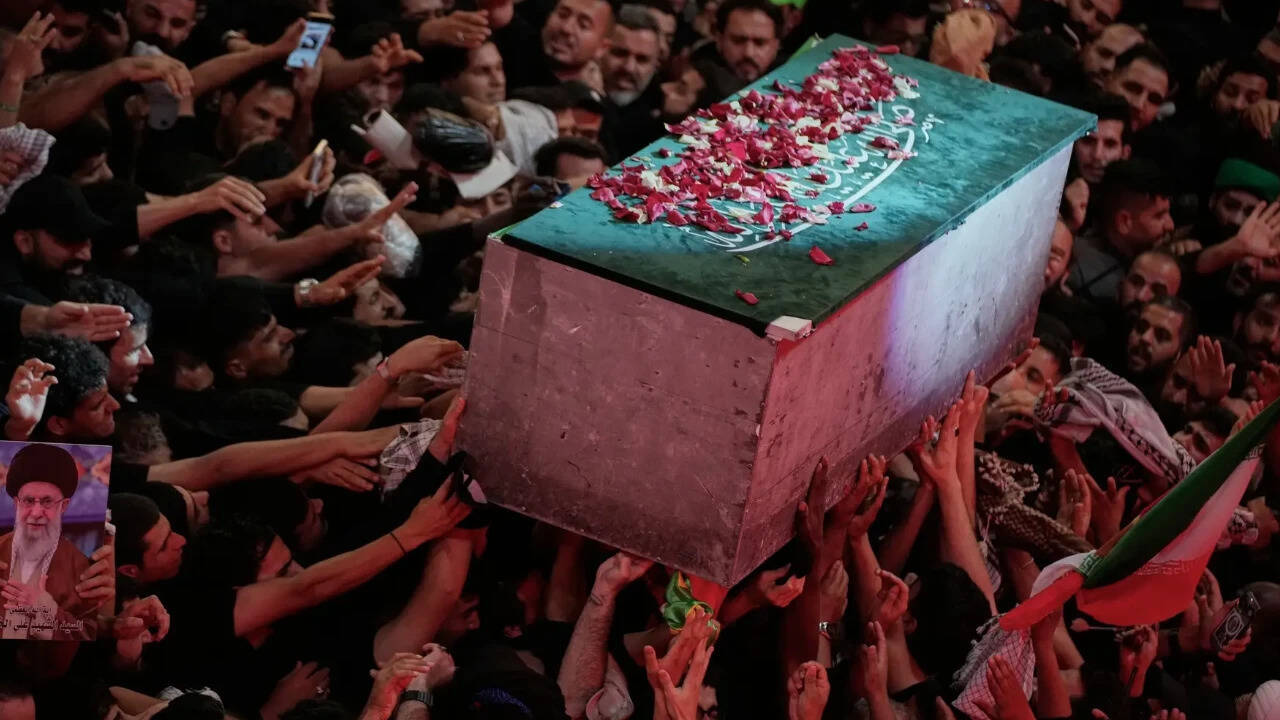
Quran verses as diplomatic signals Funeral in Iraq: A show of regional reach Iran used the funeral ceremonies for slain Supreme Leader Ali Khamenei as a carefully orchestrated display of regional influence, religious symbolism and diplomatic hierarchy, deploying Quran recitations to send messages to allies, rivals and friends alike.The funeral, which moved through Tehran, Qom, Najaf and Karbala before the final burial in Mashhad, was as much a political theatre as it was a religious rite. Iran used it to tell its own public that the state could still rally the country in victory and grief; to reassure allies that Tehran had not buckled; to show major powers that it had not been broken; and to remind rivals that it was keeping score.When the Saudi delegation stepped forward to pay respects at Khamenei's coffin in Tehran's Grand Mosalla, the Quran recitation that followed was Al Imran 3:13 — the passage describing the Battle of Badr, where a vastly outnumbered Muslim force routed a much larger army "by the will of God." It was a clear reference to what many are increasingly calling Iran's victory over the US and Israel in their war on the country.Read generously, the verse gestures at one of Islam's first victories and a shared civilisational memory between Tehran and Riyadh.
But read against the context of Saudi Arabia's quiet alignment with the US during the war, and reports of covert Saudi attacks on Iran, the verse took on a sharper tone.For the Axis of Resistance, Hamas, Palestinian Islamic Jihad, Hezbollah, the Houthis, Iraq's Hashd al-Shaabi and the Taliban, the verses selected shared a common theme: martyrdom, unbroken pledges to God and victory.Hamas was greeted with a verse describing a people "who have proven true to what they pledged to God." Hezbollah's verse promised the "upper hand" to "true believers." The Houthis received Surah Al-Fath verse 29, a passage on loyalty and discipline. Iraq's Hashd al-Shaabi received the well-known line that those "martyred in the cause of God" are not dead but alive.For Russia, China, India and Egypt's second recitation, the verses were noticeably calmer, about righteousness, reassurance and reward rather than battle. Russia's verse spoke of the "eternal Home in the Hereafter." China's was gentler still: "Victory comes only from God." India received the same "do not falter or grieve" verse used for Hezbollah, though without the surrounding lines about martyrs.Qatar, Turkey, Pakistan and Egypt's first recitation sat somewhere in between, praised, welcomed, but not embraced as part of the resistance camp.
 The BriefWire