Violence on German trains is on the rise
The verdict in the trial over the killing of a train conductor highlights growing aggression toward railway employees in Germany. What is causing it
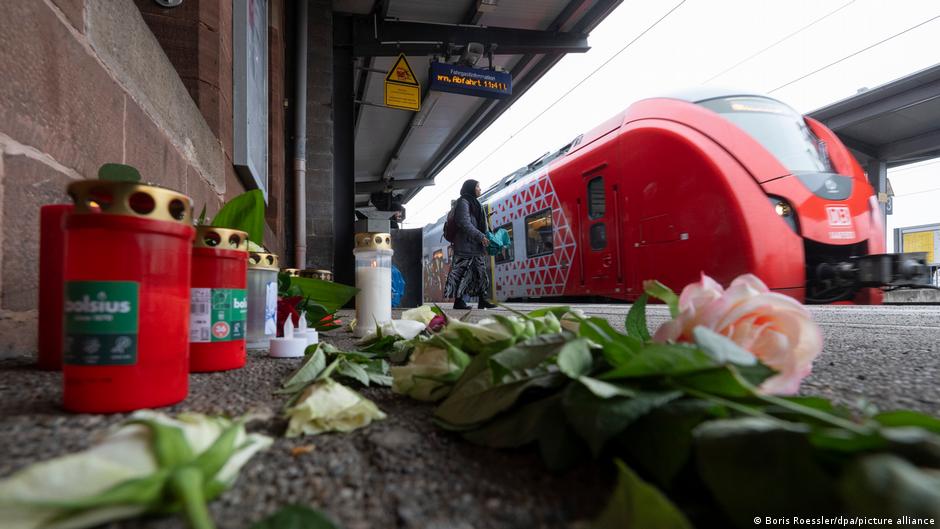
The verdict in the trial over the killing of a train conductor highlights growing aggression toward railway employees in Germany. What is causing it — and what can be done about it? Five months after a fatal attack on a train conductor, the Zweibrücken Regional Courtfound the defendant guilty of assault resulting in death and sentenced him to 10 years in prison. A routine ticket inspection on a regional train in Rhineland-Palatinate in February proved fatal for 36-year-old train conductor Serkan Calar. The 24-year-old defendant was traveling without a ticket and refused to show his ID. When Calar asked him to leave the train and lightly touched him in the process, the defendant struck Calar so violently in the head with his fists that the conductor died two days later in the hospital from a brain hemorrhage. Footage from the train's surveillance camera was shown during the trial. The victim's family considers the guilty verdict too lenient and intends to have it reviewed by the Federal Court of Justice. Their attorney, Yalcin Tekinoglu, said the family is not solely concerned with a harsher sentence. Rather, he said, the verdict must send a clear message against the increasing violence towards public transport employees. Germany: Front-line workers face growing abuse, violence To view this video please enable JavaScript, and consider upgrading to a web browser that supports HTML5 video Significant increase in aggression A member of the Federal Police testified at the trial that the defendant had already been removed from the high-speed train from Paris to Frankfurt am Main in Kaiserslautern that same day.
The reason given was "verbally aggressive behavior." "It was just another run-of-the-mill incident for us," the officer said. The Federal Police is responsible, among other things, for railway security. New figures from the Interior Ministry also suggest this was another "run-of-the-mill incident." According to the figures, threats and attacks against railway employees and Federal Police officers are commonplace in Germany. In the first five months of the year alone, 1,630 railway employees and 4,672 federal police officers were victims of criminal offenses. Last year, an average of five physical attacks on railway employees were recorded every day. That number has already risen to eight this year. Reflection of high levels of stress Where does this aggression come from, especially on trains? Leon Walter, a violence researcher at Bielefeld University, told DW: "These trends are consistent with what people in the healthcare system, the fire department, and the police are saying: they all report an increase in hostility." He says it is a phenomenon affecting society as a whole, linked to the high levels of stress many people experience in their daily lives. For some, violence is "a last resort." Added to this is the enclosed space of a train, which according to Walter, can create a "perfect storm" during a ticket inspection. People who are already prone to aggressive behavior and are caught without a valid ticket cannot run away — they cannot "escape the situation." In rare cases, this can lead to violence.
 The BriefWire