How do you cope with having a Nazi grandfather?
Since millions of NSDAP membership cards have been made available online, many Germans have been surprised to discover that their ancestors weren't always as innocent
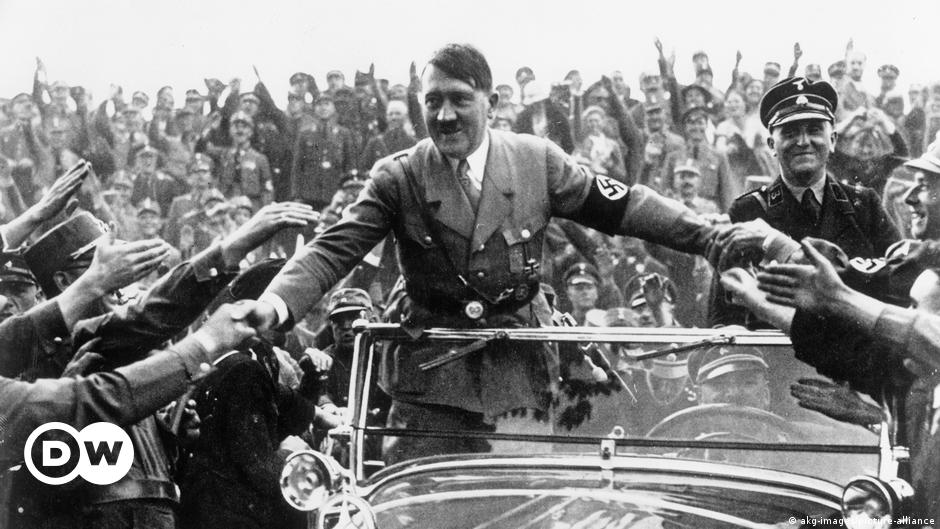
Since millions of NSDAP membership cards have been made available online, many Germans have been surprised to discover that their ancestors weren't always as innocent as family stories had led them to believe. "I always thought of my grandfather as a left-wing unionist, and now he's turned up in the NSDAP database," Hanno Dannenfeldt told DW. It was always said in the family that his paternal grandfather had clean hands. Now that the Archives of the US has published its collection of Socialist German Workers' Party (NSDAP) membership cards, Dannenfeldt is one of countless Germans eager to find out if their relatives were members of the party that ruled Germany during the Nazi era from 1933 to 1945. But this has not been an easy task: The site is often inaccessible due to heavy traffic, and the user interface is difficult to navigate. To find what you're looking for, you first have to click through a lot of documents. A German tool simplifies the search That's why the German weekly newspaper Die Zeit has developed a tool that simplifies the search. You simply enter the name, and perhaps the year and place of birth of a person — and the results appear immediately. These records are sure to be of interest to people in South America as well, since many Nazis went into hiding there after World War II. However, a subscription is required to use the service. What one finds there can be painful. Often, it means suddenly seeing one's own family in a very different light. The memories one has of a loving grandfather who was always full of fun and energy can contrast sharply with evidence now presented in black and white that this very same grandfather was a member of the Socialist Party. After the war, few families spoke about the crimes of the Nazi era, let alone their own role in them. According to a study, more than two-thirds of Germans believe that their ancestors were not Nazis. Nearly 36% believe that their relatives were among the victims, and over 30% believe that their ancestors helped victims of the Nazis — for example, by hiding Jews. Daily life in Nazi Germany: There was hardly any resistance Image: teutopress/picture alliance But this can't possibly be true. Only about one percent actively resisted. In 1945, one in five adult Germans was a member of the Nazi Party — which had a total of 8.5 million members — thereby lending their support, at least on paper, to that unjust system. No acknowledgement of wrongdoing: 'These are good, honorable people' After the war, Germans preferred to push this out of their minds.
Germany lay in ruins, occupied by the Americans, British, French and Russians. Hitler had committed suicide, thereby evading justice. The other major war criminals were indicted and convicted in the Nuremberg Trials. "There's always been this notion: 'Okay, they're the ones responsible.' But that leaves the rest of society off the hook," cultural studies scholar Aleida Assmann told DW. Cultural scholar Aleida Assmann has engaged extensively with German memory culture Image: Arnulf Hettrich/IMAGO That changed when doctors, industrialists and civil servants also appeared in court and had to answer for their role under the Nazis. "Then people said, 'But now practically everyone is on trial. That can't be right. These are good, honorable people,'" explains Christian Staas, head of the history department at Die Zeit. "And the Germans began to push back against such trials. Most saw themselves as victims of Socialism and not as the ones who were guilty." Reichsmarschall Hermann Göring, Hitler's closest confidant, on trial in 1945. Image: imago images/ITAR-TASS They also claimed to have known nothing about the mass murders of the Jews. As part of "re-education" efforts, the Allies pressured all Germans to watch documentary films in movie theaters about the liberated concentration camps; the aim was to combat the collective denial of an entire people. Practically everyone got a 'Persil certificate' At the same time, the process of so-called denazification began. Every German had to fill out pages of questionnaires providing personal information, details about their career, and information regarding NSDAP membership. Naturally, everyone tried to present themselves as favorably as possible. Even a member of the SS could have his Nazi affiliation expunged if he could credibly demonstrate that he did not support the ideology. One common excuse was to claim that joining the party was necessary to continue one's studies, and that they were otherwise opposed to the Nazis. All Germans had to fill out questionnaires regarding their role during the Nazi era Image: Arne Dedert/dpa/picture alliance People mockingly referred to the denazification certificates as "Persil certificates" — named after the laundry detergent that "gets clothes extra white." As Aleida Assmann says, "White is the color of purity and flawlessness and, of course, innocence." People washed away their guilt with the "idea of Persil." She explains that it was important to the Western Allies — above all the Americans — to restore Germany to a functioning state. "Making a clean break and creating a fresh start was their goal. Socialist society had to be transformed into a democratic society, but with the same people: How could this be achieved? By forgetting. People simply stopped talking about it." Konrad Adenauer, the first chancellor of the young Federal Republic, took a pragmatic view of the whole matter: "You don't pour out dirty water if you don't have any clean water," he said, thereby justifying the inclusion of former Nazis in the new government.
 The BriefWire