Is ethanol-blended fuel safe for your vehicle?
India's transition to E20 petrol has stoked fear and worry among car owners amid news/rumours that a higher ethanol blend might affect engine life, fuel
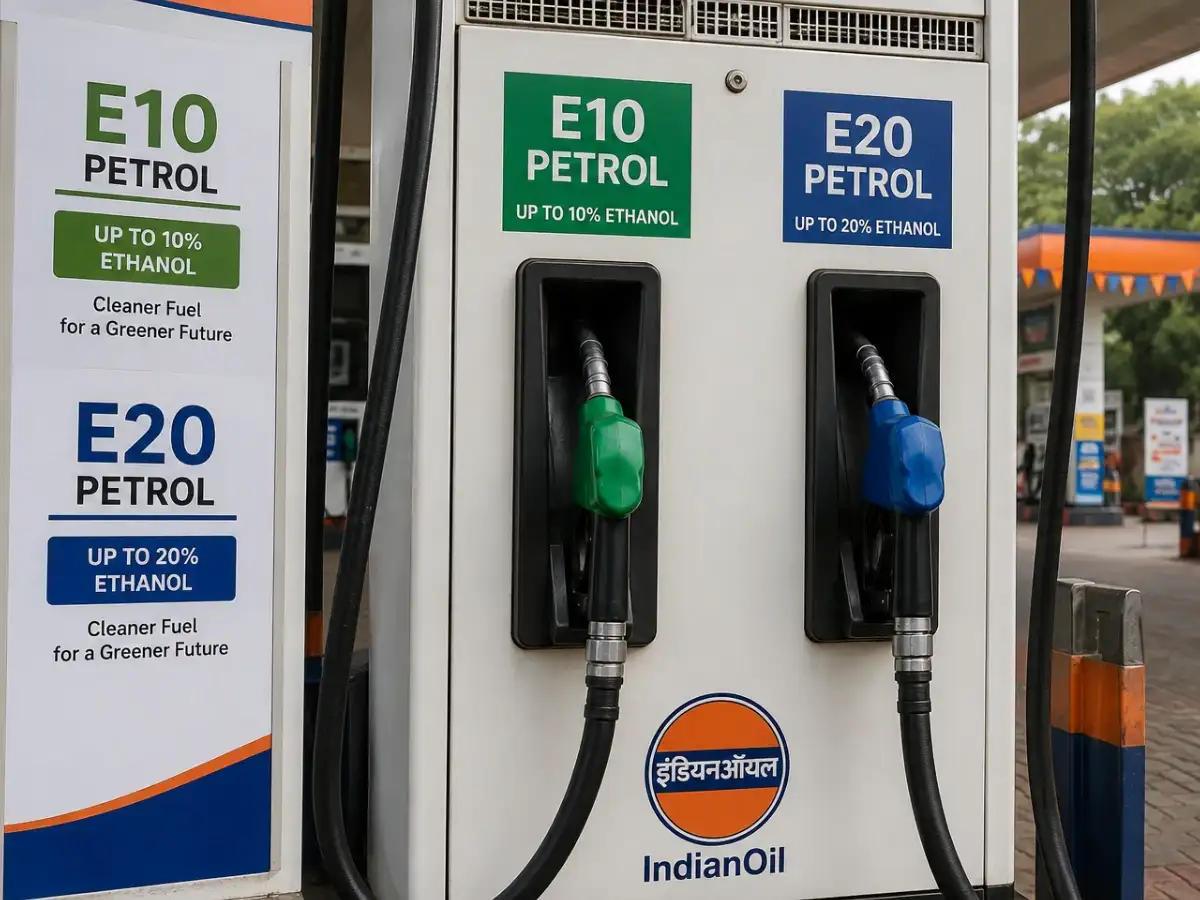
India's transition to E20 petrol has stoked fear and worry among car owners amid news/rumours that a higher ethanol blend might affect engine life, fuel efficiency or maintenance costs.Even as the govt and some voices from the auto industry maintain that the fuel is safe for most vehicles on Indian roads, the row has only intensified and the faultlines have become sharper, with public backlash over the E20 shift showing no signs of abating.The nationwide rollout of E20 petrol was completed in 2025 as part of a broader strategy to reduce India's dependence on imported crude oil, improve energy security and create a larger market for domestically produced ethanol.E20 is now the default petrol available across the country's fuel stations. Consumers have little choice but to try and understand how the fuel differs from the earlier E10 blend and whether older vehicles face any risks.What is E10 Petrol and what is E20 Petrol?The key difference lies in ethanol concentration. E10 contains up to 10% ethanol blended with petrol, while E20 doubles that proportion to 20%.Ethanol is a renewable biofuel produced largely from sugarcane and grain feedstock in India. By increasing blending levels, the government aims to curb fossil fuel consumption while supporting the farm economy.For car owners though, at least for now, the policy angle holds no importance. The primary concern for them is compatibility, or the lack of it -- whether or not will the new fuel impact their vehicle.E10 vs E20: Key DifferencesRecent testing by the Automotive Research Association of India (ARAI) suggests the answer depends largely on the vehicle's age and engine configuration rather than on a simple yes-or-no assessment.Bikes vs cars: ARAI's study found no major durability concerns for two-wheelers operating on E20 fuel after extensive testing.
Four-wheelers, however, showed a more nuanced picture.Turbo vs naturally aspirated: In the tests, naturally aspirated petrol engines generally performed satisfactorily, while certain turbocharged engines showed signs of increased deposit formation under prolonged E20 usage.132278785Older cars, more risk? ARAI observed that older vehicles originally designed for E10 fuel could experience accelerated ageing of some rubber components in the fuel system after extended use.Will E20 affect cars quickly, or over long-term? These observations do not imply that vehicles will immediately suffer engine failure after switching to E20. Instead, they point to long-term wear that may become relevant in vehicles not originally engineered for higher ethanol concentrations.Automobile manufacturers have nevertheless continued to reassure customers that the transition has been backed by years of validation. Industry executives have maintained that vehicles sold in recent years were tested extensively before E20 became the national standard and that no evidence has emerged of widespread engine damage attributable solely to the fuel.How E20 might affect mileage of your carFuel efficiency is one area where a lot of speculations is going on.Ethanol contains less energy per litre than petrol. As a result, vehicles running on E20 are expected to deliver slightly lower mileage than those operating on E10.Read also | How E20 petrol might affect engines, according to ARAI reportIndustry assessments, cited by various ET reports, indicate the reduction is likely to be generally modest rather than dramatic, although actual mileage varies depending on traffic conditions, driving habits, vehicle maintenance and engine design/type.Is your car from pre-E20 times?
 The BriefWire