In a remote corner of Italy, men reach 100 almost as often as women. Scientists say the reason is not as simple as diet or exercise
Why men in remote Italy reach 100 almost as often as women The numbers that made Sardinia famous Is the secret really purpose instead of
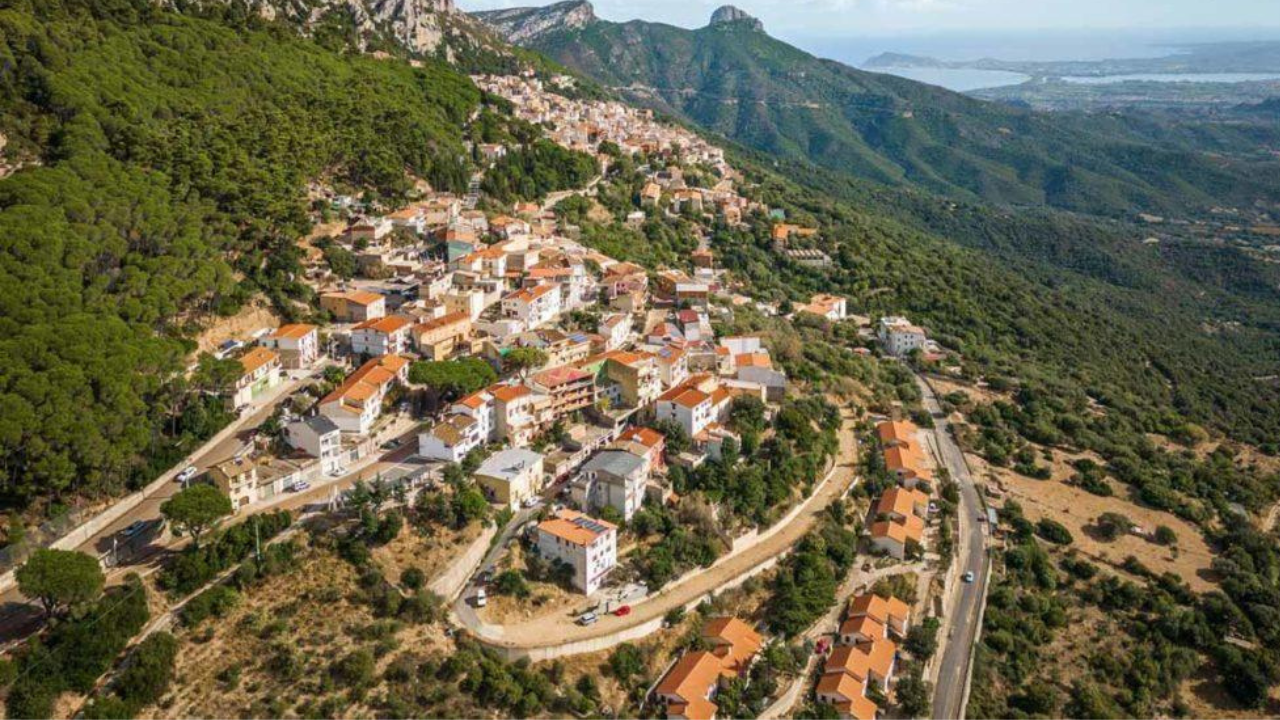
Why men in remote Italy reach 100 almost as often as women The numbers that made Sardinia famous Is the secret really purpose instead of diet? Lifelong physical activity appears to be one of the biggest factors Genetics and geography also matter The traditional Sardinian lifestyle Does having a purpose really help people live longer? Not everyone agrees with the Blue Zone story The search for the secret continues In the rugged mountain villages of central-eastern Sardinia, growing old is almost a way of life. What has fascinated scientists for decades, however, is not simply the number of people reaching 100, but the fact that men do so almost as often as women. In most developed countries, women vastly outnumber men among centenarians, yet Sardinia's mountainous interior defies that pattern. The discovery transformed the island into one of the world's original "Blue Zones" and inspired years of scientific research. Although many people credit the phenomenon to healthy eating or having a strong sense of purpose, researchers say the real explanation lies in a much broader combination of biology, lifestyle, environment and culture.The villages scattered across the mountains of Nuoro and Ogliastra in central-eastern Sardinia have one of the world's most unusual longevity patterns. While women generally live longer than men almost everywhere else, the gap nearly disappears in this part of Italy.The phenomenon was first documented in the AKEA Study, published in Experimental Gerontology in 2004 by physician Gianni Pes, Belgian demographer Michel Poulain and colleagues.After examining records from all 377 municipalities across Sardinia, researchers found that exceptional longevity clustered in the mountainous interior rather than being evenly distributed across the island.Inside this cluster, approximately 91 people born between 1880 and 1900 reached the age of 100, around three times more than expected based on the Sardinian average.
It was this remarkable concentration of centenarians that prompted researchers to mark the region in blue ink on a map, giving rise to the now-famous term "Blue Zone."Sardinia's reputation is built on more than anecdotal stories.Across much of Europe and North America, women outnumber male centenarians by roughly five to one. In Sardinia's Blue Zone, however, men and women reach 100 at nearly the same rate, making it one of the few documented regions where male longevity closely matches female longevity.Researchers also found that Sardinia as a whole had around 16.6 centenarians per 100,000 people, compared with approximately 10 per 100,000 across Europe at the time of the study. While those figures have changed over time, they highlighted just how unusual the island's demographics were.Importantly, this does not mean Sardinian men are five times more likely to reach 100 than men elsewhere. Rather, it means the usual gender gap among centenarians is dramatically smaller.One of the most widely shared explanations is that older Sardinians never "retire into irrelevance." Many continue farming, tending sheep, helping raise grandchildren, repairing homes or participating in village life well into their 80s and 90s. Their social role rarely disappears with age.The idea became globally popular through journalist Dan Buettner, whose Blue Zones books and documentaries highlighted communities where people remain physically active and socially connected throughout life.However, the original Sardinian researchers were far more cautious. Their studies did not conclude that purpose alone explained exceptional longevity. Instead, they argued that no single factor could account for the pattern.Many of Sardinia's oldest men spent decades working as shepherds, often walking several kilometres each day across steep mountain terrain.Unlike modern exercise routines, this activity was continuous and built into everyday life. Researchers believe decades of moderate physical exertion helped maintain cardiovascular health, muscle strength and metabolic fitness well into old age.A 2022 study published in Frontiers in Aging again pointed to occupational activity and physically demanding lifestyles as major contributors, particularly among men living in Sardinia's mountainous interior.Scientists say this may explain why the island's male longevity differs so markedly from that seen elsewhere.Lifestyle alone does not appear to explain Sardinia's remarkable longevity.The mountainous communities remained relatively isolated for centuries, allowing certain genetic traits to become more common within local populations.
 The BriefWire