The One Mineral India Needs For Its Nuclear Dream? PM Modi Just Got It From Australia
The One Mineral India Needs For Its Nuclear Dream? PM Modi Just Got It From Australia Published By, Last Updated: July 09, 2026, 14:13 IST
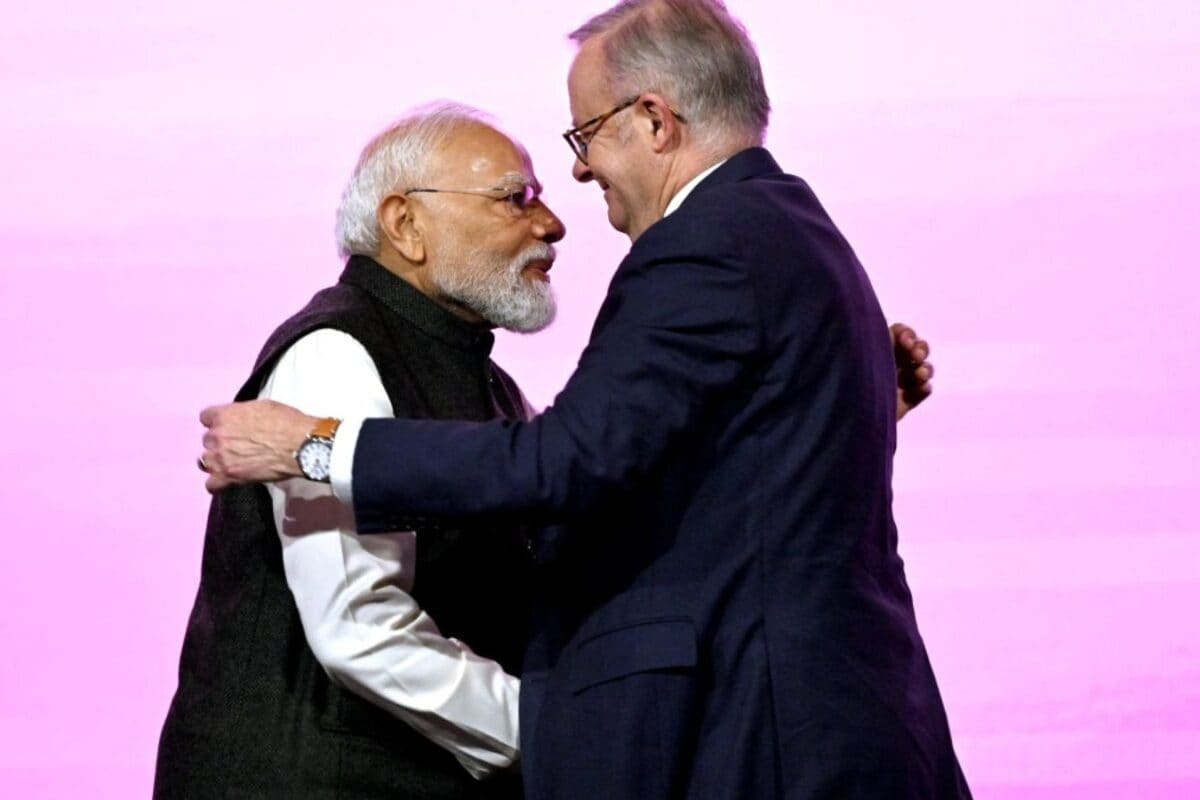
The One Mineral India Needs For Its Nuclear Dream? PM Modi Just Got It From Australia Published By, Last Updated: July 09, 2026, 14:13 IST Australia possesses nearly 28 per cent of the world’s known uranium reserves, making it the single-largest holder of the mineral globally Rapid Read Prime Minister Narendra Modi embraces Australia’s Prime Minister Anthony Albanese in Melbourne. (AFP) Prime Minister Narendra Modi’s visit to Australia produced one of the most consequential agreements in the India-Australia relationship: a long-awaited pact that will pave the way for Australia to supply uranium for India’s civilian nuclear programme. Calling it an “important agreement", PM Modi said Australian uranium would give India’s clean energy goals “fresh momentum", while Australian Prime Minister Anthony Albanese said the arrangement would help India expand its non-fossil fuel power capacity. The uranium exports will be governed by safeguards of the International Atomic Energy Agency (IAEA) and will be used exclusively for peaceful purposes. At first glance, the agreement may appear to be another energy deal. In reality, it could play a critical role in India’s ambitious plan to dramatically expand nuclear power over the next two decades. Why Does India Need More Uranium? India is the world’s fastest-growing major economy and one of its biggest consumers of electricity. Power demand is expected to rise sharply as manufacturing expands, electric vehicles become more common, artificial intelligence-driven data centres proliferate and living standards improve. Today, coal still accounts for nearly three-fourths of India’s electricity generation. To meet its climate commitments while ensuring uninterrupted power supply, India wants to diversify its energy mix and nuclear power is a key pillar of that strategy.
The government has announced an ambitious target of expanding nuclear power generation capacity from around 8 GW today to 100 GW by 2047, making it one of the largest nuclear expansion programmes in the world. That would require dozens of new reactors and, crucially, a reliable supply of uranium. Securing long-term uranium imports was a major objective of the prime minister’s Australia visit. Why Is Australia So Important? Australia possesses nearly 28 per cent of the world’s known uranium reserves, making it the single-largest holder of the mineral globally. For years, however, Australian uranium could not reach India because Canberra had long maintained a policy of exporting uranium only to countries that had signed the Nuclear Non-Proliferation Treaty (NPT). India, which never joined the NPT, remained excluded despite its growing energy needs. That changed after the India-US civil nuclear agreement and subsequent Nuclear Suppliers Group waiver in 2008, which opened the door for civilian nuclear trade. India and Australia signed a civil nuclear cooperation agreement in 2014-15, but commercial exports have remained limited. The latest arrangement is expected to operationalise long-term uranium supplies. How Does Uranium Help India? Uranium is the fuel that powers nuclear reactors. Without a steady supply, even newly built reactors cannot generate electricity. India has uranium deposits in states such as Jharkhand, Andhra Pradesh, Telangana and Rajasthan, but domestic production has historically lagged demand. As a result, India has relied on imports from countries including Kazakhstan, Canada, Russia, Uzbekistan and Namibia. Adding Australia, a politically stable democracy with abundant reserves, diversifies India’s fuel basket and reduces dependence on a smaller group of suppliers.
 The BriefWire