Maharashtra Doctor Assault Row: How Widespread Is Violence Against Medics In India?
Maharashtra Doctor Assault Row: How Widespread Is Violence Against Medics In India? Written By, Last Updated: July 09, 2026, 14:18 IST As the Thane assault
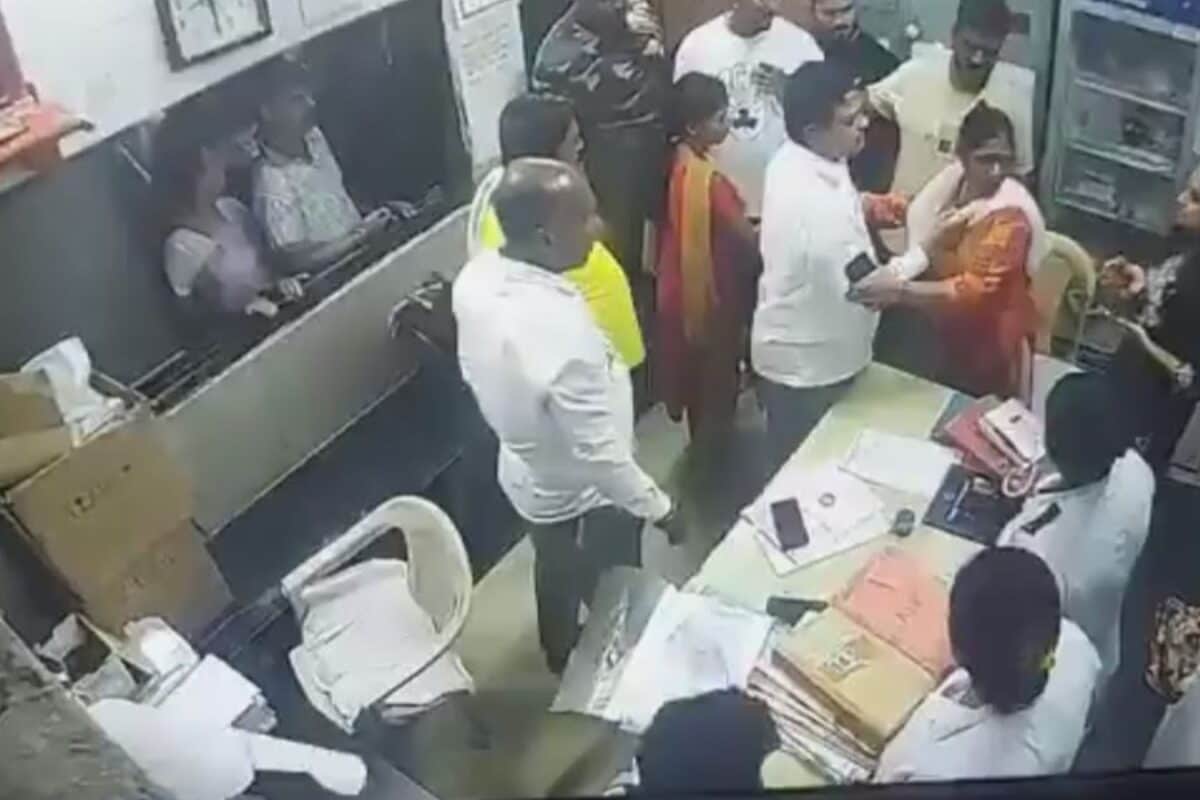
Maharashtra Doctor Assault Row: How Widespread Is Violence Against Medics In India? Written By, Last Updated: July 09, 2026, 14:18 IST As the Thane assault sparks outrage, a nationwide survey shows violence against doctors is far from an isolated phenomenon. Rapid Read Ramesh Mhatre, a Shiv Sena corporator accused of assaulting doctors and hospital staff at the Kalyan Dombivli Municipal Corporation's (KDMC) Shastri Nagar Hospital. The assault on doctors and medical staff at a civic-run hospital in Maharashtra’s Thane district has once again pushed the issue of violence against healthcare workers into the national spotlight. Shiv Sena (Eknath Shinde faction) corporator Ramesh Mhatre was arrested after a CCTV video allegedly showed him and his supporters assaulting doctors and hospital staff at the KDMC-run Shastri Nagar Hospital in Dombivli. The incident reportedly took place after doctors advised the family of a pregnant woman to shift her to another hospital because of complications and the non-availability of Neonatal Intensive Care Unit (NICU) beds. The attack triggered outrage among doctors, with routine services at the hospital disrupted before the accused was arrested. Doctors Vaibhav Salunkhe and Shrusti Baviskar alleged that Mhatre verbally abused and assaulted them without first understanding the medical reasons behind the referral. Two nurses, Namita Ubale and Dravya Giri, were also allegedly assaulted when they intervened to protect the doctors during the altercation. The political row deepened after Shiv Sena MLA Sanjay Gaikwad on Wednesday appeared to defend the corporator, saying the act was wrong but could have happened “unintentionally" in anger. Speaking to the media, Sanjay Gaikwad said, “Anger arises when doctors have been negligent, haven’t provided treatment, when a patient is suffering in some way. In anger, some people raise their hands, some file complaints." “What he did is wrong, but perhaps in anger it happened unintentionally. Maharashtra’s hospitals are in bad shape; the attitude toward patients is not right," Gaikwad added further.
Kalyan MP and deputy CM Eknath Shinde’s son, Dr Shrikant Shinde, later condemned the assault and said strict action would be taken against those responsible. “The assault on doctors and medical staff at Shastri Nagar Hospital is highly condemnable. As a doctor myself, I know that treating patients is not merely a profession but a service to humanity. Doctors, nurses and other healthcare workers work tirelessly under extremely stressful conditions for the welfare of the public," he said. The case has acquired wider significance because it comes after the Supreme Court, while hearing the RG Kar rape-murder matter, had treated the safety of doctors as a national concern. In August 2024, the court constituted a Task Force to recommend measures for workplace safety of medical professionals, including better security, CCTV coverage, adequate lighting, separate rest areas and periodic safety audits. But the Dombivli assault shows that the problem is not limited to one hospital or one state. It is part of a wider pattern of violence, intimidation and distrust faced by doctors across India. What The Numbers Say A 2026 study published in the Medical Journal of India, titled Impact of violence against medical professionals: An online survey of medical practitioners in India, surveyed 439 doctors across the country. It found that 80.2 per cent of respondents had either faced or witnessed workplace violence. Verbal abuse was the most common form of violence, reported in 92.3 per cent of such cases. Physical violence was reported by 45.6 per cent, while 1.4 per cent mentioned sexual violence. Emergency departments emerged as the most common site of such incidents, with 53.4 per cent of respondents saying the violence occurred there. In 92 per cent of cases, the perpetrators were relatives or attendants accompanying the patient. The survey also found that violence was often not a one-off experience. Nearly half of the respondents who had faced or witnessed workplace violence had experienced it more than once, while 11.6 per cent said they had seen or faced more than 10 such incidents.
 The BriefWire