Peace on paper, missiles in the sky: Why the US and Iran are clashing again
Three weeks ago, the United States and Iran announced what was supposed to be a diplomatic breakthrough. This week, they were back to trading military
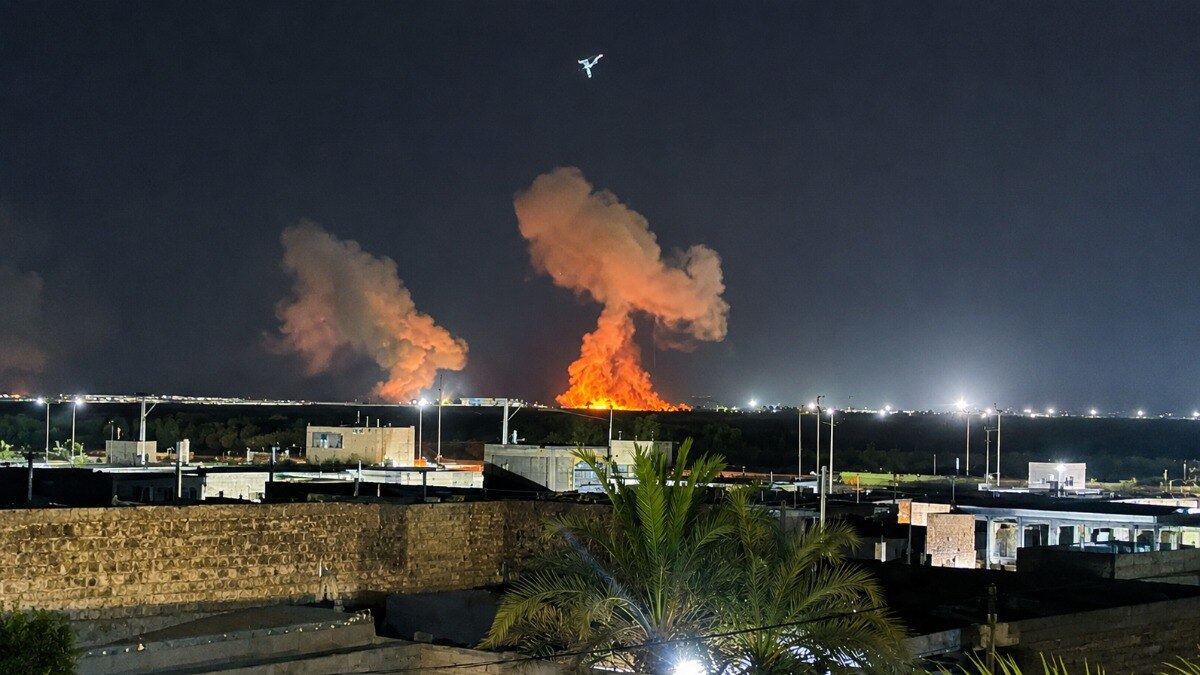
Three weeks ago, the United States and Iran announced what was supposed to be a diplomatic breakthrough. This week, they were back to trading military strikes. US forces launched a fresh wave of attacks on Iranian targets after Washington blamed Tehran for attacks on commercial vessels in the Strait of Hormuz. Iran responded with missile and drone attacks on US military facilities in Bahrain and Kuwait, while President Donald Trump declared the June 17 agreement "over" and warned that future strikes could be "much, much worse". Read Full Story The rapid collapse of what had been presented as a pathway towards de-escalation has rattled oil markets, renewed fears about the security of one of the world's most important shipping routes and raised fresh questions about whether the Middle East is heading towards another prolonged conflict. Brent crude has climbed back towards the $80-a-barrel mark as traders assess the risk of further disruption in the Gulf. The obvious question on everyone's mind is: What happened? How did an agreement that was supposed to stop the fighting unravel in less than a month? A DEAL BUILT ON UNRESOLVED DISPUTES The first thing to understand is that the June 17 agreement was never a peace treaty. The memorandum of understanding signed by Washington and Tehran was designed to halt immediate hostilities, reopen the Strait of Hormuz, ease some sanctions and create a 60-day window for negotiations on much bigger issues, including Iran's nuclear programme, regional security and the future of US-Iran relations. In essence, the temporary deal bought time, but it did not eliminate the reasons the two countries were fighting in the first place. For a brief period, however, it appeared to be working. Shipping traffic resumed, oil markets stabilised and both sides publicly talked about diplomacy. ONE DEAL, TWO VERY DIFFERENT EXPECTATIONS One reason the agreement unravelled so quickly is that the two sides appear to have viewed it very differently. The Trump administration saw the arrangement primarily as a mechanism for restoring stability. The immediate objective was to stop attacks on commercial shipping, reduce tensions in the Gulf and prevent a wider regional conflict.
Iran, meanwhile, viewed the agreement as the start of a broader diplomatic process that could eventually lead to sanctions relief, stronger oil exports and negotiations on its long-term role in the region. What looked like a shared understanding was anything but. Washington believed it had secured calm. Tehran believed it had secured leverage for future negotiations. The problem was that Washington and Tehran were never fully aligned on what the deal actually meant. THE HORMUZ FLASHPOINT The June agreement was supposed to reduce tensions in the Strait of Hormuz, one of the world's busiest and most important shipping routes. Instead, the critical waterway has again become the centre of the crisis. Several commercial vessels came under attack while passing through Hormuz, raising fresh concerns about maritime security and global oil supplies. Washington blamed Iran for the attacks and argued that they undermined the agreement signed just weeks earlier. Tehran denied responsibility and accused the United States of using the incidents as a justification for renewed military pressure. But the damage had already been done. One of the main reasons the two sides agreed to pause hostilities was to make shipping through Hormuz safer. When commercial vessels started coming under attack again, questions quickly emerged about whether the agreement was working at all. For the Trump administration, the attacks raised serious doubts about the agreement. If commercial shipping was still under threat, officials argued, then the deal was failing to deliver on one of its most important promises. FRAGILE DIPLOMACY The Trump administration responded by revoking key concessions linked to the agreement and authorising a new round of military action. US Central Command said it struck more than 90 targets across Iran, including air defence systems, command networks, coastal radar installations and anti-ship missile capabilities. The Pentagon said the objective was to impose "heavy costs" on Iran for targeting commercial shipping. Iran retaliated by launching missile and drone attacks on US military facilities in Bahrain and Kuwait, further escalating tensions across the Gulf. Air defence systems were activated and regional governments urged caution as fears of a wider confrontation grew.
 The BriefWire