Can Your Spouse Legally Access Your Call Records, Hotel Receipts In A Divorce Case? What SC Says
Can Your Spouse Legally Access Your Call Records, Hotel Receipts In A Divorce Case? What SC Says Written By, Last Updated: July 09, 2026, 13:30
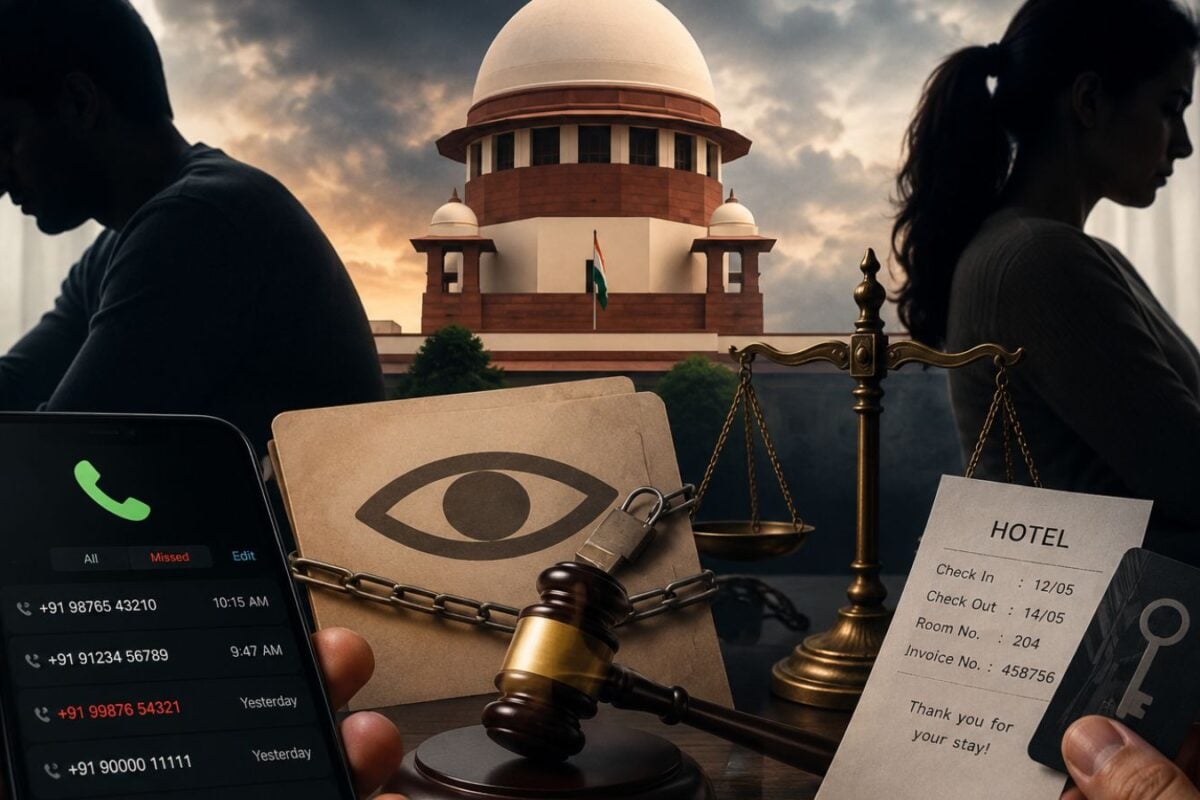
Can Your Spouse Legally Access Your Call Records, Hotel Receipts In A Divorce Case? What SC Says Written By, Last Updated: July 09, 2026, 13:30 IST The ruling could have wider implications for digital evidence, but it does not automatically make every private communication admissible Rapid Read Indian courts have previously considered various forms of electronic evidence in matrimonial disputes, including WhatsApp messages and emails. (AI-Generated Image) Can your spouse legally access your call records or hotel booking details during a divorce case? The Supreme Court has answered that question with an important caveat. Ruling that the right to privacy is not absolute, the court said judges can allow the disclosure of call detail records (CDRs), hotel records and other relevant documents if they are necessary to decide matrimonial disputes, including allegations of adultery. However, the judgment does not open the floodgates for spouses to access each other’s personal data; such disclosure can happen only under a court’s directions after balancing privacy against the need for a fair trial. So, what exactly can your spouse access and where does the law draw the line? Can They Simply Ask Your Mobile Company For Your Call Records? No. Telecom operators cannot hand over your Call Detail Records (CDRs) to a spouse merely because they ask for them. Under the telecom licensing framework and privacy protections, CDRs are confidential records. They are generally shared only with law enforcement agencies following due process and courts when they consider the records necessary for deciding a case. The latest Supreme Court judgment reinforces that disclosure can happen only through judicial scrutiny and not through private requests.
What Exactly Are Call Detail Records? A CDR is not a recording of your phone conversations. Typically, it contains numbers dialled and received, date and time of calls, duration, cell tower/location data linked to the call, and SMS metadata. It does not include the actual content of conversations. Can Hotel Records Also Be Summoned? Yes, but again, only through court orders. If hotel booking records are directly relevant to allegations made in matrimonial proceedings, courts may direct hotels to produce check-in and check-out details, guest registers, booking information, and payment records, where relevant. The Supreme Court observed that such evidence may be necessary when a party is trying to establish allegations like adultery or cruelty. What Did The Supreme Court Actually Say? The court made an important distinction. It said privacy is a fundamental right, recognised in the 2017 Puttaswamy judgment. However, privacy is not absolute. Courts have to balance one spouse’s privacy against the other spouse’s right to effectively prove their case. The bench observed that excluding relevant evidence merely because it concerns private information could undermine the administration of justice in matrimonial disputes. Does This Mean Privacy Has Become Weaker? Not really. The judgment does not create a blanket rule allowing spouses to routinely access each other’s personal records. Instead, courts are expected to ask—Is the information relevant? Is it necessary for deciding the dispute? Is there a less intrusive way of proving the allegation? Would refusing disclosure make a fair trial impossible? In other words, disclosure must satisfy the tests of necessity and proportionality.
 The BriefWire