Is the Strait of Hormuz still Iran's trump card?
Iran's latest attacks show it can easily disrupt shipping, energy markets and draw in Gulf neighbors. DW asks how much leverage Tehran really has over
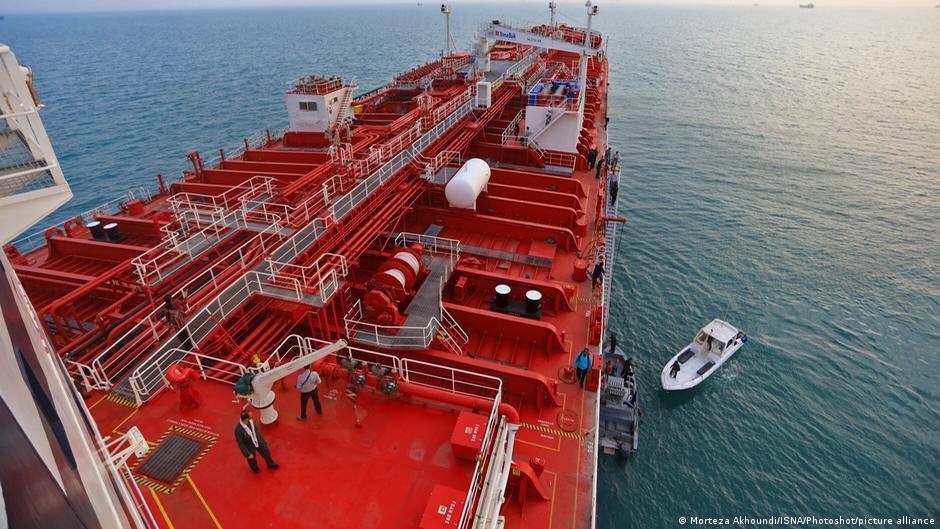
Iran's latest attacks show it can easily disrupt shipping, energy markets and draw in Gulf neighbors. DW asks how much leverage Tehran really has over Washington and if its high-risk strategy could backfire. Has the fragile US-Iran ceasefire collapsed? The Iran war has reignited after Tehran struck at least three commercial vessels in the Strait of Hormuz on Tuesday, according to US and maritime officials. The attacks, which targeted a Saudi oil tanker and a Qatari liquefied natural gas (LNG) carrier, prompted the United States to revoke the temporary sanctions waiver on Iranian oil exports. This major concession in the memorandum of understanding (MOU) agreed by the US and Iran last month allowed Tehran to restart oil exports after its tankers were halted by a US Navy blockade. In further retaliation, US Central Command (CENTCOM) said Wednesday it had struck more than 80 targets in Iran, including air defense systems, radars and over 60 small boats used by Iran's Islamic Revolutionary Guard Corps (IRGC) to harass shipping. The US military said it followed up Thursday with a fresh round of strikes on around 90 targets. CENTCOM said it wanted to "impose heavy costs for targeting and attacking commercial shipping crewed by innocent civilians in an international waterway." Iran then hit back by launching fresh missile strikes on Gulf nations on Wednesday, with air raid sirens and explosions reported in Bahrain and Kuwait. Further strikes were reported Thursday. Traffic through the strait, which had restarted after the ceasefire deal, had again grinded to a halt, Bloomberg reported on Thursday, citing shipping tracking data.
Reacting to the escalation, maritime security firm MARISKS warned Wednesday that the tit-for-tat action "marks a return to direct military confrontation." Speaking ahead of a NATO summit in Turkey, US President Donald Trump said the MOU with Iran was now "over," adding that "It’s just a waste of time dealing with them [Tehran]." China and Qatar, meanwhile, called for an immediate de-escalation, while German Defense Minister Boris Pistorius called on Tehran to stop provoking Washington and cease attacks on vessels. Trump ramped up the anti-Iran rhetoric ahead of the NATO summit in Turkey Image: Filip Singer/REUTERS Why is Iran again targeting ships in Hormuz? Iran is trying to maintain its control over Hormuz, the narrow waterway that before the war carried a fifth of the world's oil and gas exports from the Gulf to the rest of the world. Iran effectively closed the strait after US-Israeli airstrikes killed several Iranian officials, including Supreme Leader Ali Khamenei, on February 28. Later, Iran struck around a dozen ships caught in the strait, before a fragile ceasefire deal was reached last month. In the days leading up to Tuesday’s attacks, peace talks had made little progress on the many outstanding issues, including long-term US sanctions relief and Iran's nuclear ambitions. Iran has repeatedly used Hormuz as leverage in negotiations when diplomatic progress is stalled, as well as strikes on Gulf nations like Saudi Arabia, the United Arab Emirates and Qatar. Attacking these major oil-producing nations and key allies of the US is seen by Tehran as a way to pressure Washington and spread instability so the Middle East region feels the cost of the war.
 The BriefWire