Gurugram's Great Gridlock: The Economic Powerhouse That Grinds To A Halt Every Time It Rains
Gurugram's Great Gridlock: The Economic Powerhouse That Grinds To A Halt Every Time It Rains Published By, Last Updated: July 09, 2026, 13:29 IST As
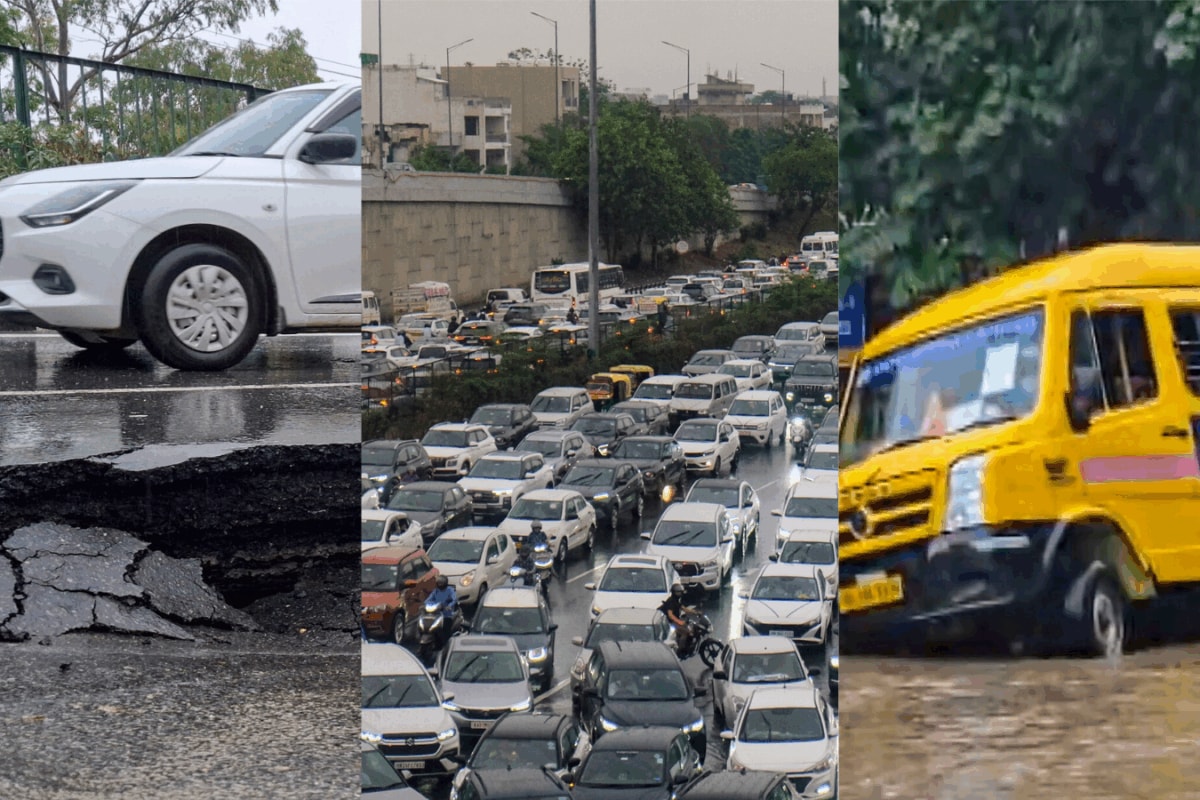
Gurugram's Great Gridlock: The Economic Powerhouse That Grinds To A Halt Every Time It Rains Published By, Last Updated: July 09, 2026, 13:29 IST As much as the city was waiting for the first proper rain of the season, Gurugram just wasn't ready to handle the aftermath. Rapid Read The downpour on July 7 and the intermittent rain that followed on July 8 affected several major stretches, including Hero Honda Chowk, Rajiv Chowk, Sohna Road, Golf Course Extension Road and areas around Subhash Chowk. (Image: PTI) When it rained for a couple of hours on July 7, it was raining across NCR. While I reached from Noida to Gurugram in about 1 hour and 30 minutes, it took me another 2.5 hours within Gurugram to reach my destination in the same city. Gurugrammers have to deal with this every single monsoon, every rainy day. As much as the city was waiting for the first proper rain of the season, it just wasn’t ready to handle the aftermath. Within hours, familiar scenes unfolded across the Millennium City. Roads disappeared under sheets of water, vehicles crawled bumper-to-bumper, commuters remained stranded for hours, and social media was flooded with videos of submerged streets. Then came an even bigger shock, a section of the service road along NH-48 near Narsinghpur caved in, forcing authorities to divert traffic and worsening congestion across the city. What should have been a welcome spell of monsoon rain once again turned into a reminder that Gurugram’s infrastructure continues to struggle with a problem it has faced for years. The downpour on July 7 and the intermittent rain that followed on July 8 affected several major stretches, including Hero Honda Chowk, Rajiv Chowk, Sohna Road, Golf Course Extension Road and areas around Subhash Chowk. Waterlogging slowed traffic across the city, while the cave-in near Narsinghpur triggered massive jams on NH-48, one of the busiest highways connecting Delhi with Gurugram and Jaipur. Office-goers spent hours on roads that had become virtual parking lots, with many reporting commute times stretching to three or four hours.
Read More: Gurgaon’s Monsoon Nightmare Continues: 10-Hour Gridlock, 500 SOS Calls In 2 Hours Between 6 pm and 8 pm on July 8, traffic police helplines received nearly 500 distress calls, while rescue teams worked through the night to restore traffic movement. For residents, however, there was little surprise. The city has seen this story play out almost every monsoon. The Same Story, Year After Year In July 2025, the city saw 133 mm rain overnight, resulting in five deaths and a gridlock across. Traffic came to a standstill on NH-48, Hero Honda Chowk, Rajiv Chowk, Golf Course Road, Basai Road and Sohna Road. School buses carrying children were stranded for up to five hours. Five people died in rain-related incidents. Three people were electrocuted after coming in contact with live electric poles or wires submerged in water. A 25-year-old graphic designer, Akshat Jain, died after touching a live wire hidden under floodwater near Ghasola Road. An autorickshaw driver drowned after falling into an open sewer concealed beneath waterlogged streets. Another person died in a road accident during the rain. In August 2024, three hours of rain led to hours of traffic across Gurugram. There was knee-deep water on NH-48 near Narsinghpur. Massive jams were reported between Kherki Daula and Rajiv Chowk. Severe waterlogging was seen on Golf Course Extension Road, Basai and Sohna Road. Schoolchildren in colonies along NH-48 reportedly could not reach school because roads became impassable. A City That Powers The Economy But Falters In The Rain The irony is difficult to ignore. Gurugram is among India’s wealthiest cities and one of its biggest economic engines. Home to thousands of multinational companies, Fortune 500 offices, global capability centres, luxury residential projects and a thriving startup ecosystem, the city contributes significantly to Haryana’s economy. Estimates place Gurugram’s economy at around Rs 2 lakh crore annually, while the district contributes roughly 35-40 per cent of Haryana’s GST and excise revenues. Around one-fourth of the state’s GST collections are estimated to originate from Gurugram alone.
 The BriefWire