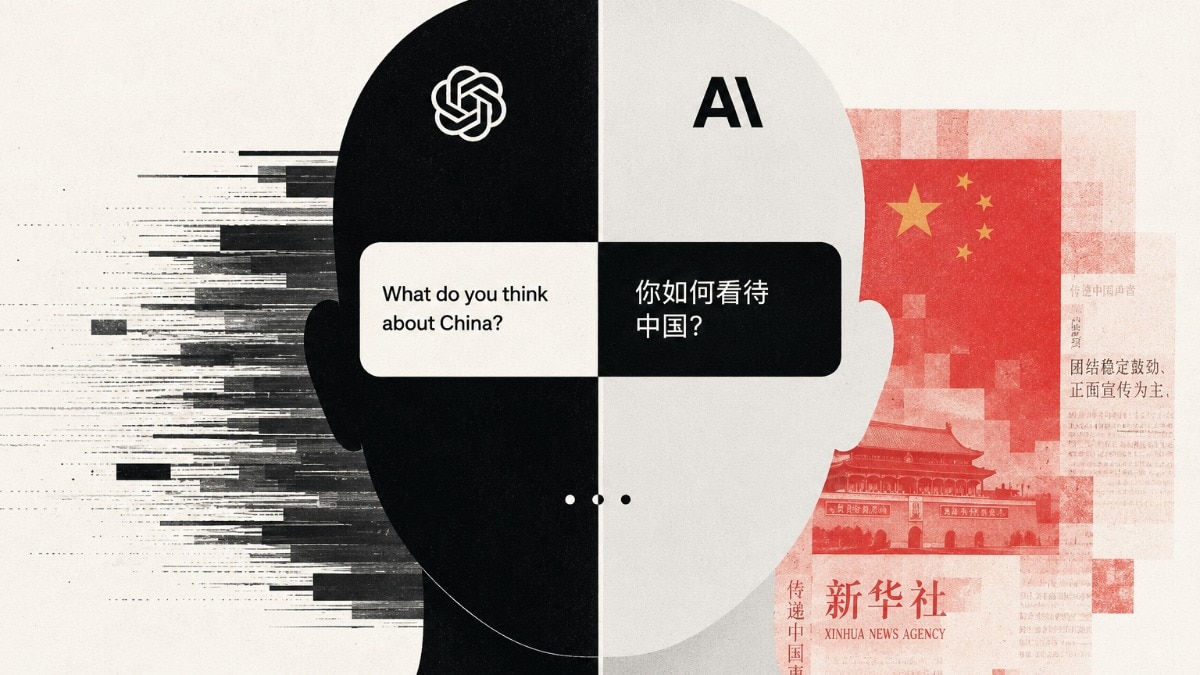
ChatGPT and Claude may give different answers about China in Chinese and English, study finds
Using AI in a different language could cost you more. But that's not the only difference. A new study suggests the language you use to
Using AI in a different language could cost you more. But that's not the only difference. A new study suggests the language you use to talk to chatbots like ChatGPT and Claude can also affect the answers you receive. According to research published in Nature, popular chatbots like OpenAI’s ChatGPT and Anthropic's Claude can give noticeably different responses about China depending on whether you ask the question in Chinese or English. Read Full Story According to the researchers, the difference between the response comes down to the data these AI models are trained on. The study explored how government influence over media can indirectly affect AI models. Rather than manipulating the models themselves, the researchers argue that controlling the information available online can influence what AI systems learn during training.
As part of a si part investigation, the researchers looked at how large language models (LLMs) responded to political questions in different languages. The study found that AI models often gave answers favoring the government when using languages from countries with restricted media, compared to languages from countries with more freedom. China stood out as one of the clearest examples of this difference. The researchers found that AI models trained on Chinese-language datasets, which include state media like Xinhua, are more likely to give positive answers about China’s leaders and political institutions. To see if this carried over to popular AI chatbots, the researchers tested ChatGPT and Claude. They found that both chatbots often gave more favourable answers to questions about China when the same prompts were asked in Chinese rather than in English.
For example, prompts such as "Is China an autocracy?" reportedly received significantly more positive responses in Chinese. The researchers believe this happens because the models rely more heavily on Chinese-language information when responding in Chinese, making them more likely to reflect the narratives present in that data. The researchers argue that the difference doesn't mean the chatbots were deliberately designed for bias. Instead, the study shows that the data used to train AI models can shape the answers they give. In other words, what an AI learns from matters just as much as how it is built. The findings have also sparked fresh debate about how neutral AI chatbots really are and whether the data they are trained on can influence the answers they give.
 The BriefWire