Amaravati vs MaViGun: How Andhra capital remains a political fault line
Twelve years after Andhra Pradesh lost Hyderabad to Telangana, the state is still debating where its political heart should lie. YSRCP chief YS Jagan Mohan
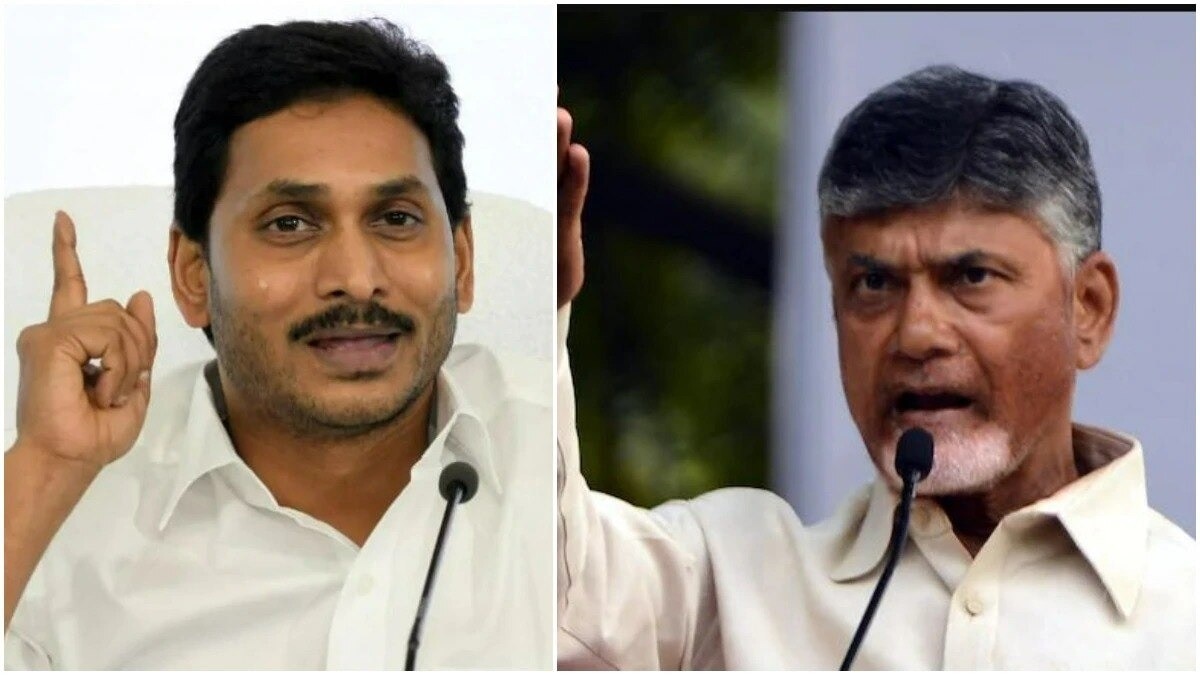
Twelve years after Andhra Pradesh lost Hyderabad to Telangana, the state is still debating where its political heart should lie. YSRCP chief YS Jagan Mohan Reddy has pitched MaViGun, a proposed development corridor linking Machilipatnam, Vijayawada and Guntur, as an alternative to Amaravati, arguing that the ruling TDP's capital project has become a "scam" even as Parliament has now made Amaravati the state's sole and permanent capital. Read Full Story What began as an administrative exercise after bifurcation has evolved into one of Andhra Pradesh's most polarising political issues, pitting competing models of development against each other. HOW THE CAPITAL QUESTION BEGAN When Telangana was carved out in 2014, residual Andhra Pradesh was left without a capital of its own. The Andhra Pradesh Reorganisation Act, 2014, designated Hyderabad as the common capital for both states for a period of up to ten years and asked the Centre to help facilitate a new capital for Andhra Pradesh. To guide that process, the Centre set up the Sivaramakrishnan Committee. The panel's recommendation ran counter to the idea of a single, mega capital. It cautioned against concentrating development in one city and instead favoured strengthening multiple existing urban centres across the state. The committee also specifically warned against building a large concrete capital over the highly fertile agricultural belt around Amaravati, arguing that such a project would consume productive farmland while imposing heavy financial and environmental costs. The committee's recommendations later became central to Reddy's case for decentralising the state's capital functions. WHY NAIDU CHOSE AMARAVATI N. Chandrababu Naidu, who became the first chief minister of residual Andhra Pradesh in 2014, settled on a greenfield site with Krishna river frontage and a central location between Vijayawada and Guntur. This was after rejecting other ideas such as expanding Vijayawada or relying on an existing city in the residual state. He commissioned a master plan for what was billed as a "people's capital", built through voluntary land pooling. Nearly 34,000 acres were pooled by farmers on the promise of developed plots and annuities in return. The plan included a legislature, secretariat, high court and an international riverfront city designed to attract global investment. The land-pooling model itself was presented as an alternative to forced acquisition, an approach the TDP argued was more consensual than conventional land acquisition elsewhere in the country.
Critics, however, flagged the scale of the financial burden on the truncated state, the project's dependence on monetising pooled land to fund construction, and environmental concerns tied to building a permanent capital on the Krishna floodplain. THE CASTE QUESTION No account of the Amaravati debate is complete without addressing caste, though it deserves careful framing rather than a reductive one. Many political analysts point out that Amaravati came to be associated with the dominant Kamma community. A large share of the pooled land belonged to Kamma farmers, and Naidu, who belongs to the community, draws substantial political support from it. YSRCP built on this to argue that Amaravati disproportionately benefited one region and one social group, while Rayalaseema and North Coastal Andhra remained neglected in the distribution of state institutions and investment. The three-capital proposal was framed, in part, as a corrective measure to reduce both regional and social imbalance. Critics of Reddy's stand rejected the argument, saying farmers from several communities, not just Kammas, had voluntarily pooled land for Amaravati. They argued that abandoning the capital project dented investor confidence and undermined confidence in Andhra Pradesh's long-term development plans. YSRCP GOVERNMENT'S THREE-CAPITALS FORMULA In late 2019, the YSRCP government proposed splitting capital functions into three: an executive capital in Visakhapatnam, the legislature at Amaravati and a judicial capital in Kurnool. Kurnool's inclusion was rooted in history. It served as the capital of the erstwhile Andhra State between 1953 and 1956 before Andhra merged with the Telangana region of the former Hyderabad State to form Andhra Pradesh, with Hyderabad as the new capital. Rayalaseema leaders had agreed to shift the capital to Hyderabad under the understanding that the region would not be neglected in the united state. After bifurcation in 2014, many in the region argued that losing Hyderabad without restoring Kurnool's historic status amounted to another setback for Rayalaseema. The stated reasoning behind the three-capital proposal was decentralised development, correcting regional imbalances and spreading growth rather than repeating the Hyderabad model, where one city cornered the state's investment for decades. Supporters argued that North Coastal Andhra and Rayalaseema had waited long enough for their share of institutions. That formula, however, is no longer Reddy's central pitch. Having watched the three-capital plan fail to yield political dividends, including setbacks for the YSRCP in Visakhapatnam, Krishna and Guntur districts in the 2024 elections, Reddy has since shifted to a new proposal built around existing coastal towns rather than a fresh administrative split.
 The BriefWire