Why electric cars cost more to insure - and what's being done about it
It's hot and bright beneath the high intensity lights in a cavernous crash and safety testing laboratory, hidden away in a business park outside Newbury
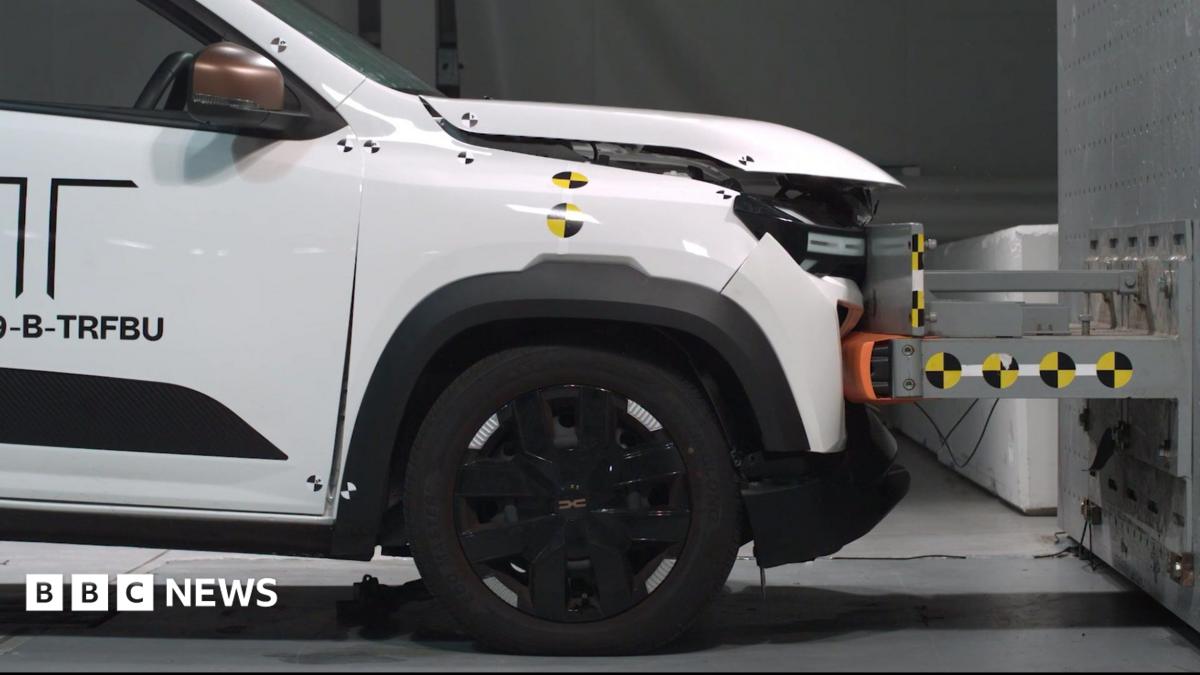
It's hot and bright beneath the high intensity lights in a cavernous crash and safety testing laboratory, hidden away in a business park outside Newbury. A siren blares and a disembodied voice counts down: "Three, two, one". A small white car trundles into view, rolls across the floor, and bumps into a barrier set against the wall. As crash tests go, this one is hardly spectacular. There is no torn metal or flying glass. At just 6mph, it replicates the kind of annoying prang you might well get in a car park or at a traffic light.
But raise the slightly bent bonnet to look underneath, and it's a different story. This is an electric vehicle (EV) – a Dacia Spring – and the hidden damage is significant. As senior test engineer Sean Hoad points out, the high-voltage charging port, mounted at the front of the car is badly broken, as are components it's attached to. "This is all one big unit, meaning we can't just replace the front charge port. We have to replace the charger itself, the inverter, and some of the cabling", he explains.
Repairing all of that, he says, would cost about £4,000, and there is other damage to consider as well, so the chances are an insurer would not bother getting it fixed. "It's more than likely this car would be written off," he adds. Thatcham Research, which works on behalf of the insurance industry, is carrying out tests like this to understand why EVs typically attract higher insurance premiums. On average, it says, EVs cost 30% more to repair than petrol or diesel models, and it takes 14% longer to fix them.
This then feeds through to the insurance price. It can cost 10-25% more to insure an EV than a petrol or diesel car, depending on the make and model. So, why is it so expensive? And what can be done about it?
 The BriefWire