Grim homecoming: Devastation greets Lebanon's war-weary returnees
And while there's less heavy fighting today along the Blue Line that separates Lebanon from Israel, ceasefire violations are still being reported as Hezbollah militants
And while there's less heavy fighting today along the Blue Line that separates Lebanon from Israel, ceasefire violations are still being reported as Hezbollah militants and Israeli troops clash - an escalation that began soon after Israeli-US bombing of Iran began on 28 February. Tweet URL In line with its Security Council mandate, the UN Interim Force in Lebanon (UNIFIL) continues to support efforts to achieve long-term security and stability for the region’s people. “The level of violence has been reduced, but we continue to record a number of violations of Resolution 1701 on a daily basis,” said UNIFIL spokesperson Kandice Ardiel. Read our Resolution 1701 explainer here. “Peacekeepers are working, including through our liaison and coordination mechanisms, to consolidate the stability gains we’ve seen and continue efforts towards security and stability for everyone living along the Blue Line.” The reduction in fighting has enabled many displaced Lebanese families to return to their homes in the south, though significant challenges remain.
In many villages and towns including Majdal Zoun, Kafra and Tyre, heavy shelling has scarred the land, while homes, schools and a health centre lie in ruins… Blue Line holds On the issue of the Israeli military’s “Yellow Line” buffer zone which is located some five to 10 kilometres (3.1 to 6.2 miles) north of the Blue Line, Ms. Ardiel described it as a self-declared military boundary established by the Israel Defense Forces which is not recognized by the United Nations. “For the United Nations and UNIFIL, the Blue Line is the only relevant line,” she said. “Any Israeli presence north of the Blue Line is considered a violation of Resolution 1701.” According to UNIFIL, Israeli forces continue to operate in areas north of the Blue Line, where peacekeepers monitor military activity and continue to urge all parties to preserve recent stability gains. Homes wrecked All along the Blue Line, the situation is extremely challenging for families and especially in southern Lebanon.
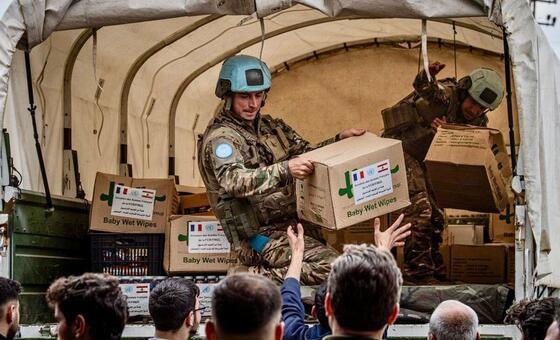
Ardiel noted a recent increase in the number of returnees following multiple waves of displacement in 2023, 2024 and this year. Many families, she said, are returning to a “very different scenario” than the one they left behind. “They are coming back to destroyed villages,” Ms. Ardiel explained. “People are trying to rebuild their lives but are facing enormous challenges, including damaged infrastructure and limited access to water, electricity, hospitals and schools.” Others remain unable to return to their villages located closer to the Blue Line because of ongoing insecurity. Despite these difficulties, UNIFIL continues to support communities wherever possible, organizing blood donations to help Marjayoun Hospital treat trauma victims and or by donating children’s toys and other supplies to the Istanbouli Theatre in Tyre. “We’re here as peacekeepers. We're here to help build and consolidate stability,” Ms. Ardiel stressed. “We liaise and coordinate between the parties to ensure the safe passage of humanitarian actors and municipal authorities carrying out infrastructure repairs.
 The BriefWire