Assassin's Creed: Why pop culture is hooked to pirates
Pirates have captured our imagination for centuries. With "Assassin's Creed Black Flag Resynced," gamers can now head off on another pirate adventure. How has our
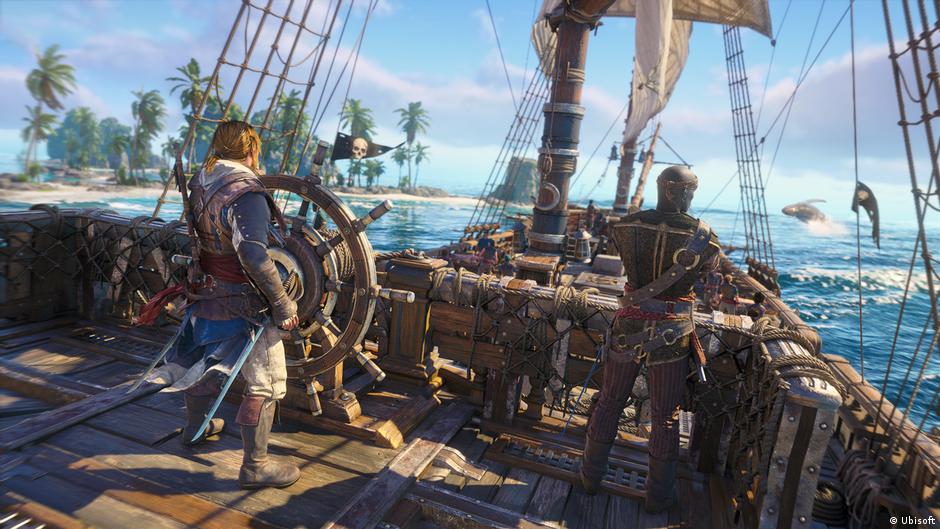
Pirates have captured our imagination for centuries. With "Assassin's Creed Black Flag Resynced," gamers can now head off on another pirate adventure. How has our concept of pirates evolved with pop culture? A bright, almost cloudless sky. Waves lash against the Jackdaw. Her sails snap in the wind. To the horizon, single-masted ships drift across the ocean. To starboard, empty sandy beaches lined with palm trees stretch off into the distance. Standing at the wheel of my very own pirate ship, I listen to my crew as they launch into their next shanty. The salty scent of freedom washes my face — and all this despite the fact that I'm really at home, sitting on my couch. I'm playing "Assassin's Creed Black Flag Resynced." The video game is a fully revamped version of the popular 2013 pirate adventure. With updated graphics and additional missions, it's expected to become a hit with gamers. Pirates, after all, never go out of style, a long-standing staple of popular culture. Writers such as Emilio Salgari (1862–1911) and Rafael Sabatini (1875–1950) produced countless pirate tales that would later inspire Hollywood films, including "Captain Blood" (1935) and "The Black Swan" (1942). Errol Flynn became a global star in the mid-1930s in the title role in the swashbuckling film 'Captain Blood' Image: World History Archive/picture alliance Robert Louis Stevenson's adventure novel "Treasure Island" (1883) has also seen multiple film adaptations. The "Pirates of the Caribbean" theme park attraction at Disneyland inspired game developer Ron Gilbert in creating the "Monkey Island" video game series, first released in 1990. Both the Disney ride and the game went on to influence the "Pirates of the Caribbean" film franchise.
There are several pirate-themed games set for release in 2026 alone, including the city-building title "Corsair Cove" and the action games "Windrose" and "Assassin's Creed Black Flag Resynced." A romanticized image of piracy's 'golden age' While pirates have existed since antiquity, today's popular image largely draws on the so-called Golden Age of Piracy, which began in the late 17th century and lasted only a few decades. During that period, European powers expanded their colonies in the Caribbean and along the West African coast. Merchant ships transported goods from Europe to those regions, bringing colonial products back with them. Pirates would attack those vessels, raid their loot and return to the sea. Most didn't live long; many were captured or killed. The 'Pirates of the Caribbean' transformed the historical pirate into the ultimate pop culture anti-hero Image: United Archives/IMAGO As historian Jann M. Witt sees it, pirates were simply criminals. "The pirates people imagine today have nothing to do with reality. It's a romanticized image," he told DW. At the same time, some scholars have portrayed pirates as early proponents of a more democratic, community-oriented social order. However, Witt said such claims are difficult to support due to limited historical sources. Charles Johnson's "A General History of the Pyrates" (1724) is often cited. Witt considers it more "sensational journalism" than scholarly research. "I know that a lot of the pop culture ideas of piracy are sort of romanticized and that's great," Sean Dagher, a composer and folk musician who has himself spent time on the high seas, told DW. "It's not piracy that people are in love with — it's the pop culture romanticized idea." Unlike in 'Assassin's Creed Black Flag Resynced,' pirates usually avoided warships and targeted lightly armed merchant vessels instead Image: Ubisoft Dagher, who contributed shanties for "Assassin's Creed Black Flag Resynced," said sea shanties served a practical purpose.
 The BriefWire