Cambridge scientists create a living bio-battery that generates electricity around the clock using algae and could replace millions of disposable batteries
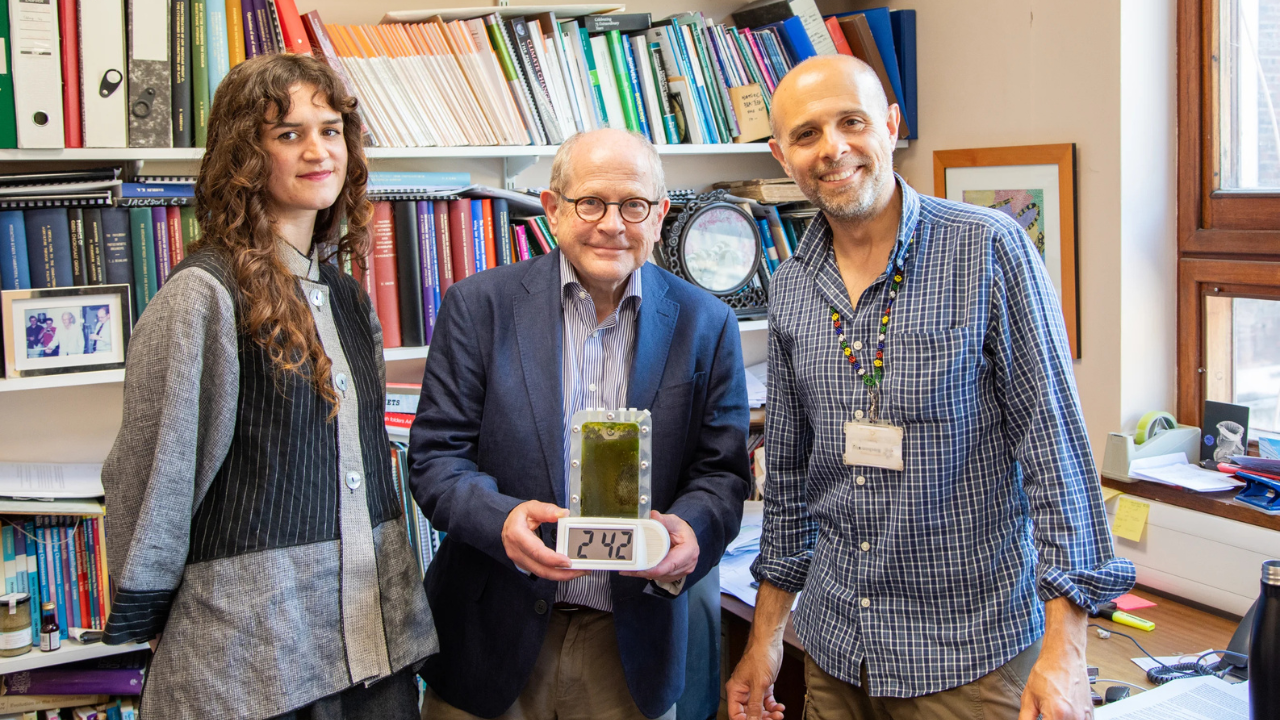
The Cambridge team behind the living algae-powered bio-battery: Lucia Giron, Dr Paolo Bombelli and Professor Chris Howe. How Cambridge scientists turned algae into a living
The Cambridge team behind the living algae-powered bio-battery: Lucia Giron, Dr Paolo Bombelli and Professor Chris Howe. How Cambridge scientists turned algae into a living battery How the living bio-battery works Why the battery keeps producing electricity after sunset Why researchers believe it could replace millions of disposable batteries Why the technology could be much greener than conventional batteries From powering clocks to monitoring crops Why it could transform energy access in remote communities From laboratory research to commercial products Inspiring the next generation of scientists The importance of the breakthrough Researchers at the University of Cambridge have developed a living bio-battery that generates electricity continuously using photosynthetic algae, offering a potential alternative to millions of disposable batteries used in everyday electronics. Unlike conventional batteries that gradually run out of stored energy, the experimental device harnesses the natural flow of electrons produced by living cyanobacteria during photosynthesis and respiration, allowing it to produce a steady electrical current around the clock without harming the organisms. Although the technology currently generates only low levels of power, scientists believe it could one day provide a cleaner, longer-lasting energy source for low-power devices while significantly reducing battery waste.The project is the result of nearly two decades of research led by Dr Paolo Bombelli and Professor Chris Howe in the University of Cambridge's Department of Biochemistry. Work on the technology began in 2006, driven by a simple question: could living organisms continuously generate electricity without being damaged?The answer turned out to be yes."We've found a way to tap into a natural process in algae and use it to generate continuous electricity 24/7 without harming the plant at all," said Dr Bombelli, who leads the scientific research behind the project.Unlike conventional batteries that store a finite amount of energy before running flat, the Cambridge device functions as a biocell, producing electricity continuously as long as the microscopic organisms inside remain alive.The "algae" inside the device are actually photosynthetic cyanobacteria, microscopic aquatic organisms that first appeared billions of years ago and helped transform Earth's atmosphere by producing oxygen through photosynthesis.Like plants, cyanobacteria absorb sunlight, water and carbon dioxide to produce energy for growth.
 The BriefWire