The Australian tree reshaping the world's wildfires
As Europe experiences another summer of extreme heat and wildfire warnings, one tree imported from Australia is coming under renewed scrutiny across the world: eucalyptus
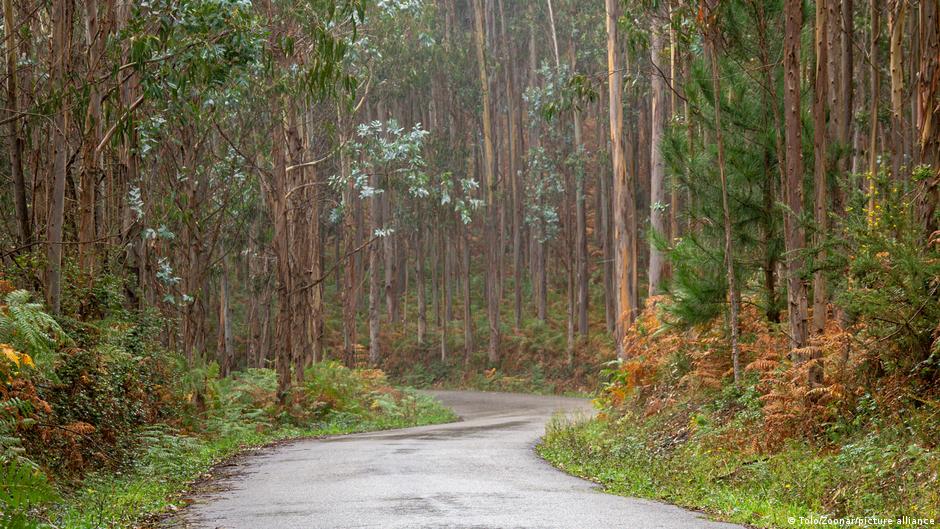
As Europe experiences another summer of extreme heat and wildfire warnings, one tree imported from Australia is coming under renewed scrutiny across the world: eucalyptus. Each year, more than 400,000 hikers descend on Galicia for the Camino de Santiago pilgrim walk, crossing misty hills and dense green woodland. But much of the forest surrounding the route is no longer native. Instead of indigenous oak and chestnut, large parts of northwestern Spain are now dominated by eucalyptus. That transformation is not unique to Galicia. Prized by the pulp and timber industries for its rapid growth and profitability, vast monocultures of the Australian tree have been planted in places such as Brazil, Chile, California, India and South Africa. Globally, eucalyptus plantations now cover 22 million hectares across more than 90 countries, and in many regions, they have become a cornerstone of rural economies. But hiding beneath the seemingly tranquil canopies are landscapes vulnerable to extreme wildfires, because the trees are regarded by scientists as highly flammable. European heatwave raises alarms Europe has already been sweltering this summer, with concerns that the unusually early heatwaves could intensify fire risk. Parts of the southern continent have been hit in recent days. Last year was the worst wildfire year on record, with more than one million hectares burned — much of it on the Iberian Peninsula. Eucalyptus plantations in Galicia have spread much further than was originally intended Image: Unai Huizi/imageBROKER/IMAGO Researchers say that while eucalyptus trees aren't to blame for igniting these infernos, they can significantly intensify fires once they start. "Eucalypt forests are clearly one of the more flammable forests that we have in the world," Tim Curran of Lincoln University in New Zealand told DW. "If you put a eucalypt in a new environment, you're very likely to change what we call fire regimes.
So things like fire intensity, fire frequency; how hot the fire gets and how often you get fires." The trees' leaves contain highly flammable oils, and strips of bark can ignite into burning embers. In extreme conditions, those embers can travel huge distances to start secondary fires, as happened during Australia's devastating 2009 Black Saturday fires. "There was evidence that embers were blown more than 30 kilometres ahead of the fire front to start a new fire," Curran said, adding that it was not a one-off. In Galicia, plantations can easily outgrow their original borders because while native oak and chestnut can take more than 80 years to reach maturity, eucalyptus needs just 15. As a result, they bounce back quickly when fires decimate landscapes, giving them a competitive advantage over native species. That creates a self-reinforcing cycle that ultimately allows monocultures to expand further, increasing wildfire risk. Eucalyptus divides opinions The plantations in Galicia date back to the 1970s but really took off two decades later. In 1992, the regional government released a forestry plan projecting eucalyptus would reach 250,000 hectares by 2030. It took them 30 years to update that plan, during which time eucalyptus ran rampant. "It's now around half a million hectares, which is a massive amount of land," local community leader Joam Evans Pim said. Though the regional government has since introduced a moratorium on new eucalyptus plantations, campaigners say enforcement remains uneven, and illegal planting persists. How this invasive tree made wildfires worse To view this video please enable JavaScript, and consider upgrading to a web browser that supports HTML5 video On the one hand, there is money in eucalyptus — the Galician plantations, which predominantly feed the pulp and timber industries, generated €167 million in 2024 alone.
 The BriefWire