Why Kerala called Wayanad landslide man-made, not natural disaster
The scenic tourist hub of Wayanad is no stranger to natural disasters. The mountainous Kerala district has witnessed four major landslides over the past two
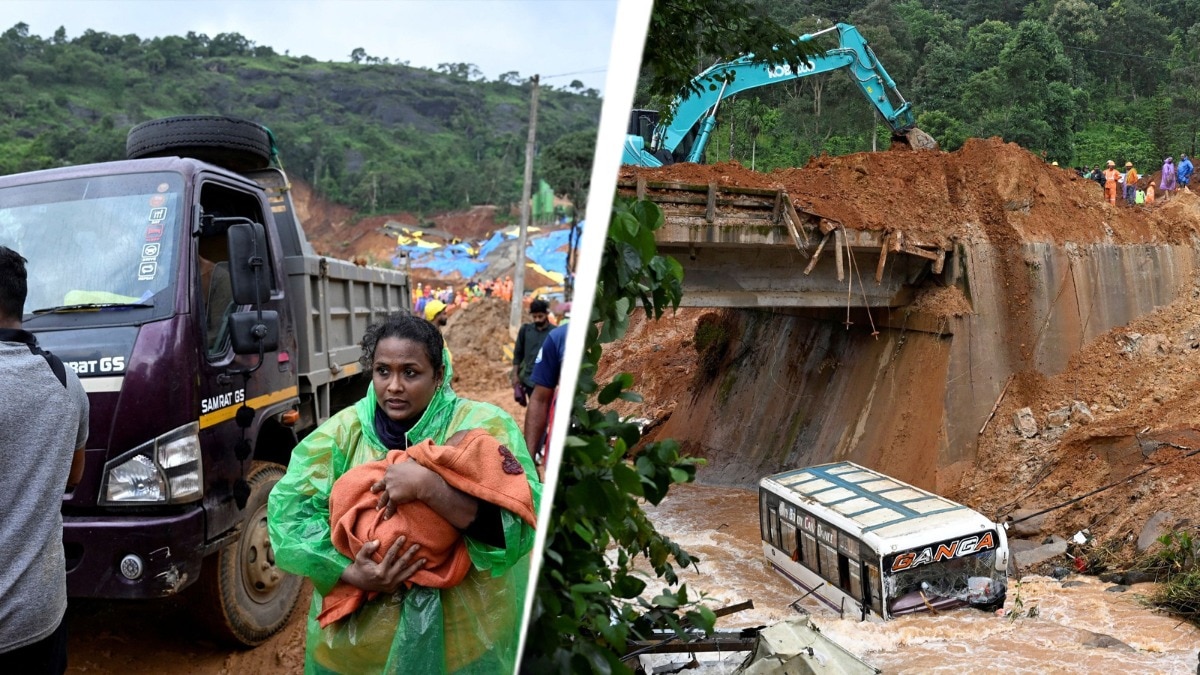
The scenic tourist hub of Wayanad is no stranger to natural disasters. The mountainous Kerala district has witnessed four major landslides over the past two decades, including the catastrophic series of landslides in 2024 that left over 300 dead and wiped out hamlets overnight. However, the landslide that struck at Kalladi near a tunnel road construction site was called a "man-made" disaster by the Kerala government. Not a natural one. Read Full Story Wayanad, an ecologically fragile region, has been pounded by heavy rain for the past few days. Just 24 hours before the landslide, Wayanad received around 265 mm of rain - the highest recorded this season. On Tuesday, amid incessant rain, the soil near the construction site of the Kozhikode-Wayanad tunnel project gave in. A huge mass of mud and debris came cascading down the hillside, trapping workers and killing three. Around 10 people have been rescued. WERE WARNINGS IGNORED? The Kerala government was quick to term the landslide a "man-made" disaster, blaming the construction firm behind the Anakkampoyil-Kalladi-Meppadi twin tunnel project. Better known as the Wayanad tunnel project, it was a much-hyped project of the previous Pinarayi Vijayan-led Left government. The project is being executed by Konkan Railway Corporation Ltd for Rs 2,134 crore.
Bhopal-based Dilip Buildcon had bagged the tunnel work tender. After several legal hurdles, construction of the 8.17-km twin-tube tunnel started in March this year. Environmentalists had opposed the project, which will cut through the ecologically sensitive Western Ghats. They pointed out that the project was close to areas devastated by landslides in 2019 and 2024. Experts also flagged that the earth in the Kalladi region was loose. The Wayanad Prakrithi Samrakshana Samithi (WPSS) was the biggest critic of the project. In its plea before the Supreme Court, it argued that the proposed tunnel would pass directly through the Chooralmala-Mundakkai range. The area receives some of the highest monsoon rainfall in South India. This same region was wrecked by a spate of landslides in 2024. This would make underground rock blasting for a tunnel highly risky. However, the project received a go-ahead from the Supreme Court. Earlier this year, a -led bench rejected a plea challenging the environmental clearance (EC) granted to the project, calling it a "lifeline" for Kerala. In fact, the key aim of the project was to provide all-weather connectivity while reducing travel time between Kozhikode and Wayanad by 45-60 minutes. A preliminary probe has indicated that the soil excavated for the tunnel construction was piled on one side of the site.
 The BriefWire