Why Prambanan Temple is symbol of India-Indonesia's shared civilisational heritage
India and Indonesia have exchanged a Letter of Intent for an India-backed conservation and restoration project at the historic Prambanan Temple complex in Yogyakarta, a
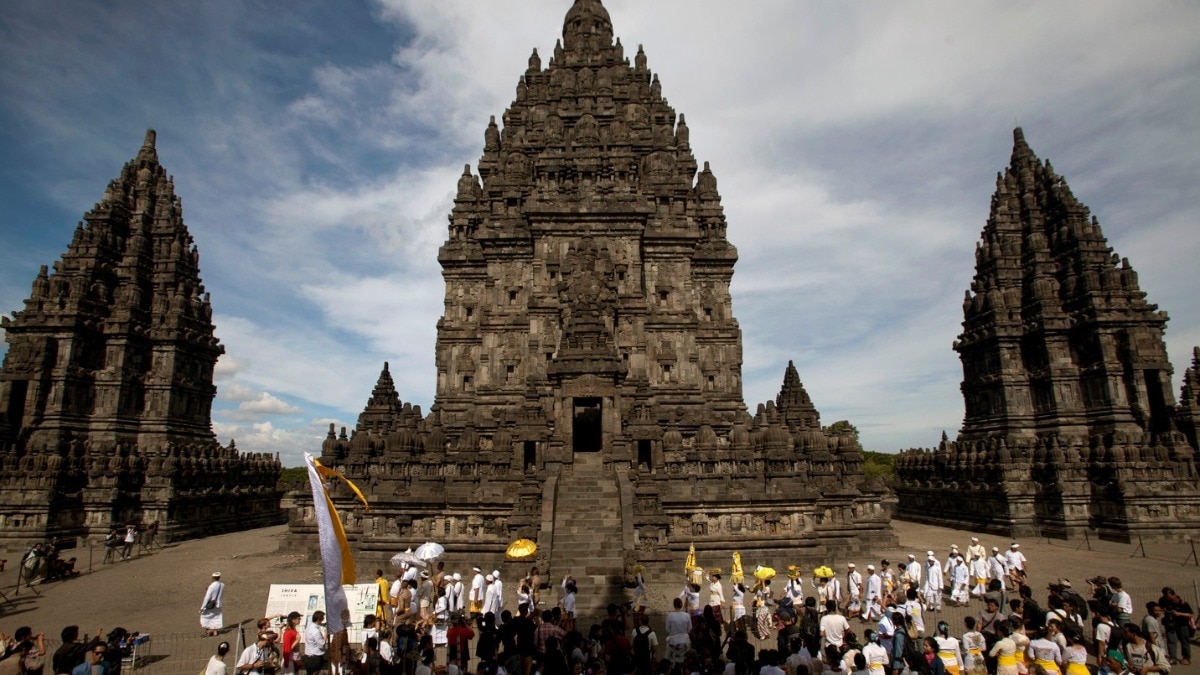
India and Indonesia have exchanged a Letter of Intent for an India-backed conservation and restoration project at the historic Prambanan Temple complex in Yogyakarta, a UNESCO World Heritage Site. The exchange took place on Tuesday following talks between Prime Minister Narendra Modi and Indonesian President Prabowo Subianto, as the two leaders reaffirmed their commitment to deepening the India-Indonesia Comprehensive Strategic Partnership and promoting a peaceful, stable and prosperous Indo-Pacific. Read Full Story Prime Minister Modi is scheduled to visit the nearly 1,000-year-old Hindu temple complex on Wednesday, where the conservation initiative will be formally launched. The project reflects India's growing cultural diplomacy under its Act East policy and underscores the centuries-old civilisational ties between the two nations. ANCIENT HINDU MARVEL OF JAVA The Prambanan Temple Complex is the largest Hindu temple complex in Indonesia and the second largest in Southeast Asia after Angkor Wat in Cambodia. Located on the island of Java near Yogyakarta, the sprawling complex originally consisted of around 240 temples spread across nearly 40 hectares.
Today, it remains one of Indonesia's most iconic cultural landmarks and a powerful reminder of the region's rich Hindu heritage. ORIGINS IN THE MATARAM KINGDOM Prambanan was built during the 9th century CE under the Hindu Mataram Kingdom. Construction is believed to have been initiated by King Rakai Pikatan and completed by his successor Lokapala. Historians believe the temple was constructed as a symbol of the kingdom's embrace of Shaivite Hinduism and as a response to the earlier Buddhist Borobudur Temple built by the rival Sailendra dynasty. ARCHITECTURAL MASTERPIECE The heart of the complex is formed by three towering temples dedicated to the Hindu Trimurti—Lord Shiva, Lord Vishnu and Lord Brahma. The Shiva Temple, standing approximately 47 metres tall, is the largest and most prominent structure. Built using volcanic stone, the temples feature soaring spires, intricately carved reliefs, ornate gateways and symmetrical layouts that represent the finest traditions of classical Hindu architecture.
SYMBOL OF HINDU CIVILISATION Prambanan stands as one of the finest surviving examples of Hindu architecture outside the Indian subcontinent. Its walls are adorned with detailed carvings depicting scenes from the Ramayana and other Hindu epics, reflecting the deep cultural and religious influence India once had across Southeast Asia through trade, scholarship and maritime links. FROM RUINS TO RESTORATION The temple complex was abandoned in the 10th century, possibly following volcanic eruptions from Mount Merapi and shifting political power in Java. Over the centuries, powerful earthquakes reduced many of the structures to ruins. Restoration efforts began under the Dutch colonial administration in the 19th century, while large-scale archaeological reconstruction between 1913 and 1953 restored many of the principal temples to their former glory. UNESCO WORLD HERITAGE STATUS Recognising its exceptional cultural and historical value, UNESCO designated Prambanan a World Heritage Site in 1991. Today, it is among Indonesia's most visited monuments and, together with the nearby Borobudur Temple, offers a unique window into the country's Hindu and Buddhist past.
 The BriefWire