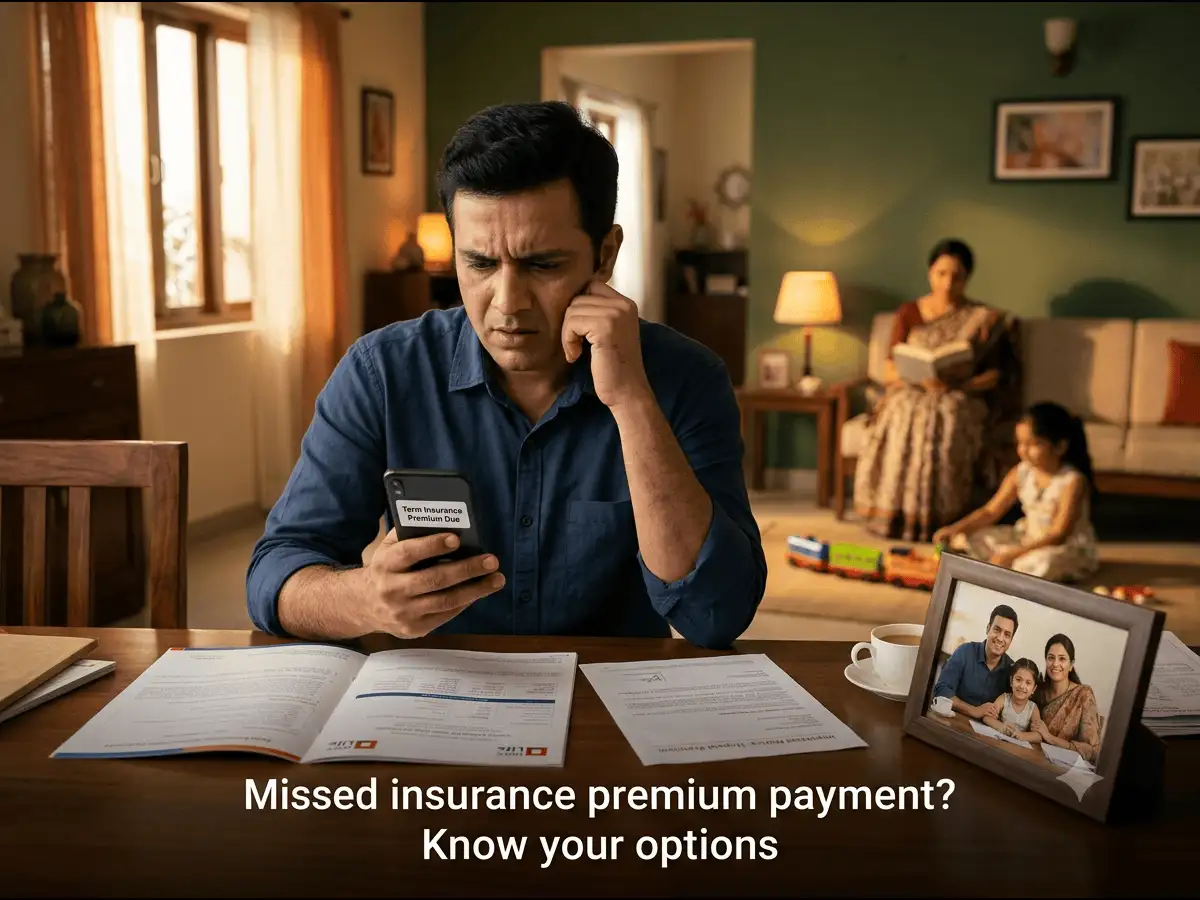
Missed insurance premium payment? Know your options
What happens if you miss a term insurance premium payment? ET Online Can nominees still receive the death benefit during the grace period? When does
What happens if you miss a term insurance premium payment? ET Online Can nominees still receive the death benefit during the grace period? When does a term insurance policy lapse? How does a Waiver of Premium rider help keep your policy active? Can a lapsed term insurance policy be revived? Will the policy benefits remain the same after revival? How can policyholders avoid a policy lapse? Missing a term insurance premium can happen to anyone, whether it’s because of a financial crunch, a hectic schedule, or just forgetting the due date. But does one missed payment mean your family's financial protection is gone altogether? Not necessarily. Here's what happens after you miss a term insurance premium and the options available to keep your policy active.Missing a premium does not mean your policy becomes inactive immediately. Life insurers provide a grace period, giving policyholders additional time to pay the outstanding premium without losing coverage.A grace period is the extra time available after the premium due date during which the policy remains active if the payment is made. The length of this grace period depends on your chosen payment frequency.“For monthly premium payments, you are typically allowed a grace period of 15 days, whereas if you pay your premiums on a quarterly, half-yearly, or yearly basis, you get a full 30 days to clear the dues,” says Sabyasachi Sarkar, MD & CEO, Go Digit Life Insurance.During this period, the policy continues to provide life cover, allowing policyholders to make the payment without any interruption in benefits.The policy remains in force during the grace period.
This means that if the insured person dies before the grace period ends, the nominee is generally entitled to receive the death benefit.“If you die while in this grace period, the beneficiary will get the death benefit but may have the unpaid premiums deducted from that benefit before paying it out,” says Sarita Joshi, Head – Health and Life Insurance, Probus.Once the grace period ends without payment, the policy may lapse and the benefit may no longer be payableIf the premium remains unpaid even after the grace period expires, the policy lapses and the life cover stops.“At this point, the policy becomes inactive, and life cover ceases; the insurer is no longer obligated to pay any benefit, leaving the family financially exposed precisely when protection may be needed most,” says Kamesh Rao, MD and CEO, Aditya Birla Sun Life Insurance.However, Rao points out that a lapse is not a cancellation. The contract is temporarily suspended, not terminated, and remains eligible for reinstatement.One way to reduce the risk of losing life cover due to an inability to pay premiums is by opting for a Waiver of Premium rider while purchasing the policy.If you have opted for this rider and happen to become totally and permanently disabled or suffer from a critical illness, you won't have to worry about the policy lapsing. Under these conditions, all future premiums are entirely waived.“The policy continues to run seamlessly without interruption, ensuring your family's financial protection remains fully intact even when you are physically unable to pay the premiums.
 The BriefWire