‘Shared blueprint for peace’: Development goals deliver for billions, but challenges remain
The findings come from the 2026 SDG Progress Report, released on Tuesday, which calls the goals “a shared blueprint for peace” while acknowledging the significant
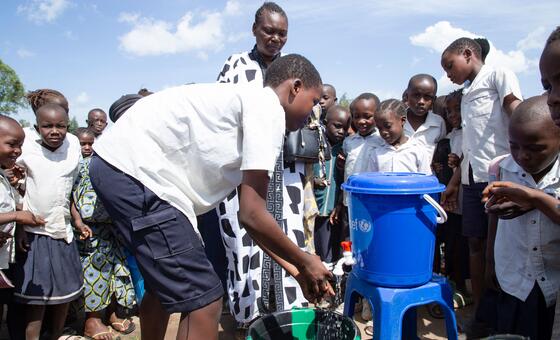
The findings come from the 2026 SDG Progress Report, released on Tuesday, which calls the goals “a shared blueprint for peace” while acknowledging the significant political and financial challenges associated with meeting the 17 ambitious targets. Call to action All 193 UN Member States adopted the SDGs in 2015 as an urgent call for action to promote peace and prosperity. With the SDGs at the heart of the 2030 Agenda, countries aim to achieve the goals by that year. Coinciding with the annual report is the High-Level Political Forum on Sustainable Development (HLPF), which kicked off in New York on Tuesday and will run until 15 July. The forum serves as the main UN platform tracking progress on the SDGs. Most goals still not on track Since 2015, hard-won gains have been made, including Tweet URL Nearly one billion people gaining access to safe drinking water 1.2 billion people gaining access to safely managed sanitation New HIV infections falling by 30 per cent between 2015 and 2024 Electricity now reaching 92 per cent of the global population Internet access surging from 40 to 74 per cent Social protection now covering more than half the global population Despite those achievements, the report concludes that overall progress remains far too slow One in 10 people still live in extreme poverty Food insecurity affects 2.3 billion people Maternal mortality remains nearly three times the global target In 2025, global temperatures reached 1.43°Celsius above pre-industrial levels 273 million children and young people remain out of school The global refugee population has more than doubled in the past decade Of the 139 SDG targets with trend data, only 36 per cent are on track or making moderate progress.
Meanwhile, 49 per cent of them are advancing too slowly and 15 per cent have regressed below 2015 baselines. Escalating conflicts, climate change, slowing economic growth, rising debt and a record decline in official development assistance have slowed progress toward the SDGs and disproportionately affected the world’s most vulnerable people, according to the report. At UN Headquarters on Tuesday, Deputy Secretary-General Amina Mohammed called for reforms that would allow international development banks to provide debt relief and longer-term financing to initiatives that would advance the SDGs. “Many countries are being asked to deliver on promises without the tools to keep them,” Ms. Mohammed said. Annual forum underway Government ministers, top UN officials, civil society representatives and other stakeholders gathered Tuesday for the opening of the HLPF, which meets once every year under the auspices of the UN's Economic and Social Council (ECOSOC). Official HLPF programming will include a broad range of in-person and virtual special events for governments, UN entities, the private sector, youth, civil society and other groups to exchange knowledge and ideas on sustainable development. At an event kicking off the forum, ECOSOC President Lok Bahadur Thapa pointed to widening disparities in areas ranging from clean energy to water security and urged countries to “work differently” to achieve the SDGs. “The 2030 Agenda remains our shared promise – to people, to the planet and to future generations,” Mr. Thapa said. “The years ahead will not ask whether our challenges were difficult.
 The BriefWire