America's 250-year time capsule has been buried: Here's what people in 2276 will discover
PC: PBS How America's 250-year time capsule was built to survive for centuries The unique items hidden inside America 's 250-year time capsule How science
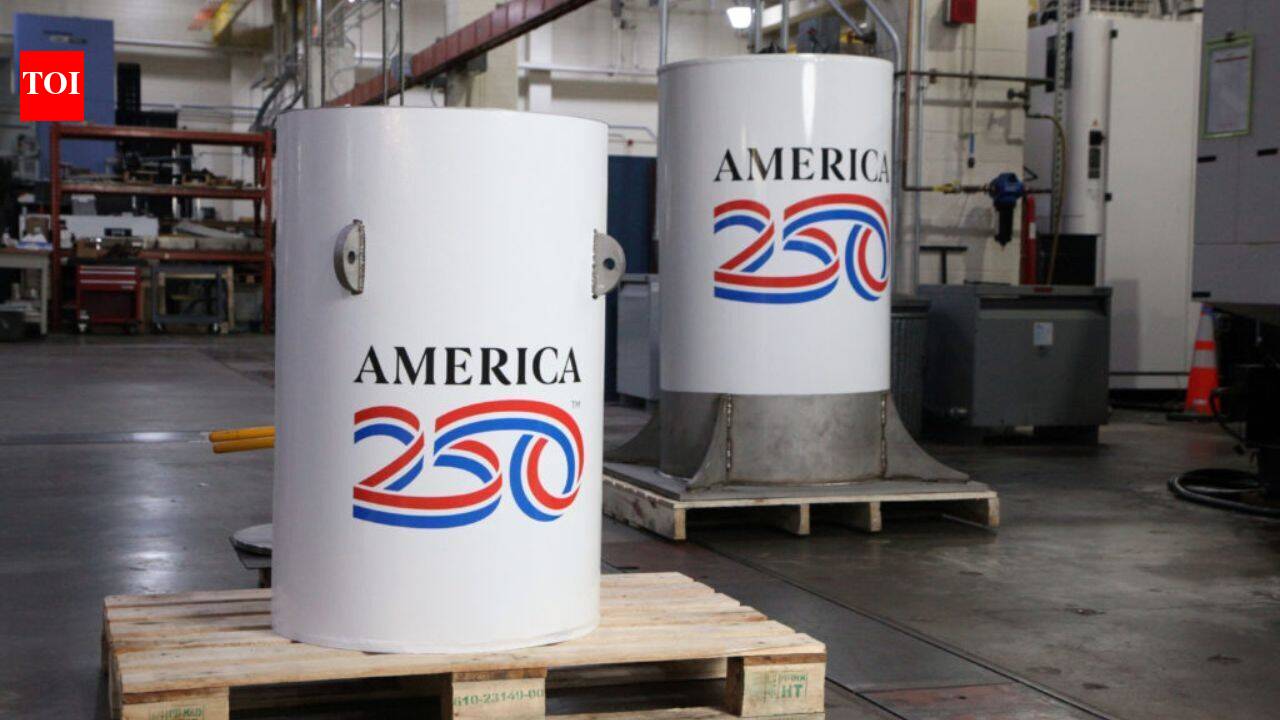
PC: PBS How America's 250-year time capsule was built to survive for centuries The unique items hidden inside America 's 250-year time capsule How science influenced what was sealed inside How the time capsule captures life in America in 2026 America's long tradition of national time capsules How the US plans to preserve the time capsule until 2276 The United States has now marked its 250th anniversary, but one part of the celebration has only just begun. Beneath the ground in Philadelphia, a specially engineered time capsule has been buried with instructions that it should not be opened for another 250 years. Intended as a message to people living in 2276, it brings together objects and documents from across the country rather than focusing on a single version of American history. Every state, the District of Columbia, the five US territories and all three branches of the federal government contributed something, creating a collection that reflects different places, traditions and moments in time. The project took years to prepare, with equal attention given to preserving the contents and deciding what future generations might one day discover about life in 2026.The time capsule was created under legislation passed in 2016 that established the bipartisan America250 Commission, which was responsible for organising commemorations marking 250 years since the signing of the Declaration of Independence.Rather than producing a symbolic container for display, engineers were asked to create something capable of surviving underground for two and a half centuries. The result is a stainless steel cylinder weighing roughly 900 pounds, designed specifically to resist moisture, which remains the greatest threat to long-term preservation.Its shape was carefully chosen.
Cylinders distribute pressure more evenly than square containers, reducing the risk of structural damage over time. Once sealed, the capsule was enclosed inside a second protective shell that traps air around the inner chamber, helping keep groundwater away from the contents.Engineers also compressed a soft metal seal between the lid and the body of the capsule to create an airtight and watertight barrier. Before closing it permanently, every item placed inside had been stabilised at carefully controlled humidity levels intended to preserve paper and other delicate materials for generations.The capsule has been buried around ten feet below ground, where soil temperatures remain relatively stable and weather events are unlikely to affect it.Rather than asking every participant to submit the same type of object, organisers allowed each state and territory to decide how it wished to represent itself.That freedom produced an unusually varied collection. Many governments chose archival paper, sending letters, historical records, posters, poems and postcards that captured aspects of local culture, history or daily life. Others selected objects linked more directly to regional identity.New Hampshire included material reflecting its role during the American Revolution, while California looked towards the future instead of the past. State officials asked an artificial intelligence chatbot to imagine California in the year 2276. The prediction suggested highways would disappear, grizzly bears would return to the landscape, and California would become part of a fictional "Pacific Federation" alongside Oregon, Washington and British Columbia.Elsewhere, contributions ranged from historical keepsakes to highly unusual artefacts.Utah assembled one of the largest submissions, including commemorative cards, coins, documents, pins, granite discs and printed material. Arizona used nano-etching technology to reproduce the complete text of both the Declaration of Independence and the US Constitution onto a stainless steel coin.Maine contributed a bone from the endangered North Atlantic right whale, while Arkansas chose to send one of the state's most recognisable natural resources: a diamond.Selecting the contents involved more than choosing meaningful objects.
 The BriefWire