What will happen on 13 April 2029: A giant asteroid will pass closer than some satellites and be visible to billions
Asteroid Apophis 2029: A remarkably close but safe flyby of Earth Who will be able to see asteroid Apophis in 2029 The best time to
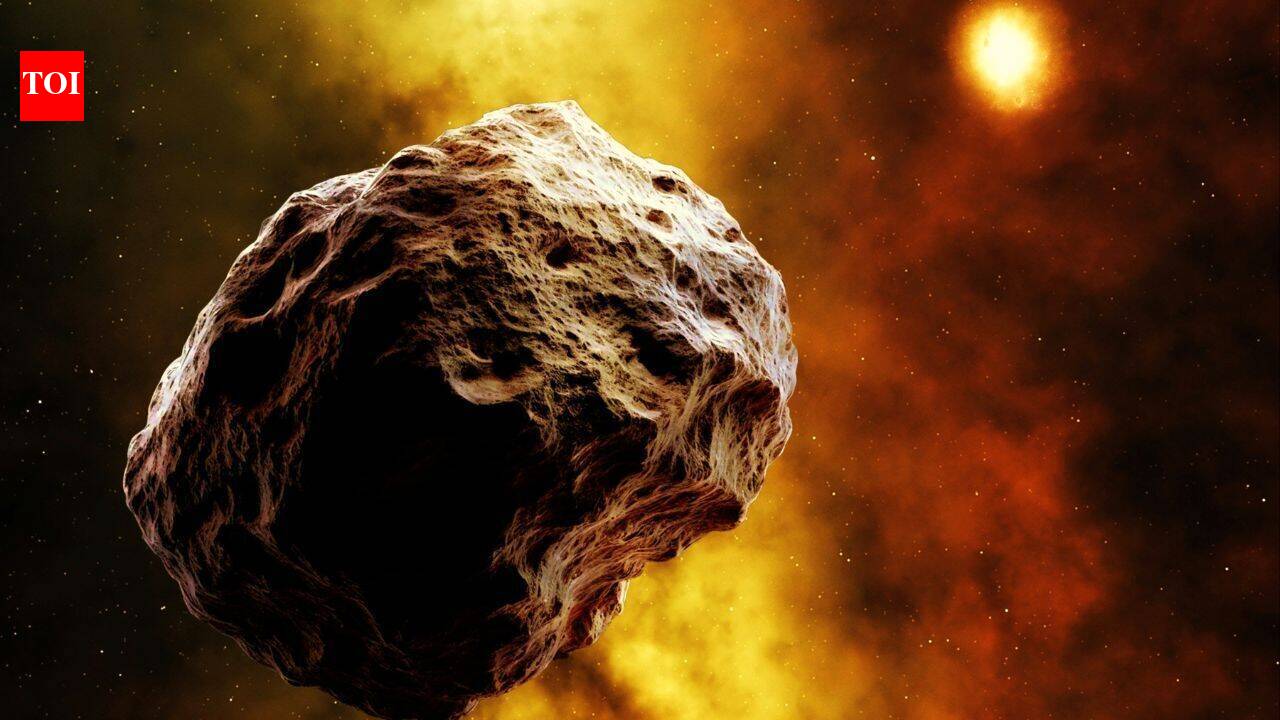
Asteroid Apophis 2029: A remarkably close but safe flyby of Earth Who will be able to see asteroid Apophis in 2029 The best time to watch asteroid Apophis in April 2029 How asteroid Apophis went from a threat to a scientific opportunity How the 2029 flyby could reshape asteroid Apophis How astronomers will study asteroid Apophis during its 2029 flyby For most people, asteroids are distant objects that remain hidden behind telescope lenses and scientific instruments. That will briefly change in April 2029, when one of the best-known near-Earth asteroids is expected to become visible without specialist equipment across large parts of the world. The object, called Apophis, has attracted scientific attention for more than two decades, first because of early concerns about a possible impact and later because those fears were ruled out through increasingly accurate observations. Its close approach has instead become an opportunity for research and public observation.Scientists are already mapping where people will have the best chance of seeing it, years before the event itself. If skies remain clear, billions could witness an astronomical sight that has no equivalent in recorded human history: a large asteroid passing close enough to be followed by the naked eye as it slowly crosses the night sky.On 13 April 2029, asteroid 99942 Apophis will pass around 31,600 kilometres above Earth, bringing it closer than the orbit occupied by geostationary satellites.
Although that distance remains entirely safe, it is exceptionally close in astronomical terms.Rather than appearing as a blazing fireball or leaving a glowing trail, Apophis is expected to resemble a bright point of light moving steadily across the sky. Observers should notice its motion without telescopes because it will gradually shift position against the background stars over several hours. At its fastest apparent movement, it will cover roughly the width of the full Moon every minute.Astronomers describe the event as something that has never before been predicted with such certainty. While bright comets and meteor showers have long been visible to the public, forecasting a large asteroid passing this close to Earth during recorded human history is a different kind of event.Visibility studies presented during a scientific workshop in Italy suggest that roughly 90% of the world's population lives in areas where Apophis could potentially be seen without optical equipment.That does not mean everyone will witness it. Weather conditions, cloud cover and artificial light from towns and cities will all affect visibility on the day. Even so, the geographical reach of the event is unusually broad.The asteroid's journey across Earth's skies is expected to begin above Australia before continuing westward across Asia, Africa, Europe and the Atlantic, with the final stages visible from parts of the Americas and surrounding regions. The complete viewing window is expected to last about seven hours.Astronomers have already calculated the periods when Apophis should appear brightest.During one of those peak moments, observers across Africa, much of Asia, eastern South America and sections of Europe are expected to have particularly favourable viewing conditions.
 The BriefWire