Germany: Record debt and a seismic policy shift
More money for the military, less for everything else, while debt continues to grow rapidly: such is Germany's draft budget for 2027. The Cabinet has
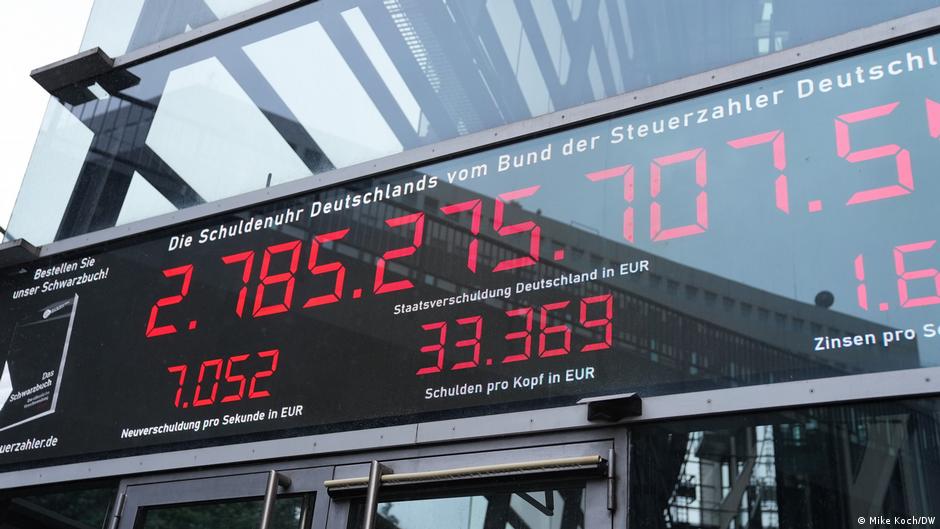
More money for the military, less for everything else, while debt continues to grow rapidly: such is Germany's draft budget for 2027. The Cabinet has approved it, now it needs to pass in parliament. In Berlin's government district, the so-called "debt clock" can be seen hanging on an office building. Installed by the German Taxpayers' Federation, a lobby organization advocating for lower taxation and public spending, it is meant to be a reminder of Germany's rising national debt. Against a black display, the red numbers climb higher and higher every day. On July 6 at 1:00 p.m., the debt clock read €2.78 trillion ($3.18 trillion). The draft budget for 2027, announced on Monday, will drive debt levels up further. Federal Finance Minister Lars Klingbeil of the center-left Social Democratic Party (SPD) estimates that spending for 2027 will total €555.4 billion. Of that amount, €109.7 billion is earmarked for defense spending — a third more than in 2026. Because expenditures far exceed tax revenues, Klingbeil will once again have to take on more debt. His plan calls for just under €119 billion, but that is far from the whole story. German Defense Minister Pistorius on new military spending To view this video please enable JavaScript, and consider upgrading to a web browser that supports HTML5 video Two special funds for infrastructure and military Then there's also spending from debt-financed special funds — which act as a kind of shadow budget. Since these funds are spread out over several years, they are not listed in the current budget. At a staggering €500 billion, this fund is earmarked for the maintenance and restoration of infrastructure and for achieving Germany's goal of becoming climate-neutral. Spread out over twelve years, the money will go toward repairing dilapidated bridges, roads and the rail network, among other things. An additional special fund has also been established for the Bundeswehrby, Germany's Armed Forces. By 2029, Germany plans to gradually increase its defense spending to 3.5% of gross domestic product (GDP), which is a measure of economic output.
By 2035, it is expected to reach the new NATO target of five percent. "Putin's imperialist delusions pose a greater threat to peace in Europe than we have seen in a long time," said Federal Finance Minister Lars Klingbeil after the cabinet meeting. "We cannot defend ourselves against Putin with a balanced budget." Instead, he said, Germany must make up for the three decades in which defense spending was "cut back" as quickly as possible. "Doing that without incurring new debt is impossible — it's like flying to the moon without a rocket." Crumbling infrastructure: Germany's growth killer? To view this video please enable JavaScript, and consider upgrading to a web browser that supports HTML5 video But what about the debt brake? If debt from the regular budget is added to that from the special funds, new debt is projected to reach around €203 billion in 2027. Over the years to come, this trend is expected to persist. Based on the federal government's financial planning, the German Chamber of Commerce and Industry has calculated that spending will rise by an average of five percent per year through 2030. Meanwhile, tax revenues will grow only half as fast during the same period — namely, by about 3% per year. What's more, the more debt the government accumulates, the more interest it must pay. By 2030, interest is expected to reach €80 billion, and almost one in five euros of tax revenue could be spent on interest. Yet the Basic Law — the German Constitution — stipulates that the government may spend only as much as it collects in revenue. This is known as the debt brake. Additional borrowing may not exceed 0.35% of gross domestic product (GDP). Add yet spending on defense and security is largely exempt from the debt brake, while economic downturns allow for higher debt limits. However, as Europe's largest economy and the third largest in the world, Germany can afford the debt, emphasizes Klingbeil.
 The BriefWire