A different approach to the caste census | Explained
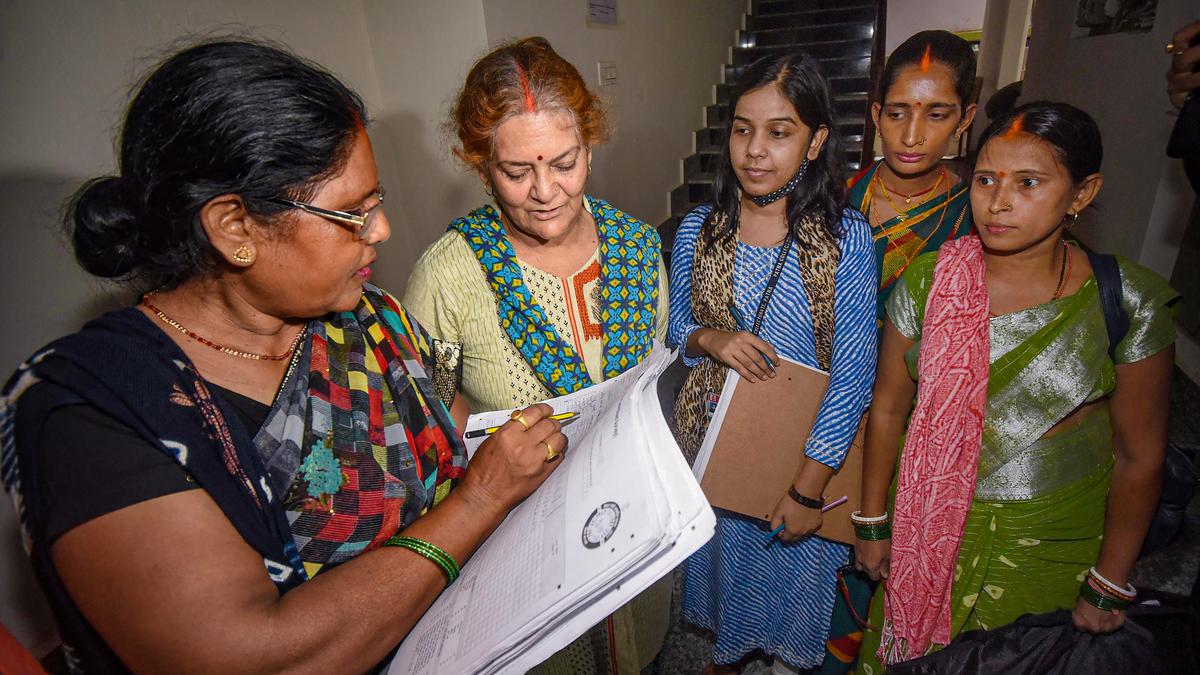
The story so far: The Cabinet Committee on Political Affairs, chaired by Prime Minister Modi, has decided to conduct caste enumeration in the upcoming Census
The story so far: The Cabinet Committee on Political Affairs, chaired by Prime Minister Modi, has decided to conduct caste enumeration in the upcoming Census. As per Article 246 of the Constitution, the Census is a Union subject listed in the 7th schedule. The caste census must be viewed beyond binaries of “for or against” to envision a more transformative idea — as a foundational tool for what might be called a social management approach to governance. Caste Census: The methodology, challenges, and the road ahead | Explained What were the findings from State-level caste censuses? The Bihar caste survey (2023) found that Other Backward Classes (OBCs) and Economically Backward Classes (EBCs) together make up over 63% of the population, with EBCs alone at 36.01%. Scheduled Castes (SC) account for 19.65%, and Scheduled Tribes (SC) for 1.68%. The general category comprises only 15.52%. Additionally, over 34% of Bihar’s families live on less than ₹200 per day, with nearly 44% of SC households below that line. In Telangana’s 2025 survey, Backward Classes (BCs) constituted 56.33% of the population, with BC Muslims forming a substantial 10.08%. These numbers reveal a stark reality: India’s marginalised communities form the majority but are significantly underrepresented in education, employment, and governance.
Data shared by the Union Minister of State for Education in Parliament reveals that only 4% of professors and 6% of associate professors in 45 Central Universities are OBCs, while 85% are from the general category. This imbalance exists despite the Central Educational Institutions (Reservation in Teachers’ Cadre) Act, 2019. Yet, the policy response is hindered by the absence of reliable data. India hasn’t conducted a full caste census since 1931. The 2011 Socio-Economic and Caste Census (SECC) was marred by data inconsistencies and its findings were withheld. Without up-to-date caste data, affirmative action and development policies remain speculative. What is a social management approach? Top-down welfare models in India have failed to adequately address layered inequities of caste, gender, and class. A social management approach does the opposite: it starts with data, targets need-based interventions, and treats caste as a developmental variable rather than a stigma. If we know who needs what, and how need is shaped by historical disadvantage, we can design policies with greater equity and efficiency. Caste data becomes a lens to understand inequity structurally, rather than as isolated cases. Tamil Nadu offers a model, using data from the Backward Classes Commission to adjust policies on reservations, scholarships, and governance.
 The BriefWire