The world's energy lifeline is still vulnerable
For a few weeks, energy markets had begun to believe the worst was over. Oil prices had retreated, ships were gradually returning to the Strait
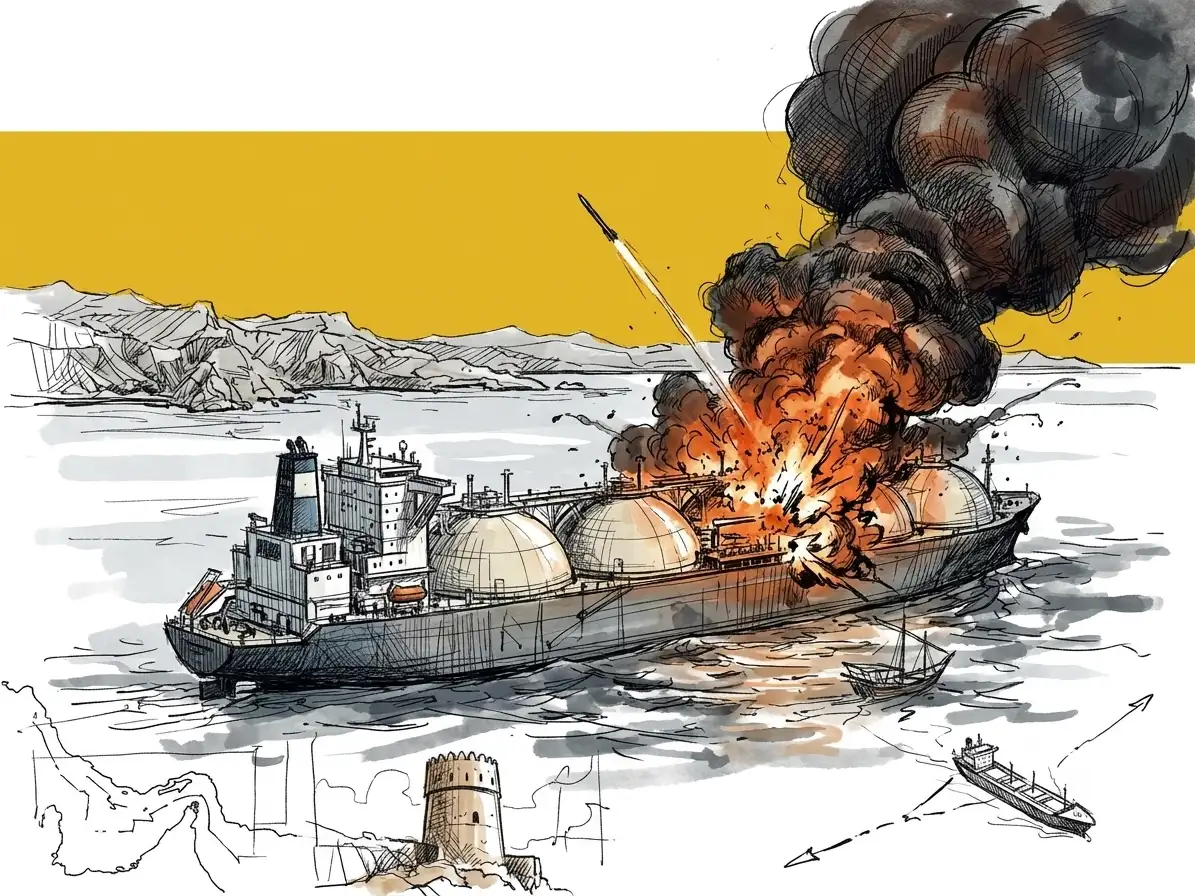
For a few weeks, energy markets had begun to believe the worst was over. Oil prices had retreated, ships were gradually returning to the Strait of Hormuz and last month's US-Iran framework agreement had raised hopes that one of the world's busiest energy corridors could move closer to normal. Tuesday's attack on a Qatari liquefied natural gas (LNG) carrier may have challenged that assumption.Iran's Revolutionary Guards fired at least two missiles at commercial ships passing through the Strait of Hormuz on Monday night, according to an Axios report citing two US officials.Also Read: Iran fires missiles at commercial ships in Strait of HormuzThe strike suggests that although large-scale fighting has eased, the threat to commercial shipping has not disappeared. Instead, the risk facing energy markets is shifting from fears of an all-out regional war to the possibility of repeated disruptions that can unsettle trade, push up prices and remind shipowners that safe passage through Hormuz remains far from guaranteed.The Al Rekayyat, a loaded LNG carrier owned by Qatar's state-run shipping company Nakilat, was reportedly struck during the early hours of Tuesday shortly after leaving the Strait of Hormuz, Bloomberg also reported.Security consultancy EOS Risk Group said, according to Bloomberg, that the vessel was hit around 8 nautical miles, or roughly 15 kilometres, east of Limah on Oman's coast. The impact triggered a fire, with the consultancy assessing that the projectile was either a drone or a missile.Ship-tracking data indicated that Al Rekayyat appeared to be sailing with its transponders switched off while making the crossing. Earlier, the UK Maritime Trade Operations had warned of an incident in the area, although it did not identify the vessel involved.Also Read: The likely loser in Gulf's post-war race for oil market shareShipping confidence takes another blow The latest attack comes at a particularly delicate moment for commercial shipping. Since the US and Israel launched military strikes against Iran in late February, every movement through Hormuz has been closely watched by shipowners weighing the risks of entering or leaving the Persian Gulf.The incident has already prompted signs of caution elsewhere in the market. Bloomberg said shipping data showed that another LNG tanker, Al Areesh, altered its course on Tuesday after loading cargo in Qatar. The vessel had previously been signalling Pakistan's Port Qasim as its destination before changing direction.Financial markets reacted quickly.
European natural gas prices climbed by as much as 4.5% during early Asian trading, while Brent crude futures also edged higher after news of the strike spread.The reaction marked a reversal from recent trading sessions, when oil prices had fallen as improving vessel movements through Hormuz encouraged expectations that higher exports could leave global markets with more supply than previously anticipated.Traffic returns, but the route through Hormuz remains dividedShipping activity has picked up since Washington and Tehran agreed to an interim peace framework last month, yet normal operations remain elusive.Iran continues to assert control over parts of the waterway by restricting movements on routes it has not approved and, at times, attacking commercial vessels. On Monday, a group of Japan-linked ships appeared to pass through Hormuz using a corridor approved by Tehran rather than the route overseen by US-led naval forces.Negotiations aimed at establishing a longer-term arrangement for the strategic waterway have yet to produce a permanent solution, leaving shipowners to make their own judgement on the safest route.Data compiled by intelligence company Kpler Ltd. show that around two-thirds of vessel movements through Hormuz in recent days have used the Iran-approved northern corridor, according to Bloomberg. The remaining ships have crossed through the US-managed passage near Oman.The split becomes even clearer when examining Monday's traffic. Of the 25 vessels that crossed the strait, only three travelled along the Omani route with their transponders switched on, despite regional naval forces reminding operators that the US-managed corridor remained open."The continued use of different shipping lanes suggests that traffic through the strait remains operational, but is fragmented as shipowners adopt different routing strategies based on their individual risk assessments," Bloomberg cited Muyu Xu, senior crude oil analyst at Kpler.The attack also lands at an awkward time for Qatar's LNG industry. Al Rekayyat had reportedly loaded its cargo earlier this month at Ras Laffan, the world's largest LNG export complex. Any sustained threat to tankers departing Qatar would directly affect the country's efforts to restore normal export flows after months of regional conflict.Who controls Hormuz?The strike on Al Rekayyat comes as Washington and Tehran try to keep diplomacy alive after months of military confrontation. Rather than being viewed as an isolated security incident, the attack is likely to be seen as a reminder that the agreement reached last month has reduced the intensity of the conflict without removing its underlying source.US President Donald Trump travelled to Ankara, Turkey, for a NATO leaders' summit where the war with Iran is expected to feature prominently.
 The BriefWire