'Beijing's Rapid, Opaque Nuclear Weapons Buildup': US Sees Red Over China's Pacific Missile Test
'Beijing's Rapid, Opaque Nuclear Weapons Buildup': US Sees Red Over China's Pacific Missile Test Published By, Edited By Last Updated: July 07, 2026, 10:54 IST
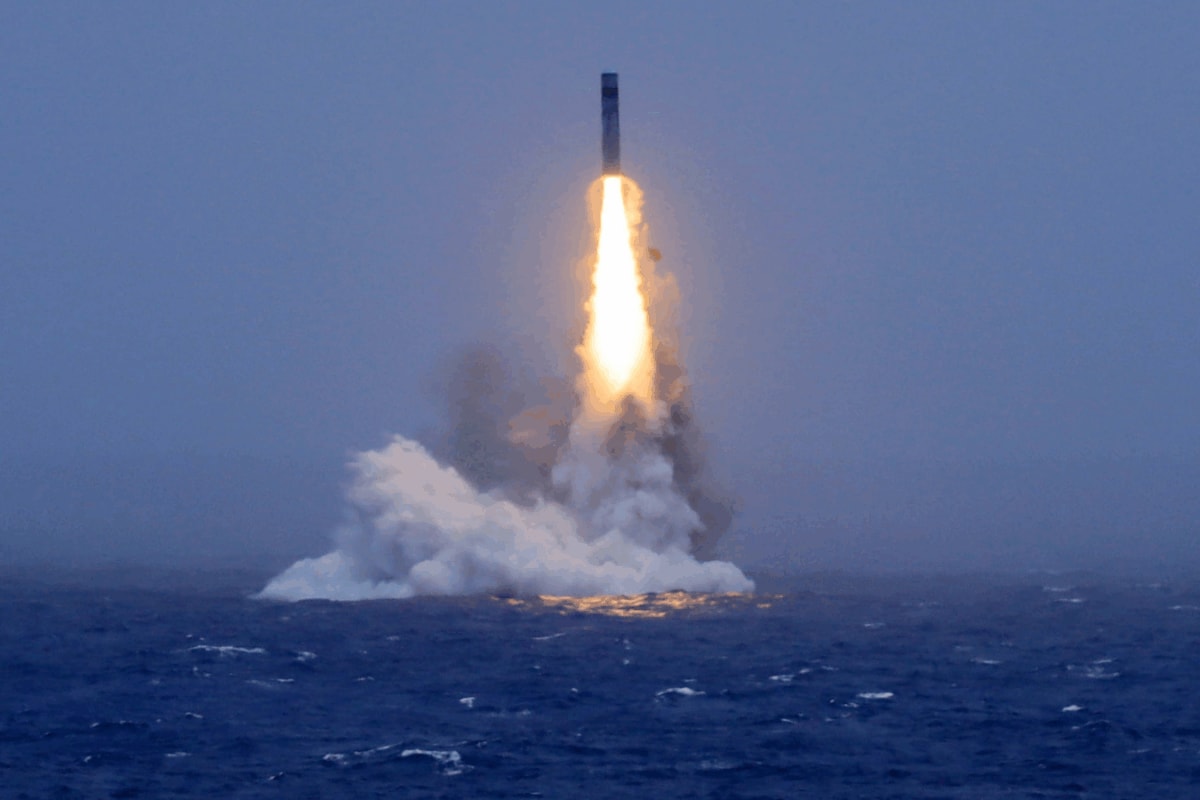
'Beijing's Rapid, Opaque Nuclear Weapons Buildup': US Sees Red Over China's Pacific Missile Test Published By, Edited By Last Updated: July 07, 2026, 10:54 IST US State Department spokesperson Tommy Pigott said Washington was "concerned" by China's continuing expansion of its nuclear arsenal and the lack of transparency. Rapid Read A long-range ballistic missile bursts out of the sea during a test launched from a Chinese nuclear-powered submarines in the South Pacific on Monday, July 6, 2026. (Xinhua via AP) The United States has voiced fresh concern over China’s rapidly expanding nuclear capabilities after Beijing carried out a rare long-range missile test over the Pacific Ocean, a move that has also prompted criticism from Australia, Japan, New Zealand and Taiwan. Responding to the launch, US State Department spokesperson Tommy Pigott said Washington was “concerned" by China’s continuing expansion of its nuclear arsenal and the lack of transparency surrounding its strategic weapons programme. At a time when the United States is working harder than ever to prevent nuclear proliferation, China is doing the opposite," State Department spokesman Tommy Pigott said. “Beijing’s rapid and opaque nuclear weapons buildup is of great concern to the region and the world," he said, while adding that the US had monitored the missile launch. He also reiterated Washington’s call for Beijing to engage in meaningful discussions on nuclear risk reduction and arms control. The launch marks one of China’s most significant demonstrations of its sea-based nuclear deterrent in recent years and is being viewed as far more than a routine military exercise.
What Did China Test? China’s People’s Liberation Army (PLA) Navy on July 6 launched a long-range ballistic missile from a nuclear-powered submarine into the Pacific Ocean. According to Chinese state media, the missile carried a dummy, or training, warhead and landed in a designated area of international waters after being fired at around 12:01 pm local time. Although Beijing did not officially identify the missile, defence analysts believe it was most likely the JL-3 submarine-launched ballistic missile (SLBM), China’s newest and most capable sea-based nuclear missile. The JL-3 is believed to have a range exceeding 10,000 kilometres, allowing it to strike targets as far away as the continental United States without Chinese submarines venturing deep into the Pacific. China insisted the test was “a routine arrangement" under its annual military training programme and was “not directed against any specific country or target." Foreign Ministry spokesperson Mao Ning defended the exercise, saying it was conducted “safely, in a standardised and professional manner throughout" and urged other countries “not to over-interpret the matter." Why Has The Launch Caused Concern? Unlike previous Chinese ballistic missile tests that largely remained within its own territory, this launch sent a strategic missile deep into the Pacific Ocean, demonstrating Beijing’s growing confidence in its submarine-based nuclear force. The test also came at a sensitive geopolitical moment. It was conducted just as Australia and Fiji signed a new defence agreement aimed at strengthening security cooperation in the Pacific, leading analysts to believe the timing carried strategic messaging beyond routine military training.
 The BriefWire