After Brokering US-Iran Deal, Pakistan Now Tries To Mediate Peace In War-Torn Libya
After Brokering US-Iran Deal, Pakistan Now Tries To Mediate Peace In War-Torn Libya Published By, Last Updated: July 07, 2026, 08:31 IST Libya has been
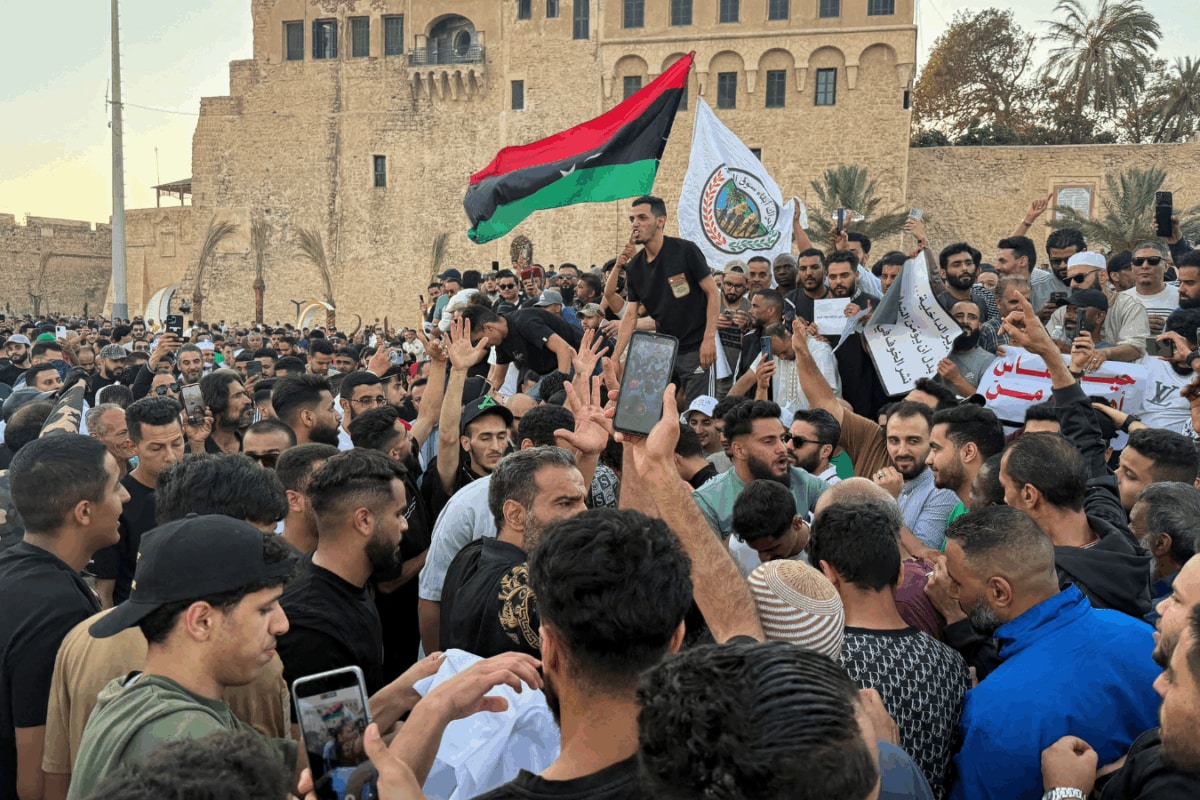
After Brokering US-Iran Deal, Pakistan Now Tries To Mediate Peace In War-Torn Libya Published By, Last Updated: July 07, 2026, 08:31 IST Libya has been divided between rival eastern and western administrations since a civil war broke out after the toppling of dictator Muammar Gaddafi in 2011. Demonstrators demand the overthrow of the Libya's Government of Unity headed by Abdulhamid al-Dbeibah, in Tripoli. (Source: Reuters) After brokering a peace deal between the United States and Iran, Pakistan has now started to slowly mediate between the rival eastern and western power centres of Libya, according to a report published by Reuters. Pakistan has stepped into the conflict-riddled Libya after months of US-led efforts to reach a diplomatic solution in Libya. The country has been divided between rival eastern and western administrations since a civil war broke out after the toppling of dictator Muammar Gaddafi in 2011. This year, Pakistan played a central role in the peace deal signed between the United States and Iran, with the Trump administration repeatedly crediting it for its contribution. Pakistan’s Mediation Efforts In Libya According to Reuters, the US is now “fully aware and involved" in Pakistan’s efforts to reach a diplomatic solution in Libya. As per the report, Pakistan is also being backed by Saudi Arabia in this endeavour.
Last year, Pakistan signed a mutual defence pact with Saudi Arabia, which has long sought influence in Libya. Also Read: Pakistan May Host Next Round Of US-Iran Talks On July 11, Nuclear Plan On Agenda | Exclusive Pakistan started the efforts to secure peace in Libya late last year, and both factions of the country had requested its involvement. However, it remained unclear to what extent Pakistan has been coordinating with other regional stakeholders to reach a truce. Libya’s Unity Plan According to experts, any successful plan to bring peace and unity in Libya would require balancing the different interests of foreign patrons along with resolving disputes over election rules, posts and oil revenues, which have derailed attempts to establish peace for decades. Speaking to Reuters, a contributor to Britain’s Royal United Services Institute think tank, Jalel Harchaoui, said, “The United States has been pushing hard in Libya, but the format it is trying to impose is still loose and ill-defined." According to Reuters, the proposed “Libya Reunification Plan" would establish a 36-month transitional power-sharing arrangement under the body known as the “Government of Consensus and Presidential Council". According to a Pakistani source, the proposal is still under discussion. Once approved by both the factions, the proposal would establish a transition period with Abdulhamid Dbeibah of the U.N.-recognised and western-based Libyan Government of Unity as prime minister and Saddam Haftar, deputy commander of the eastern-based Libyan Army, as chairman of the Presidential Council.
 The BriefWire