How heavy rain cut off Mumbai from three sides and turned it into a virtual island
Three days of continuous rainfall have brought Mumbai and its neighbouring areas to a standstill, severing the road and rail arteries that connect India's financial
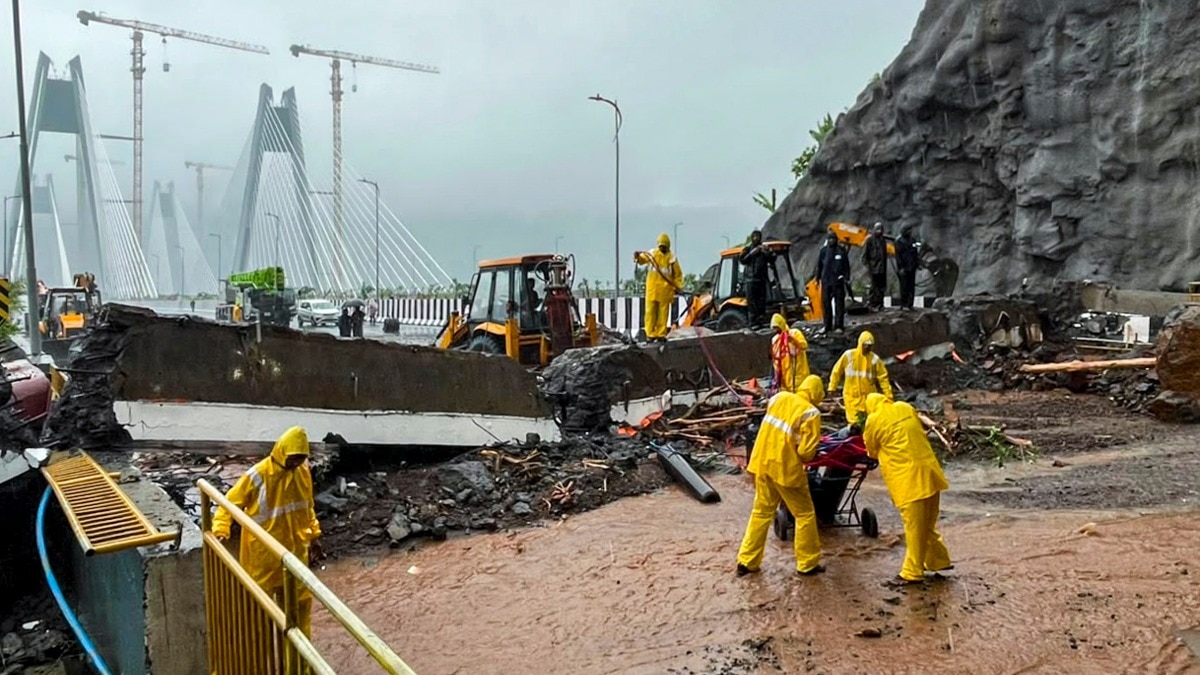
Three days of continuous rainfall have brought Mumbai and its neighbouring areas to a standstill, severing the road and rail arteries that connect India's financial capital to the rest of the country and leaving thousands of commuters stranded. By Monday morning, the Mumbai–Pune Expressway, the Mumbai–Ahmedabad highway, and the Mumbai–Konkan route had either been closed or placed under severe restrictions, bringing intercity movement to a near standstill. Read Full Story The Expressway was the worst hit. A landslide near the exit of Tunnel 2 forced a diversion on the Pune–Mumbai carriageway of the newly opened 'Missing Link', a 13-kilometre bypass through the Sahyadri mountains that had opened two months ago. Nearly 100 tonnes of debris fell at a location where, according to Chief Minister Devendra Fadnavis, such an incident had never occurred before. The 'Missing Link' was eventually opened for vehicular traffic as the day came to a close. On the Mumbai–Ahmedabad highway, waterlogging has choked traffic. Efforts to drain flood water are underway, but traffic movement remains painfully slow. Near Nagothane on the Konkan route, severe waterlogging has left commuters stranded for over 24 hours with little sign of improvement.
Train services between Pune and Mumbai were suspended after landslides struck the Thakurwadi and Monkey Hill sections, sending debris onto the tracks. Trains arriving from Gujarat were halted mid-journey, leaving passengers stuck in coaches for hours. Over 20 long-distance trains on the Western Railway remain stranded across Mumbai and south Gujarat, with over 40 services impacted. At least 10 have been cancelled, eight rescheduled, and several others diverted. DEATHS, DAMAGE, DISRUPTION Thirteen people have died in rain-related incidents over the past three to four days across Mumbai and Pune regions, according to Disaster Management Minister Girish Mahajan. Two people were killed after their house was buried in a landslide at Patan village in Pune's Maval tehsil. Another was swept away on a flooded road in Pune's Khed. A fireman was injured while clearing a large uprooted tree, and a billboard and two walls collapsed in Thane. In Palghar, strong winds blew away tin-roofed sheds and uprooted trees at a residential school. Some parts of Palghar recorded nearly 300 mm of rainfall in just two hours by 9 AM on Monday. Both houses of the state legislature were adjourned in view of the heavy rains.
The Bombay High Court assured lawyers that no adverse orders would be passed if they were unable to reach court. MORE RAIN LIKELY IN MMR The India Meteorological Department has warned the situation could worsen, forecasting two more days of heavy rainfall. A red alert has been issued for Mumbai, Thane, Raigad, Nashik, and Trimbakeshwar, with the possibility of cloudburst-like conditions and rainfall exceeding 300 mm in isolated areas. Notably, Mumbai, Thane and Raigad form the larger Mumbai Metropolitan Region, which has already recorded heavy rainfall after the late arrival of monsoon. The Maharashtra CM specifically warned of a possible cloudburst in parts of Nashik on Tuesday and said the state government was keeping "a close watch" until at least July 8. Fadnavis, addressing a press conference after reviewing the situation at the State Disaster Management control room, described the landslide as "an unprecedented event" and called the extreme rainfall a "force majeure" situation. He said NDRF teams has been pre-positioned in vulnerable areas and SDRF teams redeployed based on the latest alerts, with the state disaster management and BMC control rooms functioning round the clock.
 The BriefWire