This 600-year-old French house seems to defy gravity; the real reason lies in a medieval tax rule
The hidden logic behind this structure in France and its uneven form How generations of families quietly shaped the life of the house The quiet
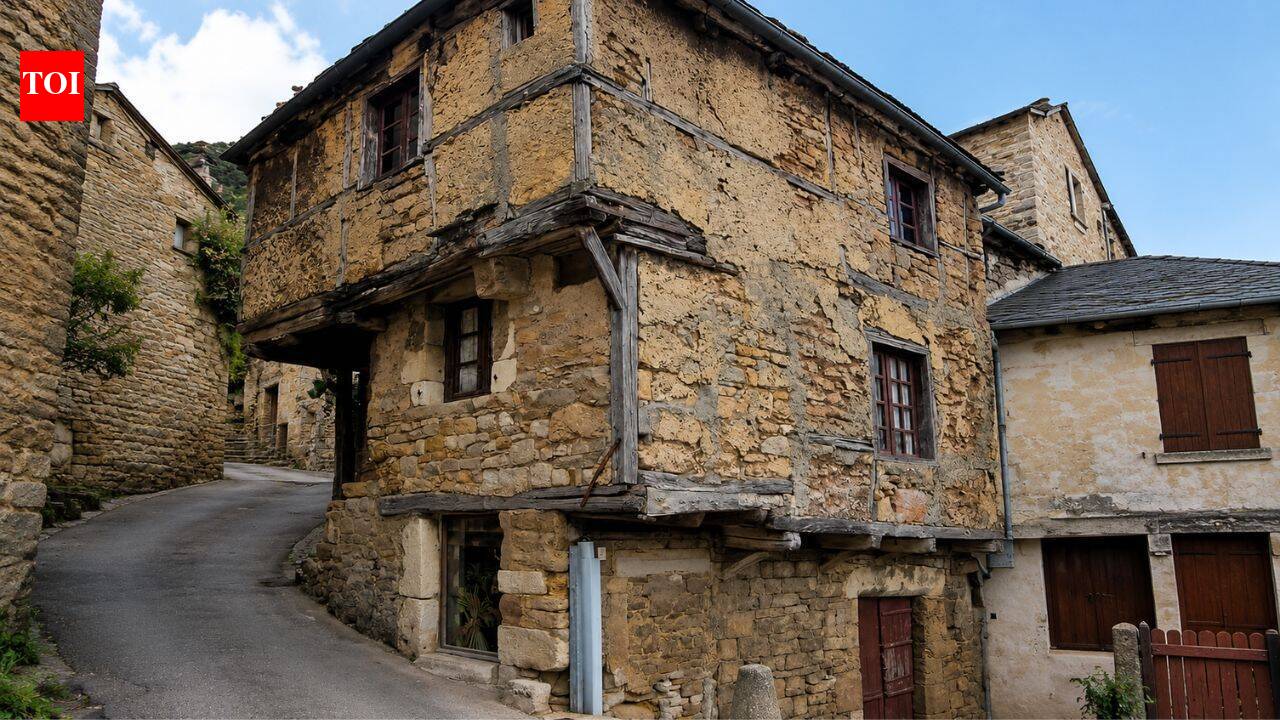
The hidden logic behind this structure in France and its uneven form How generations of families quietly shaped the life of the house The quiet decline of a historic structure before its rescue Restoration that stayed close to the original fabric How a quiet building in Sévérac-le-Château briefly captured global attention The house sits slightly off the usual tourist rhythm in a corner of Aveyron where stone villages tend to blur into one another after a while. At first glance, it does not try to announce itself, though the upper storeys seem to lean out with a kind of quiet confidence that interrupts the street below. Locals call it Maison de Jeanne, a name that has stuck despite centuries of changing ownership and use. It is often described as one of the oldest surviving timber-framed houses in the area, though that label barely captures how uneven and slightly improbable it feels when seen in person.The ground level sits narrow and restrained, almost as if it were built for a different idea of space, while everything above appears to push against those limits. Nothing about it feels decorative for the sake of charm; it reads more like a practical compromise that simply refused to disappear.The proportions make more sense once the logic of old taxation is brought into the picture.
In late medieval Aveyron, what you paid was tied closely to the footprint of your house, not what rose above it. Builders learned quickly how to work around that rule. The result, in this case, is a lower floor that seems deliberately modest, with upper levels that overhang it as if testing how far they could extend without breaking anything.There is something slightly awkward about the geometry, but it is precisely that imbalance which has allowed the building to survive as a curiosity rather than be replaced. The timber frame carries much of the visual weight, dark beams crossing pale infill, with age softening the edges where lime and wood meet. It does not feel frozen in time so much as layered, each century leaving a trace without fully rewriting what came before.The house has never been static in its use. It moved through private ownership for centuries, shifting quietly between families whose names rarely appear in public records. At some point it came to be associated with a woman named Jeanne, the last known inhabitant remembered locally more than historically documented. That name eventually stuck to the building itself, as these things often do in small places where memory outlives paperwork.Inside, the layout suggests a way of living that would feel unusual now.
 The BriefWire