Is Africa ready for El Nino?
Experts warn the El Nino climate phenomenon could bring drought, floods and displacement to parts of Africa later this year. Are governments prepared? The United
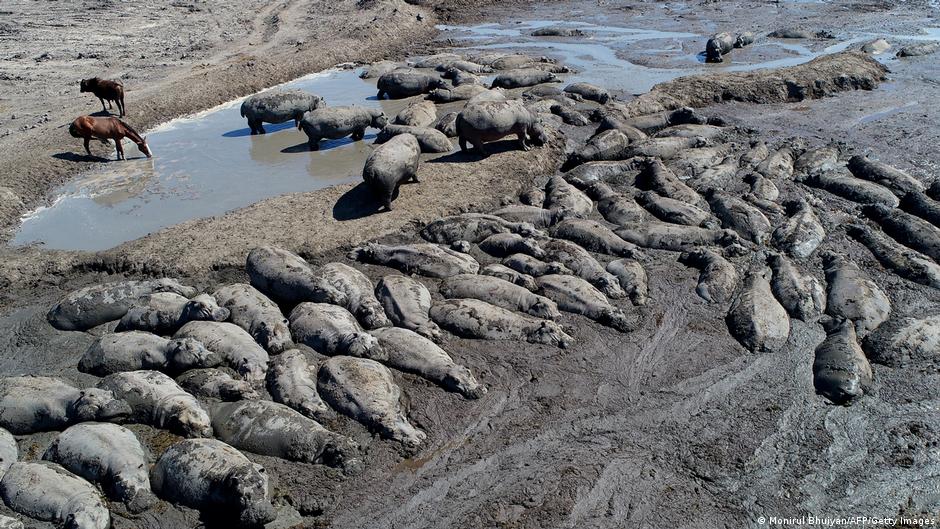
Experts warn the El Nino climate phenomenon could bring drought, floods and displacement to parts of Africa later this year. Are governments prepared? The United Nations Food and Agriculture Organization (FAO) and the World Food Programme (WFP) have appealed for over $200 million in funds to help protect 8.8 million people across 22 high-risk countries from the looming return the destructive El Nino weather pattern. The support would include cash transfers, climate-resilient seeds, livestock protection and flood control measures, as extreme weather patterns affect much of the world already. "El Nino conditions have developed in the tropical Pacific, and are forecast to strengthen rapidly over the coming months, increasing the likelihood of extreme weather events in many parts of the world," the World Meteorological Organization (WMO) has warned. In Africa, the countries listed as most at risk include Cameroon, Ethiopia, Kenya, Madagascar, Malawi, Mozambique, Nigeria, Somalia, South Sudan, Sudan, Uganda and Zimbabwe. Severe drought in Zimbabwe threatens millions with hunger To view this video please enable JavaScript, and consider upgrading to a web browser that supports HTML5 video El Nino: What it means for Africa El Nino is a naturally occurring warming of sea surface temperatures in the central and eastern Pacific Ocean, which usually happens every two to seven years. It can last between nine and 12 months and, in some regions, El Nino can bring hotter and drier conditions, while in others, it can increase rainfall and flooding. "For Africa, it's not one climate story. It's actually going to be a much more varied impact," says Kgaugelo Mkumbeni, a research officer in the Climate Risk and Human Security Project at the Institute for Security Studies in Pretoria, South Africa. Southern Africa has in the past experienced "hotter and much drier conditions" during previous El Nino events, she explains, which raises the risk of "drought, water shortages and general food insecurity." The situation in Eastern Africa, however, is more complex, as El Nino can have different effects depending on the season.
Are African nations underestimating the risks of El Nino? To view this video please enable JavaScript, and consider upgrading to a web browser that supports HTML5 video Global warming: from bad to worse Bhargabi Bharadwaj, a research associate at Chatham House's Environment and Society Centre, says that "El Nino reshapes rainfall and temperature patterns around the world, though its impacts can vary depending on the region and which season it hits." "Some areas will face drier conditions, which increases risk of drought and wildfire occurrence, whereas other parts of the world will have wetter conditions and face likelihood of storms and flooding," Bharadwaj stresses. Scientists like Bharadwaj believe climate change does not directly cause El Nino but that it can make its effects more severe. "We're working with warmer baseline temperatures of around 1.4 degrees higher than pre-industrial levels. This means that when an El Nino event does occur, then there are more extreme outcomes," Bharadwaj told DW. Some experts are also concerned about the possibility of a very strong — or "super" — El Nino this year,"when your average temperature difference is around two degrees higher, or at least forecast to be two degrees higher," she adds. Acting before disaster strikes The real challenge is whether governments and aid agencies can act quickly enough, as "science is ahead of policy," Bharadwaj says. In northern Kenya, Abdikadir Aden Hassan, founder of Garissa Million Trees, said the danger is not only the possibility of heavy rains and subsequent floods, but the fact that they may come after months of drought. "We are in a dry spell and are headed toward drought in August and September," he told DW. "Then in October, November and December, we are expected to have the short rains. People may be coming out of drought and then going straight into flash floods. That means their livelihoods will be affected for a second time," Hassan explains. With lives and livelihoods at stake, experts argue that Africa's climate preparedness cannot be left to environment ministries alone.
 The BriefWire