'Strategically aligned': Singapore, Indonesia pledge to keep Strait of Malacca open and free
Indonesia, Singapore reaffirm that Strait of Malacca will remain open and free for all 'Strategically aligned' on maritime security Global spotlight on Strait of Malacca
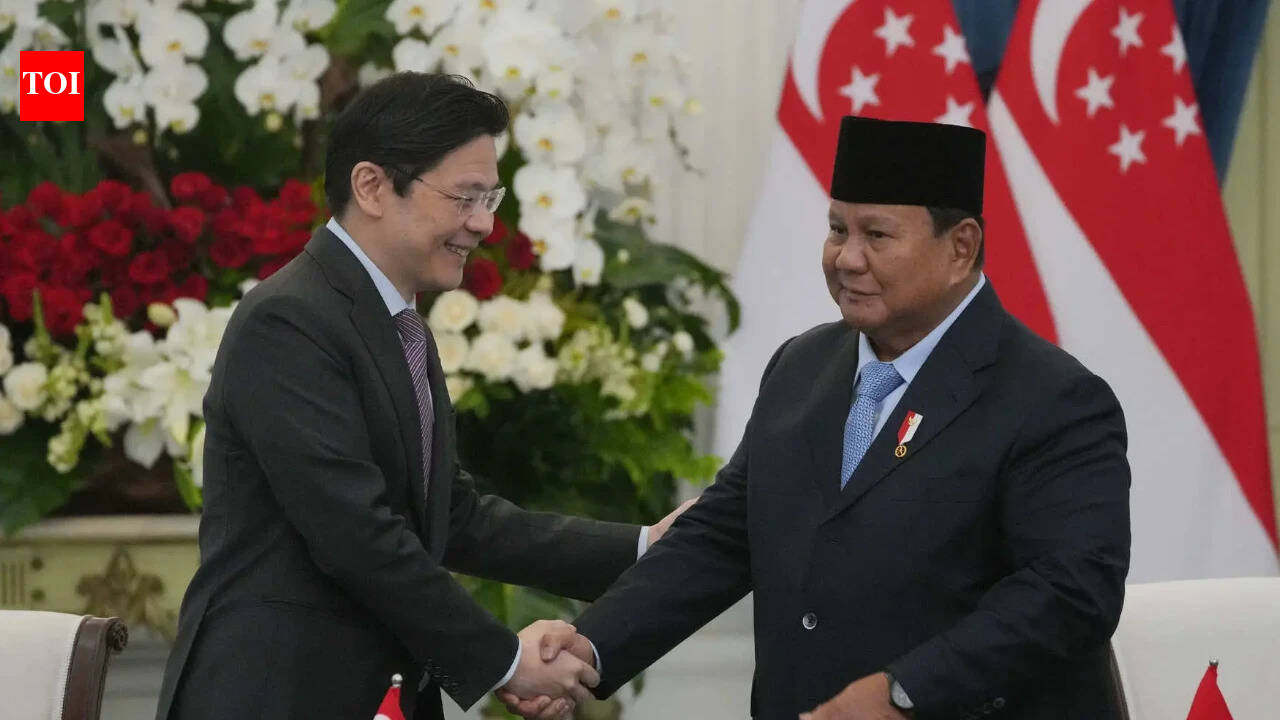
Indonesia, Singapore reaffirm that Strait of Malacca will remain open and free for all 'Strategically aligned' on maritime security Global spotlight on Strait of Malacca Singapore and Indonesia have pledged to keep the Strait of Malacca open, safe and accessible to all, elevating maritime security to the forefront of a bilateral relationship that both countries see as critical to regional stability.The commitment came after talks on July 6 between Prime Minister Lawrence Wong and President Prabowo Subianto at the annual Leaders' Retreat in Jakarta, where they stressed the importance of safeguarding one of the world's busiest shipping routes amid growing geopolitical uncertainty.The Strait of Malacca, which connects the Indian Ocean and the South China Sea, carries a significant share of global trade and energy shipments, making it one of the world's most strategically important maritime corridors.
In 2025, the strait handled more than 102,500 vessel transits, accounting for about 22 percent of global maritime trade, and carried approximately 23.2 million barrels of oil per day.President Prabowo said Indonesia and Singapore had reaffirmed their shared position on the waterway. "Indonesia and Singapore are countries that directly border one another in the Strait of Malacca. We have a shared interest in maintaining the Strait of Malacca as a passage that is free for all parties," he said at a joint press conference.He added that Indonesia would continue coordinating with Malaysia and Thailand to ensure that, in accordance with the United Nations Convention on the Law of the Sea, the strait would "always remain open to all, safe and accessible to anyone who requires access".Prime Minister Wong struck a similar note, linking maritime security to global developments.
He said recent events in the Middle East had underscored the importance of keeping major trade routes functioning and secure. The Iran war had choked off traffic in the Strait of Hormuz, leading to disruptions in global trade and the supply of oil."As littoral states bordering the Straits of Malacca, Singapore and Indonesia are strategically aligned," Wong said. "We share an interest in upholding navigational rights and freedoms and keeping sea lines of communication open to all".The two leaders agreed to work with other littoral states to ensure that the straits remain safe, open and accessible.The commitment comes amid heightened global attention on the Strait of Malacca following disruptions in the Strait of Hormuz. Analysts note that while Hormuz serves primarily as an energy export route, the Strait of Malacca functions as a broader global trade artery.The strait operates under a fundamentally different governance framework compared to Hormuz.
 The BriefWire