World Cup 2026: Trump, FIFA and the Balogun controversy
One of the few certainties of World Cup football has been rocked after Donald Trump lobbied FIFA to overturn a US red card suspension. The
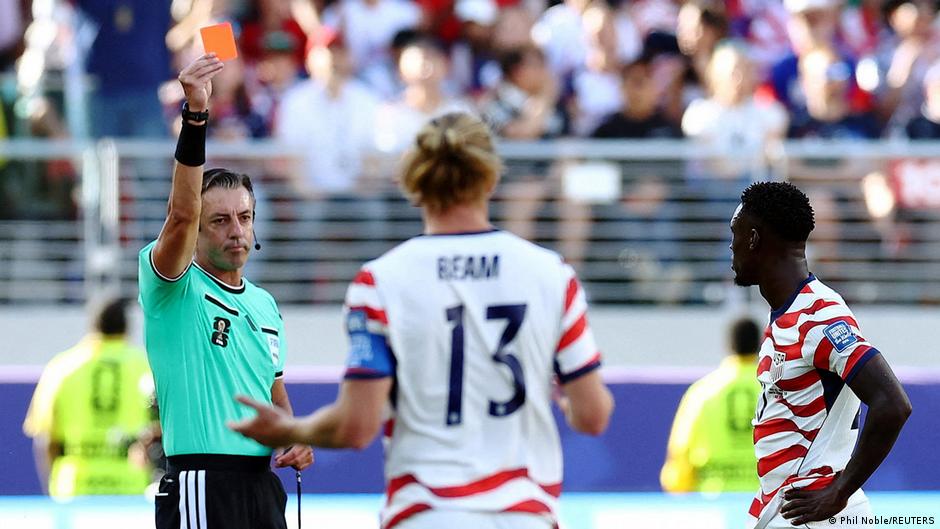
One of the few certainties of World Cup football has been rocked after Donald Trump lobbied FIFA to overturn a US red card suspension. The decision has caused outrage but it isn't completely without precedent. For a while, the football appeared to have taken over the politics at the 2026 World Cup. Cape Verde taking world champions Argentina to the wire, Paraguay knocking out Germany and Lionel Messi, Erling Haaland, Harry Kane and Kylian Mbappe fighting it out for the top scorer's Golden Boot — the focus was on the pitch. But just before Norway upset Brazil and England knocked out cohosts Mexico in one of the tournament's best games, Donald Trump put his thumb on the World Cup scales. Reports from multiple sources state that the US President lobbied to have the red card suspension of his country's top scorer, Folarin Balogun, in effect, overturned. He was successful, with FIFA ripping up the rulebook that bans red card appeals to say that the "automatic match suspension for USA player Folarin Balogun is suspended for a probationary period of one (1) year." FIFA cited Article 27, a broad piece of legislation which allows them to "fully or partially suspend the implementation of a disciplinary measure." The decision was handed down a little more than 48 hours before the USA are to face Belgium in the quarterfinals and Trump celebrated with a post on his Truth Social platform that read: "Thank you to FIFA for doing what was right, and reversing a great injustice!" The close relationship between Trump and FIFA President Gianni Infantino, who created a FIFA Peace Prize to award Trump in December, has faced much scrutiny in the buildup to the tournament and will now come under the microscope again.
What has the US and Belgian reaction been to Balogun decision? Belgium, as you might expect, are not happy. The Royal Belgian Football Association (RBFA) responded with a strong statement of condemnation, saying they were "astonished” by the decision. "I didn't know that 5 July was equal to 1 April [April Fools' Day] at FIFA," joked a clearly angry Belgium coach Rudi Garcia in his prematch press conference. On Monday, "The Athletic" reported that the RBFA have been handed the right to appeal the decision to a member of the FIFA appeals committee not associated with the European federation UEFA or the North American equivalent CONCAFAF. The judgement on that appeal could land as late as 12 hours before the quarterfinal kicks off. Garcia's opposing coach, Mauricio Pochettino, suggested issues had been "conflated" by those with an unspecified "agenda" to justify the decision. "If anyone was harmed in this whole situation, it was the United States. Can anyone justify the idea that we weren't punished? I mean, playing 30 or 35 minutes a man down in a World Cup knockout match? It's not as if we're benefiting. Ultimately, we aren't victims, but we aren't the villains of this story either." How has the rest of the football world reacted to FIFA's decision? Those without skin in the game have, almost universally, backed the Belgian standpoint. The US are manifestly not the only side in the tournament to be frustrated by a call they believe to be incorrect. UEFA, which is increasingly at loggerheads with FIFA, said the u-turn "crossed a red line" in a statement released on Monday.
 The BriefWire