Mumbai wants a copy of NYC's Central Park. This might drown the city further
India's financial capital, Mumbai, has drowned again. The city falls under the stewardship of Asia's richest municipal corporation, the BMC. But that distinction matters little
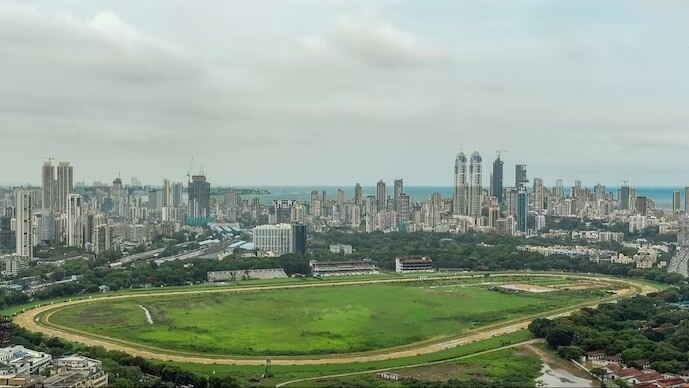
India's financial capital, Mumbai, has drowned again. The city falls under the stewardship of Asia's richest municipal corporation, the BMC. But that distinction matters little when the rains arrive. One fact, however, deserves attention. Although southern Mumbai is no stranger to flooding, it has largely been spared the crippling inundation that routinely paralyses Mumbai's northern suburbs. This monsoon, which is worse than every year, is an appropriate time to note that it might not remain the case for much longer. Read Full Story One of south Mumbai's largest remaining open spaces, the 225-acre Mahalaxmi Racecourse, which acts as a natural sponge for rainwater, might soon not remain the same. With plans to develop parts of the Mahalaxmi Racecourse, this crucial flood buffer might not remain as open as it is today. The proposal is to develop a sprawling public park at the Mahalaxmi Racecourse, inspired by iconic green spaces such as New York's Central Park and London's Hyde Park. In the northern suburbs of Mumbai, multi-storey buildings are collapsing. People are being electrocuted on flooded roads. Others are disappearing into manholes in invisible waterlogged streets. Yet, the southern part of Mumbai continues to fare better. Waterlogging in pockets such as Worli and Dadar, usually drains out far quicker. The Mahalaxmi Racecourse, in the heart of south Mumbai, is a reason for this relief. The racecourse is a rare expanse of permeable ground in a concrete jungle of a city. Reclaimed from marshy land decades ago, its low-lying terrain naturally collects rainwater during the monsoon. This allows water to percolate into the soil, recharging groundwater and reducing the volume that rushes into already strained drains, which dump 5,000 tonnes of plastic into the Arabian Sea annually.
Mumbai-based architect and urban planner Rahul Kadri has highlighted the role of the Mahalaxmi Racecourse repeatedly. "Due to concretisation, there is no percolation of water," the urban planner pointed out twice in conversations with India Today Digital over the last year, noting that the racecourse "actually acts as a sink for water from the monsoon and helps the area to not get flooded during the rains." Without such open, unpaved spaces, rain has nowhere to go but into the drainage system, which Mumbai's infrastructure often cannot handle. Last year, India Today Digital analysed how much rain it takes for Indian cities to drown. Mumbai, while more resilient than some cities due to its topography and scale, still drowns under heavy downpours — often 200 mm or more in 24 hours — because its natural absorption zones have shrunk. The Mahalaxmi Racecourse has helped buffer southern Mumbai from the worst of this. Altering that capacity could push the city's "Doobo-meter" reading lower, making flooding more frequent and severe in South Mumbai as well. Comprising just earth and grass, the Mahalaxmi Racecourse is one of the largest remaining open spaces in Mumbai. (Image: Getty Images) MAHALAXMI RACE COURSE'S REDEVELOPMENT PLAN The Mahalaxmi Racecourse land was originally leased to the Royal Western India Turf Club (RWITC) for 99 years beginning in 1914. The lease expired in May 2013 and has since been extended through short-term renewals, while the land has remained under public ownership. The redevelopment proposal by the BMC (with collaboration from the state government) aims to transform parts of the racecourse into what authorities have called Mumbai's Central Park, inspired by New York's iconic green space.
 The BriefWire