Fashion against fascism: When trademarks deter neo-Nazis
In Germany, where Nazi symbols and propaganda are tightly restricted by law, a new and creative strategy is being used to challenge far-right merchandise sellers
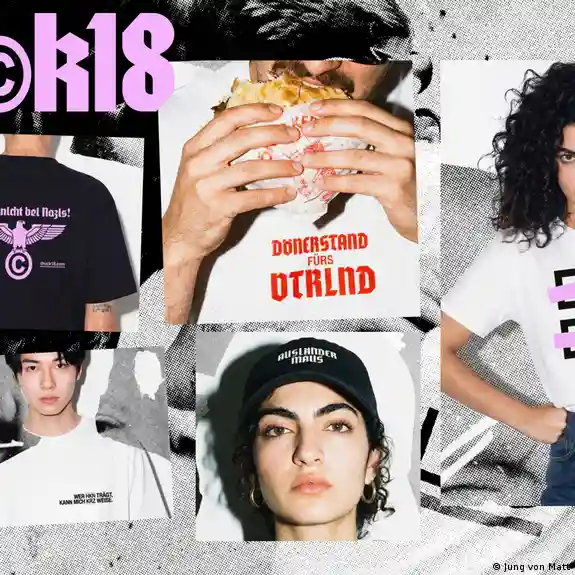
In Germany, where Nazi symbols and propaganda are tightly restricted by law, a new and creative strategy is being used to challenge far-right merchandise sellers: trademarks. In recent years, far-right merchandise has become an important source of income for some right-wing extremist groups and individuals in Germany. Online stores sell clothing, accessories and other products that use symbols recognized by members of the far-right scene. Because many openly Nazi symbols are illegal in Germany, sellers have increasingly relied on coded language to get around the law. Hitlerhas become HTLR, while Hakenkreuz (swastika) is abbreviated to HKNKRZ. But the campaign "Recht Gegen Rechts" (Rights Against the Right) has found a clever way to combat this legal workaround. They take control of Nazi-related symbols, coded extremist phrases and the names of far-right businesses by registering them as trademarks at the European trademark office. The campaign was launched in 2021 by German creative agency Jung von Matt, together with Hamburg-based nonprofit Laut Gegen Nazis (Noise against Nazis). If extremist retailers continue to sell products carrying the newly protected names or phrases without permission, they could face legal action for infringement — including having to pay compensation for each item sold. A team of experts "These online shops are not in the darknet; they're existing there online. You have just to find the right URLs," explained Simon Knittel of creative agency Jung von Matt, who helped found the campaign. Simon Knittel was among those who started the campaign in 2021 to raise awareness about neo-Nazi codes Image: Jung von Matt However, for those outside of the far-right scene, the stores aren't easy to find. The team had help from Joern Menge, the founder of Noise against Nazis (Laut Gegen Nazis), as well as Philip Schlaffer, a former neo-Nazi and online shop owner, who is now a speaker and activist against far-right extremism.
"Basically, you can find these shops if you know what keywords to enter. A lot of them are now based overseas," Schlaffer told DW. "It's become a global business where a lot of money is changing hands." The team detected over 35 online stores with over 1,000 articles in each shop and then determined which trademarks would be more effective. For Schlaffer, the campaign has an approach that's both creative and effective. "Neo-Nazis shouldn't feel like they have a safe haven; they should be afraid that the ideas they have — the ones they're selling — might be taken away from them and that the products will need to be taken offline. That takes away their sense of security," he said. Indeed, the team saw this in action after the first trademark was secured. "When we published our initial press release announcing that we had registered a trademark, it only took about 30 minutes, and the trademark was taken down by all the online shops — we didn't have to do anything," explained Knittel. "They did it voluntarily because they knew that we really had something against them — and they didn't want to be on the losing side of a court case." Each subsequent trademark was met with the same response — items were quickly taken offline. "In the end, we had to wait just 10 minutes, not 30. That was the proof for us that we found something that really solves the problem," said Knittel. Philip Schlaffer is a former neo-Nazi-turned activist who helped advise the campaign Image: Philip Schlaffer Germany's strict approach to Nazi symbols Germany's approach to Nazi imagery reflects the country's history and its efforts to prevent the revival of Socialism.
 The BriefWire