A scientist built 200 hotels for bees. Three years later, the guests he found changed what we know about pollinators and biodiversity
Why scientists are building hotels for bees A three-year experiment with 200 bee hotels What the study revealed about biodiversity "If you build it, they
Why scientists are building hotels for bees A three-year experiment with 200 bee hotels What the study revealed about biodiversity "If you build it, they might come" Bee hotels are only part of the solution Hotels are usually built for travellers, but some are designed for creatures no bigger than your thumb. Scientists and conservationists have spent years creating these miniature refuges for wild bees in the form of small nesting structures fitted with narrow tunnels that mimic the hollow stems and cavities many solitary bee species naturally use to lay their eggs. Hoping they could provide additional nesting spaces in increasingly urban landscapes, Canadian researcher J. Scott MacIvor installed 200 bee hotels across a city and monitored them for three years. What began as a simple conservation experiment soon uncovered an entire hidden community of insects, prompting researchers to rethink how artificial nesting sites influence pollinators and urban biodiversity.When most people think of bees, they picture honey bees living in bustling hives. In reality, honey bees make up only a small fraction of the world's bee diversity. Around 90% of the roughly 20,000 known bee species are solitary, with each female building and provisioning her own nest without the help of a queen or worker bees.Many of these solitary species nest inside hollow plant stems, beetle burrows in dead wood and other natural cavities.However, urban development, intensive landscaping and the removal of dead wood have reduced these nesting opportunities in many places.
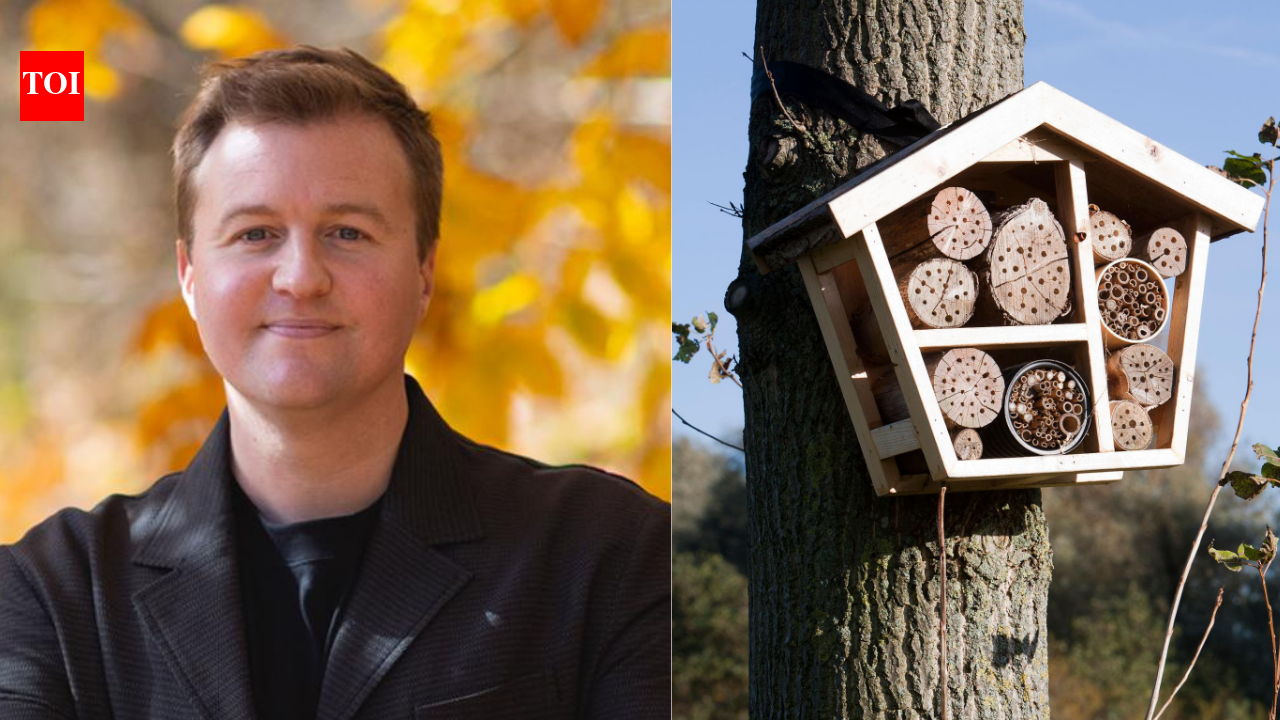
Bee hotels were developed to replace some of this lost habitat by providing carefully sized tunnels where cavity-nesting species, including mason bees and leafcutter bees, can lay their eggs. Unlike honey bee hives, these structures are not colonies but collections of individual nesting chambers, each occupied by a single female and her developing offspring.Most bee hotels are made from untreated blocks of hardwood drilled with narrow holes of different diameters or bundles of replaceable paper or cardboard tubes housed inside a protective frame. Each tunnel is sealed at one end and left open at the other, allowing a solitary female bee to lay an egg, leave behind a ball of pollen and nectar for the developing larva, seal the chamber with mud or leaves, and repeat the process until the tunnel is full. In the wild, these bees would normally use hollow stems, beetle burrows or natural cracks in dead wood to do the same.At the time MacIvor began his research, bee hotels were already being widely as a simple way to help declining pollinators, but there was surprisingly little scientific evidence showing how well they actually worked for native bees. That gap in knowledge became the focus of his study.To find out whether bee hotels genuinely support native pollinators, urban ecologist J. Scott MacIvor and co-author Laurence Packer installed around 200 bee hotels each year across Toronto and the surrounding region, monitoring them over three consecutive years.Published in PLOS ONE, the study examined nearly 600 bee hotel deployments and recorded more than 27,000 emerging bees and wasps.
 The BriefWire