Abrogation Of Article 370 Was Fitting Tribute To Dr Syama Prasad Mookerjee: PM Narendra Modi
Abrogation Of Article 370 Was Fitting Tribute To Dr Syama Prasad Mookerjee: PM Narendra Modi Published By, Last Updated: July 06, 2026, 09:03 IST PM
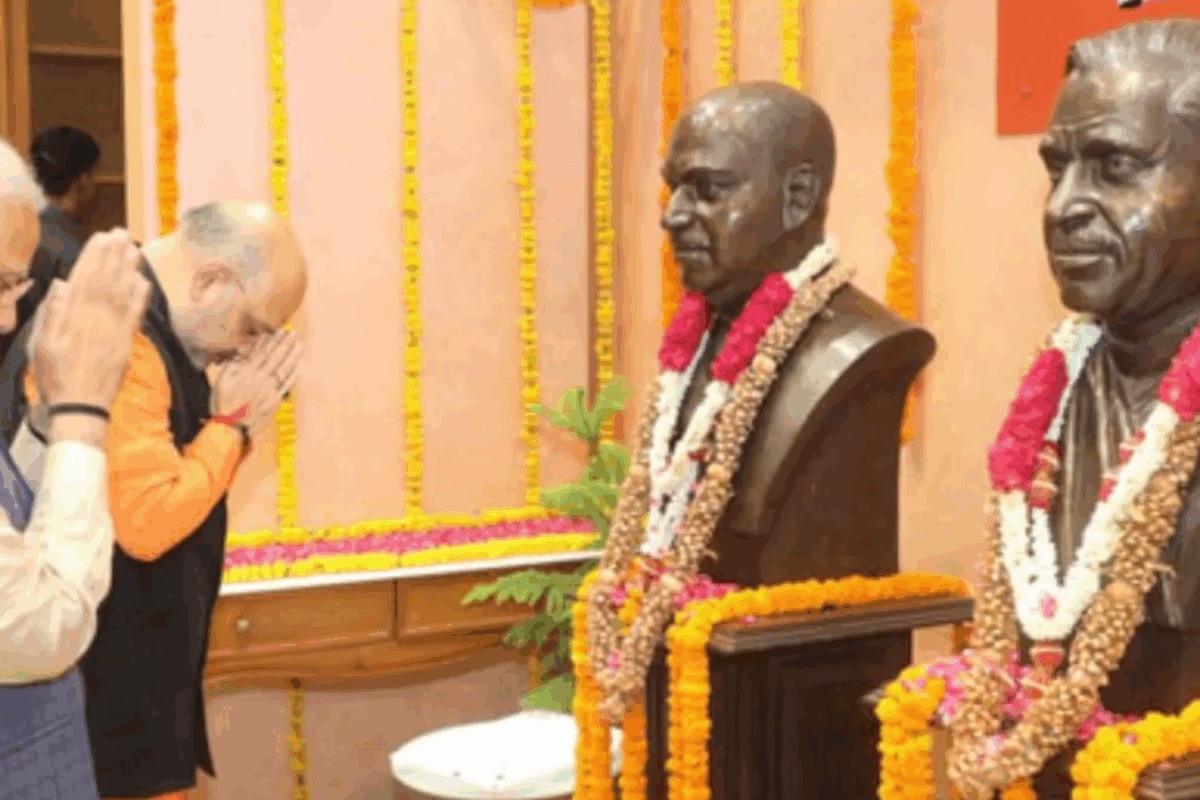
Abrogation Of Article 370 Was Fitting Tribute To Dr Syama Prasad Mookerjee: PM Narendra Modi Published By, Last Updated: July 06, 2026, 09:03 IST PM Modi looked back at the legacy of Dr Syama Prasad Mookerjee in a detailed column titled - A Life Devoted to India's Unity and Progress. Rapid Read PM Narendra Modi pays tribute to Dr Syama Prasad Mookerjee. Prime Minister Narendra Modi on Monday paid rich tributes to Bharatiya Jana Sangh founder Dr Syama Prasad Mookerjee on his 125th birth anniversary, describing his unwavering commitment to the “indivisibility of India" as the defining principle of his public life and asserting that the abrogation of Articles 370 and 35A in 2019 was the “most fitting tribute" to his sacrifice. In a detailed column titled – A Life Devoted to India’s Unity and Progress – PM Modi wrote that Mookerjee’s final sacrifice “transcends politics and enters the realm of national memory", recalling that the former Union minister’s opposition to Jammu and Kashmir’s special status ultimately became central to his political legacy. “There are moments in history when an individual’s final sacrifice transcends politics and enters the realm of national memory. Dr Mookerjee’s last journey remains one such moment," the Prime Minister wrote, adding, “Years later, the revocation of Articles 370 and 35(A) in 2019 was the most fitting tribute to his martyrdom." The tribute comes just days after the BJP’s victory in the West Bengal Assembly election, a state with which Mookerjee’s political and personal legacy remains deeply intertwined.
Calling July 6 “a special day for countless people who cherish the ideals of nationalism and selfless service", PM Modi described Mookerjee as a leader who embodied “the seamless confluence of intellect, public service and moral conviction." The Prime Minister recounted how Mookerjee, despite being born into privilege as the son of renowned educationist Sir Ashutosh Mookerjee, chose a life of public service over personal comfort. He noted that personal tragedies, including the loss of an infant child and later his wife, only strengthened Mookerjee’s resolve to serve the nation. “If there was one ideal that defined Dr Mookerjee’s public life above all else, it was the indivisibility of India," Modi wrote. He said Mookerjee remained steadfast during Partition to ensure that West Bengal remained an integral part of India and later carried the same conviction into his movement concerning Jammu and Kashmir. PM Modi described Dr Mookerjee as a visionary reformer who became the youngest Vice-Chancellor of the University of Calcutta and modernised the institution by strengthening scientific research, improving libraries, promoting agriculture studies, teacher training and student welfare. Quoting Mookerjee’s own vision for education, Modi wrote: “It is incorrect to look upon educational institutions as factories to produce potential clerks and low-paid staff. We have to turn out students who are capable of providing leadership." He said the statement reflected Mookerjee’s belief that education should create nation-builders rather than merely job seekers.
 The BriefWire