As deadly as war and as powerful as governments, global organized crime remains in the shadows
When people think of the world’s deadliest threats, armed conflicts usually come to mind first. Yet every year, organized crime quietly claims a comparable number
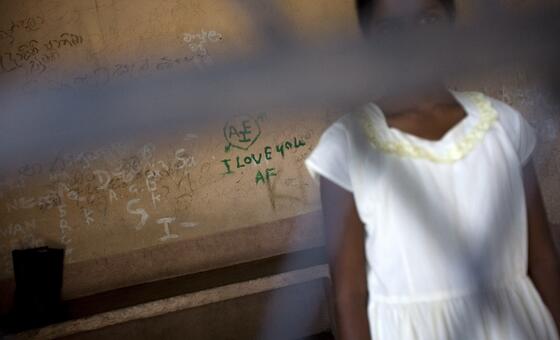
When people think of the world’s deadliest threats, armed conflicts usually come to mind first. Yet every year, organized crime quietly claims a comparable number of lives. Since 2000, the UN estimates that organized criminal groups have been linked to about 95,000 homicides annually. That figure is strikingly close to the average annual death toll from armed conflicts worldwide, estimated at around 92,000 people. The comparison raises an obvious question: if organized crime kills as many people as war, why does it receive far less international attention? As UN Secretary-General António Guterres has warned, “The activities of transnational organized crime take many forms, but the ramifications are the same: weakened governance, corruption and lawlessness, open violence, death and destruction.” Yet beyond these global patterns lies a reality that is often far less visible: The human lives shaped by these networks, and whose experiences rarely appear in headlines or statistics. Trafficking victim At 17, Mary left Benin City, Nigeria, believing she was traveling to Europe for a restaurant job and a better future. After transiting through Libya, it became clear that she had been drawn into a trafficking operation. She was subjected to coercion, sexual violence, and exploitation, and found herself unable to contact her family or escape the conditions imposed on her. Looking back on her experience, Mary described the long-term psychological impact.: “What I’m passing through right now is so big, so serious, I see myself as a grown-up. I missed ever being a child.” Yet amid the trauma, she also expressed a fragile sense of possibility, saying, “One day I will have my documents, I will have an education, I will have work.” Her words reflect a broader reality in which survivors often carry both deep trauma and uncertain hope.
As another trafficking victim put it, “I often meet girls who dream of going to Turkey and Dubai, to earn more. I tell them, ‘please don’t go. There is nothing good for you there.’” A hidden global toll Unlike armed conflicts that unfold openly and dominate global headlines, organized crime operates in the shadows, embedded in communities, economies, and sometimes legitimate institutions. Often, criminal groups do more than generate profits or exploit new technologies; they shape local power structures, influence public life, and at times rival the state itself. According to research by the UN Office on Drugs and Crime (UNODC), organized criminal networks are responsible for roughly one-fifth of all intentional homicides worldwide, rising to about half in parts of the Western Hemisphere. But the toll extends far beyond killings. Drug trafficking drives hundreds of thousands of overdose deaths, including around 600,000 linked to opioids according to the UN’s World Health Organization (WHO), while violence against journalists, community leaders, and human rights defenders weakens institutions and erodes public trust. UN Photo/Victoria Hazou Unlike war, which leaves visible scars that capture international attention, the harm caused by organized crime is often less visible but equally far-reaching. While deaths can be counted, its broader economic, social, and governance costs remain difficult to quantify. Why we don’t see it Part of the reason organized crime attracts less attention than armed conflict is that powerful criminal groups benefit from remaining invisible. Rather than relying solely on violence, they embed themselves within social and economic structures, making their influence harder to detect. According to UNODC analysis, criminal organizations often enforce their own rules and settle disputes internally.
 The BriefWire