India-US Agreement On Critical Minerals May Be A ‘Big Deal’ For China: Here’s Why
India-US Agreement On Critical Minerals May Be A ‘Big Deal’ For China: Here’s Why Written By, Last Updated: May 27, 2026, 17:11 IST India-US agreement
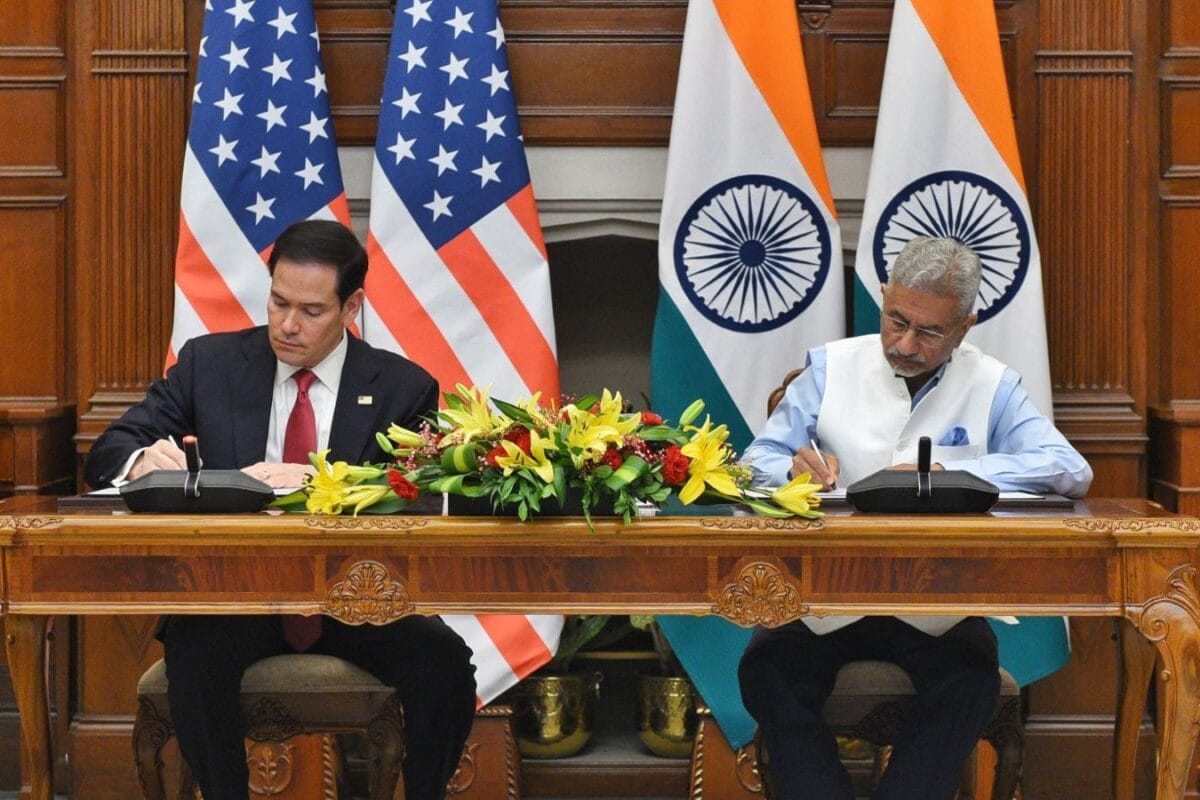
India-US Agreement On Critical Minerals May Be A ‘Big Deal’ For China: Here’s Why Written By, Last Updated: May 27, 2026, 17:11 IST India-US agreement on critical minerals acts as a direct response to rising geopolitical vulnerabilities & China's stranglehold on global processing, export, News18 explains Rapid Read Marco Rubio and S Jaishankar sign the bilateral cooperation framework. (X) Is the newly signed India-US critical minerals agreement a direct geopolitical counterweight designed to dismantle China’s global monopoly and weaponized chokepoints over clean energy, defense, and high-tech supply chains? News18 explains. INDIA-US CRITICAL MINERALS DEAL The India-US Critical Minerals Deal is a strategic bilateral cooperation framework signed on May 26, 2026, aimed at securing, diversifying, and strengthening the global supply chains for critical minerals and rare earth elements. Finalised in New Delhi between Indian External Affairs Minister S. Jaishankar and US Secretary of State Marco Rubio, the agreement acts as a direct response to rising geopolitical vulnerabilities and China’s dominant stranglehold on the global processing and export of these materials, say reports. According to the official Ministry of External Affairs (MEA) and US Embassy in India statements, the bilateral framework deepens collaborative efforts across four key pillars Mining Operations: Facilitating joint extraction and upstream sourcing of strategic metals.
Mineral Processing: Upgrading refining technologies so partner nations can process raw materials domestically rather than relying on single-source monopolies. Recycling Activities: Cooperating on the recovery and reuse of critical minerals from industrial scrap and e-waste. Supply Chain Financing: Streamlining public and private sector investments to back new infrastructure and resource management projects. EAM @DrSJaishankar and Secretary of State @SecRubio signed the 🇮🇳 🇺🇸 Framework for Securing of Supply in the Mining and Processing of Critical Minerals and Rare Earths today. It marks an important milestone in advancing the shared vision of PM @narendramodi and President @POTUS… pic.twitter.com/pVTezkMuJG — Randhir Jaiswal (@MEAIndia) May 26, 2026 WHY IS IT STRATEGICALLY SIGNIFICANT? The partnership addresses critical vulnerabilities in sectors that define future national security and economic leadership Combating Single-Source Monopolies: The deal targets China’s control over nearly 70% of global rare earth mining and 90% of refining capacity, mitigating the threat of export controls being used as diplomatic leverage. Powering Advanced Industries: Secure access to elements like lithium, cobalt, nickel, and yttrium is guaranteed for manufacturing semiconductors, electric vehicle (EV) motors, AI data centres, clean energy grids, and military hardware. Integration with Global Pacts: The deal advances goals established during bilateral summits in 2025 and builds directly on India joining the US-led Pax Silica initiative in February 2026 to safeguard tech supply networks.
CHINA FACTOR: HOW DEAL MAY BREAK MONOPOLY, NEUTRALISE EXPORT CONTROLS While many nations hold raw ore, China controls nearly 90% of downstream global refining and processing of rare earth elements. The US and India are highly dependent on Chinese imports for downstream products like rare earth magnets, which are critical for electric vehicles (EVs), defense aerospace, and semiconductors, say NDTV and other reports. The deal aims to combine US financial backing (with Washington mobilizing over $30 billion for critical mineral projects) with India’s scaling capacity, manufacturing ambitions, and domestic “rare earth corridors" to build completely independent processing ecosystems. The agreement follows strict Chinese export controls on vital tech minerals like gallium, germanium, antimony, and heavy rare earths, which Beijing restricted under the guise of “national security" amidst its ongoing trade and tariff war with the US. These restrictions hit Western defense contractors and crippled Indian EV manufacturers who relied on Chinese heavy variants for large electric motors, according to experts. By establishing this bilateral pact, Washington and New Delhi are intentionally building a “trusted network" to insulate their economies from sudden Chinese embargoes or arbitrary price manipulation. WHY QUAD HELPS The bilateral pact was inked on the sidelines of a Quad Foreign Ministers’ Meeting.
Concurrently, the Quad expanded on these efforts by unveiling its own Critical Minerals Initiative, pledging up to $20 billion in public and private capital to push back against single-source monopolies. This agreement also seamlessly aligns with India’s recent entry into the US-led Pax Silica initiative, a multi-nation bloc formed to secure AI, semiconductor, and mineral pathways against geopolitical adversaries. With agency inputs News18 Newsletter Handpicked stories, in your inbox A newsletter with the best of our journalism submit First Published: May 27, 2026, 13:51 IST News explainers India-US Agreement On Critical Minerals May Be A ‘Big Deal’ For China: Here’s Why Disclaimer: Comments reflect users’ views, not News18’s. Please keep discussions respectful and constructive. Abusive, defamatory, or illegal comments will be removed. News18 may disable any comment at its discretion. By posting, you agree to our Terms of Use and Privacy Policy Loading comments...
 The BriefWire