Iran: Pressure on persecuted Baha'i community intensifies
Arrests, torture, mock executions: War has seen the Iranian regime crack down on dissidents of all kinds. Members of the country's Baha'i faith have long
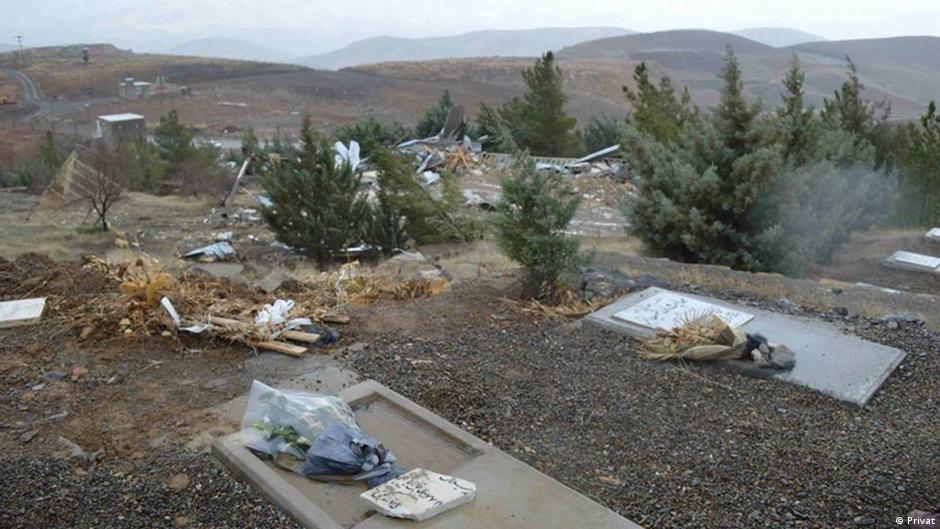
Arrests, torture, mock executions: War has seen the Iranian regime crack down on dissidents of all kinds. Members of the country's Baha'i faith have long been persecuted, but their situation is now worsening. Atossa Najafi tries to keep her composure as she describes what happened. "About three weeks ago, security forces searched our apartment, confiscated personal belongings, and took my brother away," she recounts. Since that day — June 6 — she has been plagued by worry for her brother Parsa, 19, and their parents in Isfahan, Iran. Najafi herself is in Germany. The 23-year-old came here as a student three years ago and has been studying dentistry at the Charite hospital in Berlin. "Since then, we have been living with uncertainty," she told DW. "We know nothing about his whereabouts." Najafi's family are members of the Baha'i faith, a religion that originated in the mid-19th century in what was then Persia (now Iran) and is considered a monotheistic world religion. However, it isn't recognized in Iran, and the Shiite Muslim regime there consider Baha'is heretics. As a result, the Baha'i population in Iran has been persecuted for decades. Atossa Najafi, a Baha'i student from Iran Image: Christoph Strack/DW Many Muslim countries do not recognize the Baha'i faith because its founder claimed to be a prophet, following Islam's most important prophet Mohammed. A persecuted religious minority According to Amnesty International, the Baha'is, who are Iran's largest non-Muslim religious minority, are particularly badly treated in Iran. For decades, they have been denied educational and professional opportunities, arrested, had their property confiscated and seen their cemeteries and holy sites desecrated.
In Iran, business licenses can be denied on the grounds of affiliation with the Baha'i faith. Businesses can also be arbitrarily closed, with the owners summoned to appear before disciplinary committees. In the 1990s, German newspapers regularly featured obituaries that German Baha'is had published, memorializing fellow believers who had been executed in Iran. At the start, it was hard for Najafi to find out anything about her family's fate. The authorities took the parents' mobile phone and she couldn't reach them. Najafi now occasionally has contact with them in Isfahan. But the authorities have still not provided any information about her brother. A Baha'i family said this was what their apartment looked like after it was searched by Iranian security forces Image: Privat "We are very worried about what's happening to him and his mental and physical state," she noted. Najafi is sitting in a central Berlin office belonging to the local Baha'i community. Photos of important holy sites hang on the walls: The mausoleum of the faith's founder on the slopes of Mount Carmel in Haifa, Israel, and the House of Worship in Hofheim am Taunus, in the state of Hesse. The latter is the only Baha'i temple in Europe. German support The German Bahai community's commissioner for human rights, Jascha Noltenius, shares Najafi's concerns. "The number of imprisoned Baha'is in Iran has risen to 65 in recent months," the 35-year-old lawyer told DW. "Before the war between Israel and Iran, there were around 20. According to information from the Baha'i community, some prisoners have been severely tortured.
 The BriefWire