Quote of the day by John F. Kennedy: “My fellow Americans, ask not what your country can do for you—ask what you can do for your country.”
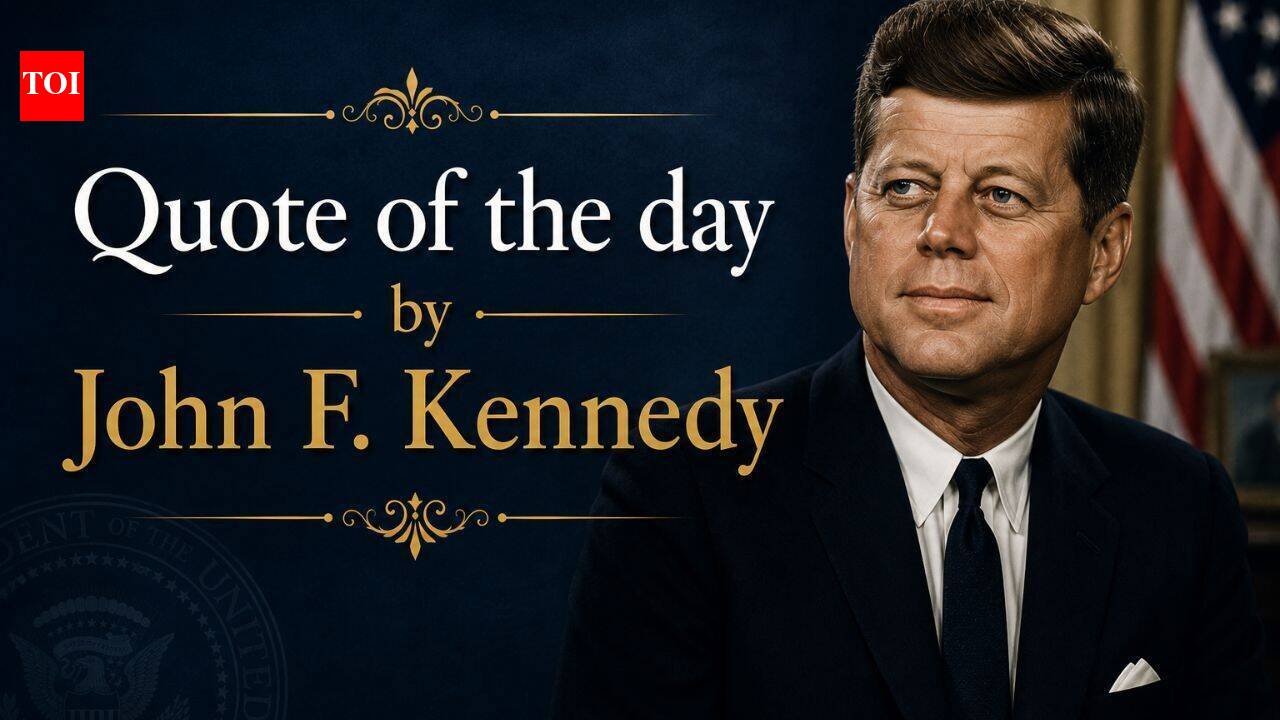
Quote of the day by John F. Kennedy (AI-generated image) Quote of the day by John F. Kennedy “My fellow Americans, ask not what your
Quote of the day by John F. Kennedy (AI-generated image) Quote of the day by John F. Kennedy “My fellow Americans, ask not what your country can do for you—ask what you can do for your country.” Understand the meaning of the quote by John F. Kennedy The two halves of the sentence, and why the order matters From words to action: The Peace Corps Why the default question is almost always "what do I get" How to apply this quote in daily life Other famous quotes by John F. Kennedy "We choose to go to the moon in this decade and do the other things, not because they are easy, but because they are hard." "A man may die, nations may rise and fall, but an idea lives on." "Change is the law of life. And those who look only to the past or present are certain to miss the future." "Forgive your enemies, but never forget their names." Most people measure their relationship with a country, a company or a team by what it gives them back. John F. Kennedy asked an entire nation to flip that measurement around. "Ask not what your country can do for you, ask what you can do for your country," he said in his 1961 inaugural address, turning citizenship from something received into something owed. It became the single most repeated line of his presidency, quoted so often that its exact wording is more familiar to most people today than almost anything else he said in office. The idea itself was not new. Versions of the same sentiment had circulated in speeches and sermons for years before Kennedy ever stood at the podium. What made this version different was how tightly it was built, a mirror-image sentence, brief enough to remember after hearing it only once.The line inverts a relationship most people take for granted without examining closely.
Citizens typically think of their country primarily as a provider, of services, protections and opportunities delivered to them. Kennedy's sentence asks each listener to flip that assumption around, treating citizenship as something owed by the individual to the collective, rather than the other way round.This was not an abstract philosophical point for its own sake.Kennedy delivered it at the height of the Cold War, addressing a generation he described elsewhere in the same speech as tempered by war and disciplined by a hard, uncertain peace. The request for contribution rather than entitlement was aimed squarely at that generation, asking them to see their own effort as part of what kept the country's promise intact, not simply something they were entitled to receive from it.It is worth being precise about what the line is not saying. It is not arguing that a country owes its citizens nothing, or that public services and protections do not matter. It is arguing that the relationship only holds up if effort flows in both directions. A country that gives everything and asks nothing back tends to hollow out over time, just as a citizen who takes everything and contributes nothing eventually undermines the thing they depend on.Look closely at the structure and the quote is really two nearly identical sentences placed back to back, with only the subject and object swapped. "What your country can do for you" becomes "what you can do for your country," the same handful of words rearranged into a mirror image of themselves.That symmetry is not decoration. It forces the listener to sit with both halves of the relationship at once, rather than only the half that usually gets attention. Most appeals for civic duty simply add a request for contribution on top of an existing sense of entitlement. Kennedy's version does something sharper. By putting the two halves in identical language, it makes the imbalance between them impossible to miss, and that is very likely why the sentence has survived so much longer than the rest of the speech surrounding it.Compare it with a more ordinary version of the same appeal, something like "your country has given you a great deal, so please consider giving something back." The sentiment is identical.
 The BriefWire