Germany news: AfD elects leaders amid massive protests
While protesters intended to disrupt the AfD party conference in Erfurt, proceedings ultimately began on time Image: Tobias Junghannß/dpa/picture alliance The far-right Alternative for Germany
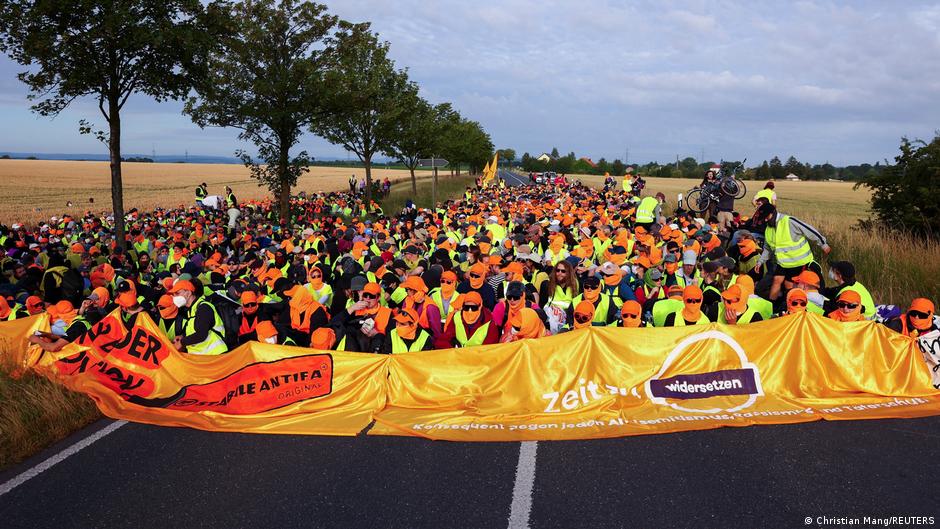
While protesters intended to disrupt the AfD party conference in Erfurt, proceedings ultimately began on time Image: Tobias Junghannß/dpa/picture alliance The far-right Alternative for Germany (AfD) opened its party convention in Erfurt on schedule Friday, overcoming protester blockades that had shut down roads around the venue since early morning. Demonstrators had hoped to prevent the convention from taking place at all. But hundreds of the roughly 600 delegates were already en route by 4 a.m. local time (0200 UTC), traveling by bus under police escort.
By 10 a.m., the hall was full and proceedings began on time. "The Antifa rioters slept through their own disruption attempt," AfD co-chair Tino Chrupalla told delegates in his opening remarks, drawing laughter from the hall. Antifa is an anti-fascist political movement originating in Germany. Police had braced for as many as 50,000 demonstrators over the weekend, though turnout so far appears well below that figure. Protests have remained largely peaceful. Police staked out a major presence by the venue of the AfD's party conferene in Erfurt Image: Martin Schutt/dpa/picture alliance In his address, Chrupalla declared the party ready to "assume governmental responsibility," pointing to what he described as newfound unity within the AfD and record poll numbers nationwide.
"Perhaps we will be governing soon," he said. The choice of venue and timing has drawn sharp criticism. The convention falls exactly 100 years after the Nazi Party (NSDAP) held its first national gathering following its refounding — a 1926 event in nearby Weimar that historians credit with reenergizing Hitler’s movement at a critical juncture. AfD officials reject any suggestion of a link between the two events. Critics
see it differently. The party’s decision to convene in Weimar near Erfurt sends what one observer called a "very clear signal." Jens Christian Wagner, who leads the nearby Buchenwald Memorial, argued the AfD is "not — at least not yet — the 'NSDAP 2.0,'" but said its rhetoric increasingly echoes the ethno-nationalist, authoritarian ideology of the 1920s and ’30s, alongside a pattern of minimizing and reframing Nazi-era crimes.
 The BriefWire